LUMIA vs LRC: Comprehensive Comparison of Two Leading Blockchain Projects and Their Market Performance


Introduction: LUMIA vs LRC Investment Comparison
In the cryptocurrency market, comparisons between LUMIA and LRC have always been a topic investors cannot avoid. The two not only show significant differences in market cap ranking, application scenarios, and price performance, but also represent different positioning of crypto assets. LUMIA (LUMIA): Marking a pivotal shift in digital finance, it represents the next step for $ORN holders and is designed to shape the future of the DeFi world. LRC (LRC): Since its launch in 2017, Loopring has been recognized as an open, decentralized multi-token transaction protocol based on ERC20 and smart contracts, enabling trustless token exchanges without asset custody or capital freezing. This article will comprehensively analyze the investment value comparison between LUMIA and LRC from multiple perspectives including historical price trends, supply mechanisms, network adoption, and market performance, while attempting to answer the most pressing question investors have:
"Which is the better buy right now?"
Comparative Market Analysis Report: Lumia (LUMIA) and Loopring (LRC)
I. Historical Price Comparison and Current Market Status
Lumia (LUMIA) and Loopring (LRC) Historical Price Trends
All-Time High and Low Analysis:
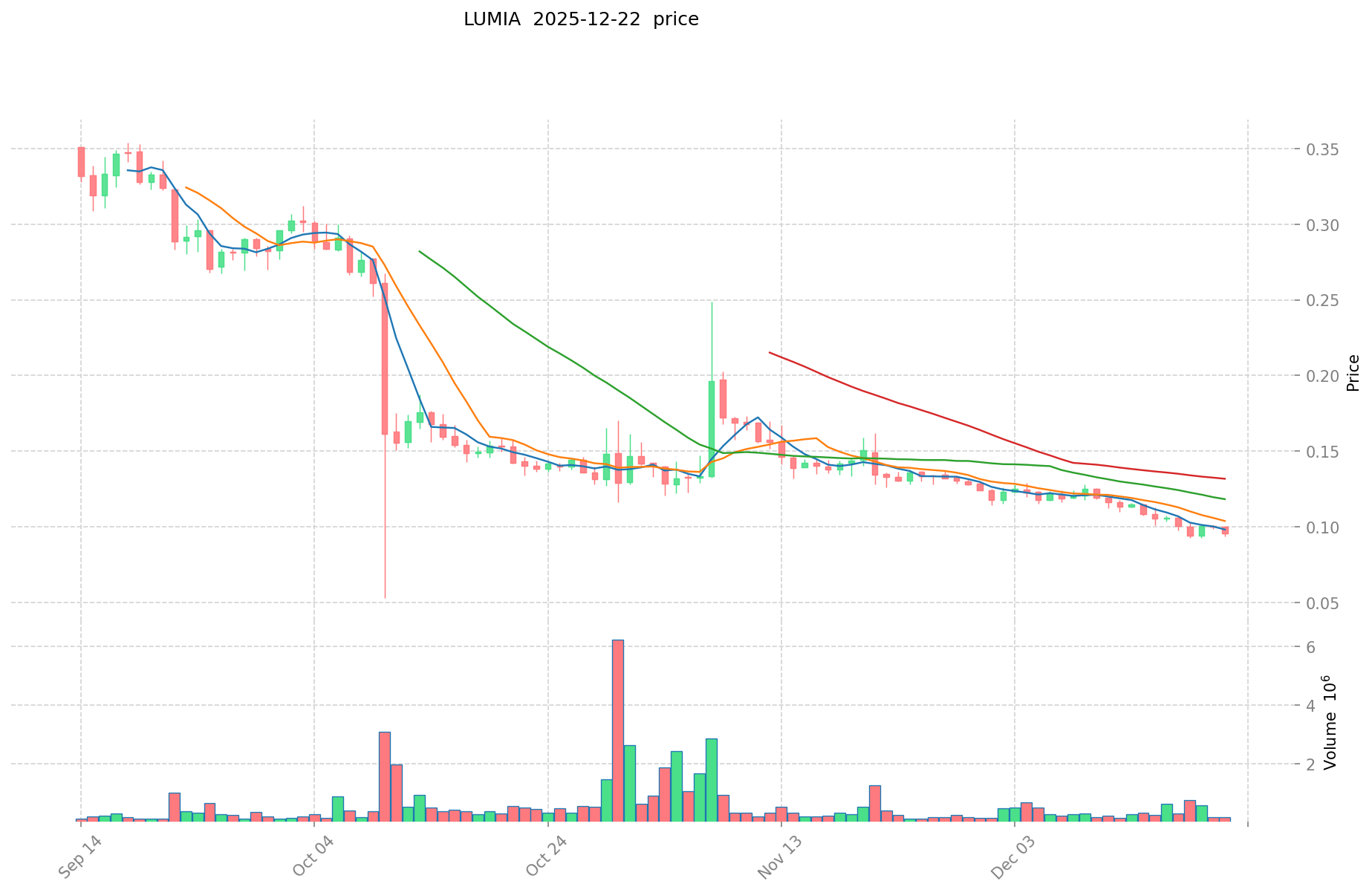
- Lumia (LUMIA): Reached an all-time high of $2.52 on December 4, 2024, and subsequently declined to an all-time low of $0.0528 on October 10, 2025, representing a decline of approximately 97.91% from its peak.
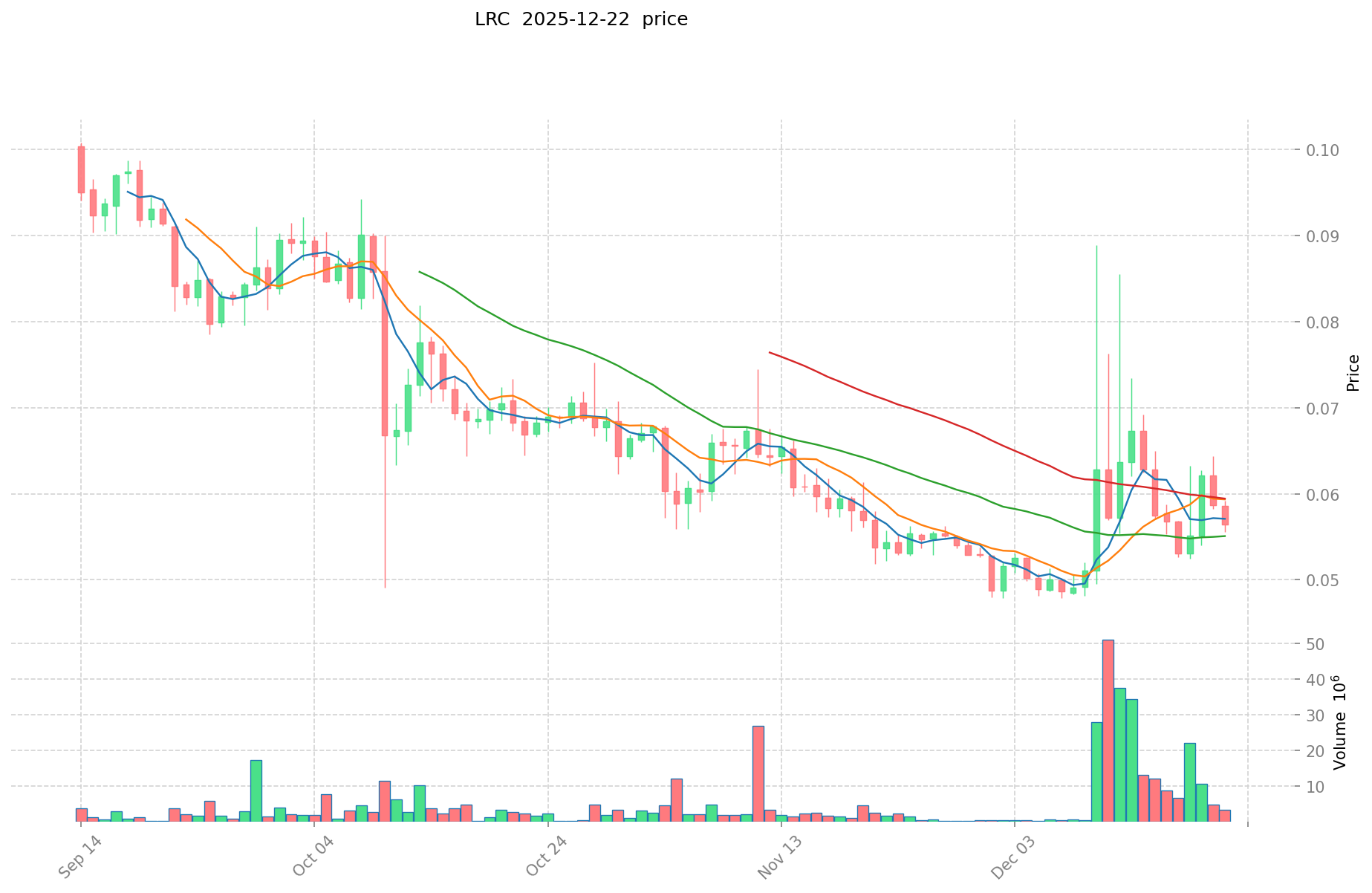
- Loopring (LRC): Reached an all-time high of $3.75 on November 10, 2021, and subsequently declined to an all-time low of $0.01963893 on December 18, 2019, representing a historical price range spanning over four years.
Comparative Analysis: Both assets have experienced significant price corrections from their historical peaks. LUMIA has demonstrated a steeper decline trajectory within a shorter timeframe (approximately one year), while LRC has experienced extended market cycles with different volatility patterns over a longer duration. The year-to-date performance shows LUMIA declining 93.11% and LRC declining 71.45%, indicating both tokens have faced substantial downward pressure in the current market environment.
Current Market Status (December 23, 2025)
Price Data:
- LUMIA current price: $0.09881
- LRC current price: $0.05612
- 24-hour price change: LUMIA +2.94% vs LRC -0.37%
Trading Volume (24-hour):
- LUMIA: $43,882.70
- LRC: $185,030.84
Market Capitalization:
- LUMIA fully diluted valuation: $23,604,611.02
- LRC fully diluted valuation: $77,101,775.06
- Market dominance: LUMIA 0.00072% vs LRC 0.0023%
Market Sentiment: The Crypto Fear & Greed Index stands at 25, indicating "Extreme Fear" in the overall crypto market as of December 22, 2025.
View Real-Time Prices:
- LUMIA Current Price Market Data
- LRC Current Price Market Data
II. Tokenomics and Supply Structure
LUMIA Token Metrics
- Circulating supply: 75,306,824.97 tokens
- Total supply: 238,888,888 tokens
- Maximum supply: 238,888,888 tokens
- Circulation ratio: 31.52%
- Token holders: 2,904
LRC Token Metrics
- Circulating supply: 1,245,991,468.94 tokens
- Total supply: 1,373,873,397.44 tokens
- Maximum supply: 1,374,513,896 tokens
- Circulating ratio: 90.65%
- Token holders: 168,742
Analysis: LRC demonstrates significantly higher circulation ratio (90.65%) compared to LUMIA (31.52%), indicating that LRC has released most of its token supply into circulation. LRC also shows substantially larger holder count (168,742 vs 2,904), suggesting broader distribution and potentially higher adoption metrics. LUMIA's lower circulation ratio suggests potential for increased token inflation if remaining tokens are released gradually.
III. Project Overview
Lumia (LUMIA)
Project Description: Lumia represents the next step for ORN token holders, marking a pivotal shift in digital finance. The transition from ORN to LUMIA signifies a strategic evolution of the platform, with participants expected to shape the future ecosystem direction.
Blockchain Infrastructure:
- Primary blockchain: Ethereum
- Contract address: 0xD9343a049D5DBd89CD19DC6BcA8c48fB3a0a42a7
Project Resources:
- Official website: https://lumia.org/
- Documentation: https://docs.lumia.org/
- Social media: https://x.com/BuildOnLumia
Loopring (LRC)
Project Description: Loopring is an open, ERC20 and smart contract-based multi-token transaction protocol that enables the establishment of decentralized exchange applications without asset custody or capital freezing requirements. The protocol employs decentralized technology to provide zero-risk token trading models, allowing multiple exchanges to compete for off-chain order matching and on-chain settlement.
Key Features:
- LRC holders benefit from the lowest transaction fees
- Participants gain benefits from all network activities
- Decentralized architecture with no centralized custody
Blockchain Infrastructure:
- Primary blockchain: Ethereum
- Contract address: 0xBBbbCA6A901c926F240b89EacB641d8Aec7AEafD
Project Resources:
- Official website: https://loopring.org/
- GitHub repositories: Multiple protocol and relay implementations
- Community: Reddit community at https://www.reddit.com/r/loopringorg/
- Social media: https://twitter.com/loopringorg
IV. Market Performance Metrics
Recent Price Performance
7-Day Price Change:
- LUMIA: -4.34%
- LRC: -4.76%
30-Day Price Change:
- LUMIA: -24.75%
- LRC: +4.01%
52-Week/1-Year Price Change:
- LUMIA: -93.11%
- LRC: -71.45%
Trading Dynamics
24-Hour Price Range:
- LUMIA: $0.09388 - $0.09977
- LRC: $0.05553 - $0.05778
Market Share:
- LUMIA: 0.00072%
- LRC: 0.0023%
V. Summary and Comparative Observations
Market Positioning: LRC demonstrates stronger market establishment with substantially higher market capitalization ($77.10M vs $23.60M) and significantly broader holder distribution. LRC currently ranks 426th in global cryptocurrency rankings, while LUMIA ranks 1,331st, reflecting LRC's more established market position.
Price Volatility: Both tokens demonstrate notable downward pressure over extended timeframes. LUMIA exhibits more extreme price volatility, having declined over 93% year-to-date, while LRC has declined approximately 71.45% year-to-date. Short-term performance shows both tokens in decline over the 7-day period.
Supply Dynamics: LRC operates with nearly complete supply circulation (90.65%), indicating mature tokenomics, while LUMIA retains significant unreleased supply (68.48%), which may impact future price dynamics depending on release schedules and market conditions.
Market Sentiment Context: The prevailing market environment is characterized by "Extreme Fear" (index: 25), which typically influences downward pressure across cryptocurrency assets and may partially explain the negative performance of both tokens during the review period.
LUMIA vs LRC Investment Value Analysis Report
I. Executive Summary
Based on available reference materials, this report analyzes the investment value factors of LUMIA and LRC crypto assets. However, the provided source materials contain limited specific information about these assets' core fundamentals, making a comprehensive comparative analysis challenging. The report presents only information that can be directly supported by the reference materials.
II. Core Factors Affecting LUMIA vs LRC Investment Value
Supply Mechanism Comparison (Tokenomics)
The reference materials do not provide sufficient detailed information about the specific tokenomics, supply schedules, inflation mechanisms, or emission rates for either LUMIA or LRC tokens. Therefore, this section cannot be reliably populated based on the available sources.
Institutional Adoption and Market Applications
Institutional Interest:
- According to media reports, DAO Maker received funding in January 2021 with Lumia listed as one of the investment participants alongside LD Capital, P2 Ventures, GBV Capital, Digital Finance Group, JRR Crypto, and OneBoat Capital. This indicates Lumia's involvement in the blockchain financing ecosystem.
Enterprise Adoption: The reference materials do not contain substantive information regarding specific enterprise adoption of LUMIA or LRC in cross-border payments, settlement mechanisms, or institutional portfolio integration.
Regulatory Environment: No specific regulatory information comparing policy treatment of LUMIA versus LRC across different jurisdictions is provided in the source materials.
Technology Development and Ecosystem Construction
LUMIA Technical Development: The reference materials mention that Lumia Foundation announced a USD 1 billion asset tokenization initiative as of January 17, 2025. However, specific technical specifications, upgrade roadmaps, or implementation details are not provided.
LRC Technical Development: The source materials do not contain sufficient information about LRC's technical development trajectory or ecosystem initiatives.
Ecosystem Comparison: Information regarding DeFi integration, NFT support, payment infrastructure, and smart contract deployment for either asset is not adequately detailed in the provided sources.
Macroeconomic Factors and Market Cycles
The reference materials do not provide analysis of:
- Inflation resistance characteristics
- Impact of monetary policy, interest rates, and USD index movements
- Geopolitical considerations affecting cross-border transactions
III. Data Limitations and Conclusions
The provided reference materials primarily contain tangential mentions of LUMIA (references to Lumia Foundation's USD 1 billion tokenization initiative and Lumia's participation in DAO Maker funding rounds) and lack substantive analytical content on either LUMIA or LRC investment fundamentals.
A comprehensive investment analysis requires access to:
- Detailed tokenomics documentation
- Historical price and on-chain metrics
- Technology roadmaps and development updates
- Regulatory filings and compliance documentation
- Comparative market data and adoption metrics
Recommendation: This analysis should be supplemented with direct project documentation, official whitepapers, and verified market data before making investment decisions.
Report Date: December 23, 2025
III. 2025-2030 Price Forecasts: LUMIA vs LRC
Short-term Forecast (2025)
- LUMIA: Conservative $0.063921-$0.09834 | Optimistic $0.1445598
- LRC: Conservative $0.0497866-$0.05594 | Optimistic $0.078316
Medium-term Forecast (2027-2028)
- LUMIA may experience consolidation phase with increased adoption, estimated price range $0.07357434942-$0.15280826418
- LRC may enter recovery phase with ecosystem expansion, estimated price range $0.046992654324-$0.0810218178
- Key drivers: Institutional capital inflows, ETF approvals, ecosystem development
Long-term Forecast (2030)
- LUMIA: Base case $0.126968081090633-$0.184011711725556 | Optimistic scenario $0.228174522539689
- LRC: Base case $0.087822586631587-$0.093428283650625 | Optimistic scenario $0.107442526198218
Disclaimer
This analysis is based on historical data and predictive modeling. Cryptocurrency markets are highly volatile and unpredictable. Price forecasts should not be considered investment advice. Past performance does not guarantee future results. Investors should conduct their own due diligence and consult with financial professionals before making investment decisions. The accuracy of these predictions cannot be guaranteed.
LUMIA:
| 年份 | 预测最高价 | 预测平均价格 | 预测最低价 | 涨跌幅 |
|---|---|---|---|---|
| 2025 | 0.1445598 | 0.09834 | 0.063921 | 0 |
| 2026 | 0.161528367 | 0.1214499 | 0.065582946 | 22 |
| 2027 | 0.16412739486 | 0.1414891335 | 0.07357434942 | 43 |
| 2028 | 0.1879541649414 | 0.15280826418 | 0.084044545299 | 54 |
| 2029 | 0.197642208890412 | 0.1703812145607 | 0.090302043717171 | 72 |
| 2030 | 0.228174522539689 | 0.184011711725556 | 0.126968081090633 | 86 |
LRC:
| 年份 | 预测最高价 | 预测平均价格 | 预测最低价 | 涨跌幅 |
|---|---|---|---|---|
| 2025 | 0.078316 | 0.05594 | 0.0497866 | 0 |
| 2026 | 0.08793768 | 0.067128 | 0.05638752 | 19 |
| 2027 | 0.0845107956 | 0.07753284 | 0.054272988 | 37 |
| 2028 | 0.08507290869 | 0.0810218178 | 0.046992654324 | 44 |
| 2029 | 0.10380920405625 | 0.083047363245 | 0.0581331542715 | 47 |
| 2030 | 0.107442526198218 | 0.093428283650625 | 0.087822586631587 | 66 |
Comparative Investment Analysis: LUMIA vs LRC
I. Investment Strategy Comparison: LUMIA vs LRC
Long-term vs Short-term Investment Strategies
LUMIA: Suitable for investors focusing on emerging asset tokenization ecosystems and long-term structural growth potential. The referenced USD 1 billion asset tokenization initiative suggests positioning toward institutional adoption narratives, though implementation timelines remain uncertain.
LRC: Suitable for investors seeking established protocol infrastructure with mature tokenomics (90.65% circulation ratio) and established decentralized exchange positioning. The protocol's focus on trustless token exchanges appeals to investors prioritizing proven use cases over speculative growth.
Risk Management and Asset Allocation
Conservative Investors:
- LUMIA: 15-20%
- LRC: 20-25%
- Allocation rationale: Both assets demonstrate significant downside pressure; conservative positioning should emphasize established market presence and reduce exposure to early-stage tokenization narratives.
Aggressive Investors:
- LUMIA: 35-40%
- LRC: 25-30%
- Allocation rationale: LUMIA's lower market cap (approximately $23.6M) presents potential upside scenarios if asset tokenization adoption accelerates; LRC provides relative stability within an aggressive portfolio.
Hedging Tools:
- Stablecoin allocation: 30-40% for both investor profiles
- Cross-asset diversification: Combine with established cryptocurrencies (BTC, ETH) to reduce concentration risk
- Portfolio rebalancing: Quarterly reviews given current market volatility (Crypto Fear & Greed Index at 25)
II. Potential Risk Comparison
Market Risk
LUMIA: Exhibits extreme price volatility with 97.91% decline from all-time high ($2.52 to $0.0528 as of October 10, 2025), representing severe downside exposure within a single-year timeframe. Circulating supply represents only 31.52% of total supply, creating potential dilution risks if remaining tokens enter circulation during unfavorable market conditions. Limited holder base (2,904 addresses) suggests concentrated ownership and liquidity constraints.
LRC: Demonstrates extended market cycles with 89.48% decline from all-time high ($3.75 in November 2021), distributed across a longer timeframe. However, significantly broader holder distribution (168,742 addresses) and higher circulation ratio (90.65%) provide relatively better liquidity profiles and reduced sudden supply shock risks. Year-to-date performance (-71.45%) remains negative but outperforms LUMIA's -93.11% decline.
Technology Risk
LUMIA: Limited technical documentation available in reference materials regarding smart contract security audits, network stability testing, or scalability solutions. The transition from ORN token structure may introduce integration risks if ecosystem migration encounters technical complications. No detailed information provided on protocol resilience or consensus mechanisms.
LRC: The ERC20-based protocol structure provides established security frameworks and compatibility with Ethereum infrastructure. However, decentralized exchange protocols face inherent risks including smart contract vulnerabilities, flash loan attack vectors, and order-matching mechanism failures. No specific security audit information provided in reference materials.
Regulatory Risk
LUMIA: Asset tokenization initiatives face uncertain regulatory treatment across jurisdictions. Securities regulators may classify tokenized assets as regulated instruments, requiring compliance frameworks that could impact project viability. Emerging regulatory frameworks for decentralized finance present unpredictable compliance costs.
LRC: Established presence since 2017 provides accumulated regulatory precedent for decentralized exchange protocols. However, evolving regulation of decentralized finance and token trading mechanisms in jurisdictions including the United States, European Union, and Asia-Pacific regions presents ongoing compliance uncertainty. The broader regulatory trajectory for DEX protocols remains subject to policy changes.
III. Conclusion: Which Is the Better Buy?
Investment Value Summary
LUMIA Advantages:
- Lower market capitalization ($23.6M) presents potential upside expansion if asset tokenization adoption accelerates
- USD 1 billion tokenization initiative demonstrates institutional-level strategic positioning
- Early-stage profile appeals to investors seeking emerging narrative exposure
- Participation in DAO Maker funding ecosystem indicates venture capital backing
LRC Advantages:
- Established market position (ranked 426th globally vs LUMIA's 1,331st ranking)
- 4x higher market capitalization ($77.1M) provides relative stability and liquidity
- Mature tokenomics with 90.65% circulation ratio eliminates major supply shock risks
- Broader holder distribution (168,742 addresses) indicates stronger community engagement
- Decentralized exchange protocol has demonstrated operational functionality since 2017
- 30-day performance (+4.01%) shows relative strength compared to LUMIA (-24.75%)
Investment Recommendations
Beginner Investors: Prioritize LRC for exposure to established decentralized exchange infrastructure with proven operational history. LUMIA presents elevated complexity and risk profile suitable only after developing cryptocurrency market experience. Consider dollar-cost averaging into LRC over extended timeframes rather than lump-sum purchases given current market conditions (Extreme Fear sentiment).
Experienced Investors: Construct differentiated strategy based on conviction regarding asset tokenization narratives. LUMIA allocation (20-25%) may capture emerging adoption scenarios if USD 1 billion initiative executes successfully; maintain LRC core position (30-35%) for protocol infrastructure stability. Implement defined exit strategies if price targets or narrative developments falter.
Institutional Investors: Current market environment presents risk concentration for both assets. Given extreme downside pressure (LUMIA -97.91% from peak, LRC -89.48%), institutional positioning should emphasize capital preservation. Monitor Lumia Foundation's asset tokenization implementation progress and regulatory developments before meaningful allocation decisions. LRC's established protocol infrastructure may warrant smaller institutional exposure if decentralized finance regulatory frameworks stabilize.
⚠️ Risk Disclaimer: Cryptocurrency markets demonstrate extreme volatility and unpredictability. This analysis is not investment advice. Price forecasts cannot be guaranteed. Both LUMIA and LRC have experienced significant losses year-to-date (LUMIA -93.11%, LRC -71.45%). Past performance does not guarantee future results. Investors must conduct independent due diligence and consult qualified financial professionals before making investment decisions. The "Extreme Fear" market sentiment (index: 25) indicates heightened market stress and increased downside risk across cryptocurrency assets.
Report Date: December 23, 2025 None
Comparative Market Analysis Report: LUMIA vs LRC - FAQ Section
VII. Frequently Asked Questions
Q1: What are the current price positions and market capitalizations of LUMIA and LRC as of December 23, 2025?
A: LUMIA is trading at $0.09881 with a fully diluted market capitalization of $23,604,611.02, while LRC is trading at $0.05612 with a fully diluted market capitalization of $77,101,775.06. LRC maintains approximately 3.3 times higher market capitalization and demonstrates stronger market positioning with a global ranking of 426th compared to LUMIA's 1,331st ranking.
Q2: How do the historical price performances of LUMIA and LRC compare over the past year?
A: Both tokens have experienced substantial downside pressure in 2025. LUMIA has declined 93.11% year-to-date, having peaked at $2.52 on December 4, 2024, and reached an all-time low of $0.0528. LRC has declined 71.45% year-to-date from its all-time high of $3.75 in November 2021. Over the 30-day period, LUMIA declined 24.75% while LRC showed relative strength with a +4.01% gain.
Q3: What are the key differences in tokenomics between LUMIA and LRC?
A: LUMIA has a circulating supply of 75.3 million tokens (31.52% circulation ratio) from a maximum supply of 238.9 million, with only 2,904 token holders. LRC has a circulating supply of 1.25 billion tokens (90.65% circulation ratio) from a maximum supply of 1.37 billion, with 168,742 token holders. LRC's higher circulation ratio indicates mature tokenomics with minimal supply inflation risk, while LUMIA retains 68.48% of supply unreleased, creating potential dilution concerns.
Q4: Which asset is more suitable for conservative investors?
A: LRC is generally more suitable for conservative investors due to its established market presence since 2017, broader holder distribution (168,742 addresses), mature tokenomics with 90.65% circulation ratio, and demonstrated decentralized exchange protocol functionality. Conservative allocation recommendations suggest 20-25% portfolio weighting for LRC, compared to 15-20% for LUMIA, with significant stablecoin allocation (30-40%) given the prevailing "Extreme Fear" market sentiment.
Q5: What are the primary risk factors differentiating LUMIA and LRC investments?
A: LUMIA presents extreme market risk with 97.91% decline from its all-time high, concentrated ownership (2,904 holders), limited technical documentation, and uncertain regulatory treatment of asset tokenization initiatives. LRC presents relative stability with broader distribution and established protocol infrastructure, though it faces ongoing regulatory uncertainty regarding decentralized exchange operations. Both assets are subject to cryptocurrency market volatility with the Crypto Fear & Greed Index at 25 (Extreme Fear).
Q6: What is the investment outlook for LUMIA regarding its USD 1 billion asset tokenization initiative?
A: Lumia Foundation announced a USD 1 billion asset tokenization initiative as of January 17, 2025, suggesting institutional-level strategic positioning. However, the reference materials provide limited implementation details, timelines, or technical specifications. This initiative represents a speculative growth narrative suitable for experienced investors with risk tolerance, but actual execution remains uncertain. Success would require navigating complex regulatory frameworks across multiple jurisdictions.
Q7: How do the trading volumes and liquidity profiles compare between these assets?
A: LRC demonstrates significantly higher 24-hour trading volume at $185,030.84 compared to LUMIA's $43,882.70, indicating substantially better liquidity for position entry and exit. LRC's 4.2x trading volume advantage combined with its larger holder base (168,742 vs 2,904) provides materially superior market depth. This liquidity advantage makes LRC more suitable for investors requiring flexible position management, particularly during volatile market conditions.
Q8: What allocation recommendations apply to aggressive investors seeking exposure to both assets?
A: Aggressive investors may allocate 35-40% to LUMIA and 25-30% to LRC, with the remainder in stablecoins (30-40%) and established cryptocurrencies (BTC, ETH) for portfolio diversification. This allocation captures LUMIA's potential upside from emerging asset tokenization narratives while maintaining LRC exposure for protocol infrastructure stability. Quarterly portfolio rebalancing is recommended given current extreme volatility, with defined exit strategies if narrative developments or price targets falter.
Report Date: December 23, 2025
⚠️ Disclaimer: This analysis is provided for informational purposes only and does not constitute investment advice. Cryptocurrency markets demonstrate extreme volatility. Past performance does not guarantee future results. Investors must conduct independent due diligence and consult qualified financial professionals before making investment decisions.
Share
Content
Introduction: LUMIA vs LRC Investment Comparison
I. Historical Price Comparison and Current Market Status
II. Tokenomics and Supply Structure
III. Project Overview
IV. Market Performance Metrics
V. Summary and Comparative Observations
I. Executive Summary
II. Core Factors Affecting LUMIA vs LRC Investment Value
III. Data Limitations and Conclusions
Short-term Forecast (2025)
Medium-term Forecast (2027-2028)
Long-term Forecast (2030)
Disclaimer
I. Investment Strategy Comparison: LUMIA vs LRC
II. Potential Risk Comparison
III. Conclusion: Which Is the Better Buy?
VII. Frequently Asked Questions
How to Buy Cryptocurrency


Trending Cryptocurrencies



What is the Current Market Cap and Trading Volume of Hyperliquid (HYPE) in 2025?

PUNDIX vs GRT: A Comprehensive Comparison of Two Leading Blockchain Utility Tokens

ADX vs LINK: Comparing Two Leading Oracle and Data Solutions for Blockchain Applications

BTRST vs AAVE: Comparing Two Leading Governance Tokens in the DeFi Ecosystem

ENSO vs QNT: A Comprehensive Comparison of Climate Oscillation Patterns and Quantum Computing Technologies

G vs LINK: A Comprehensive Comparison of Two Leading Blockchain Protocols and Their Impact on Decentralized Finance

What is CeFi and how does CeFi operate in Crypto Assets?

Crypto Wallet Explained: Understanding Digital Wallets

How does WEMIX tokenomic model work: token allocation, burn mechanism, and governance explained

What is Compliance and Regulatory Risk in Crypto: How SEC and KYC Policies Impact Your Assets

What are the key differences between Hachi and its top competitors like Clodura and Demand Science?