Throughout the evolution of blockchain performance, improvements to consensus mechanisms have gradually approached their limits, while the real challenge has shifted to the execution and storage layers. Traditional EVM chains are constrained by serial processing, meaning transactions must wait in line to be processed. At the same time, general-purpose databases, such as RocksDB or LevelDB, create significant disk I/O friction when handling reads and writes across massive account states. As fully on-chain games and high-frequency social applications take off in 2026, the industry urgently needs an underlying storage solution capable of supporting “industrial-grade” data workloads.
Somnia Network emerged in response to this need. Its core competitiveness comes not only from optimizing execution logic, but also from surgically reshaping the storage DNA of the EVM. Through its self-developed IceDB and high-performance parallel engine, Somnia pushes the performance ceiling into the million TPS range.
What Is Somnia’s Parallel Execution Engine?
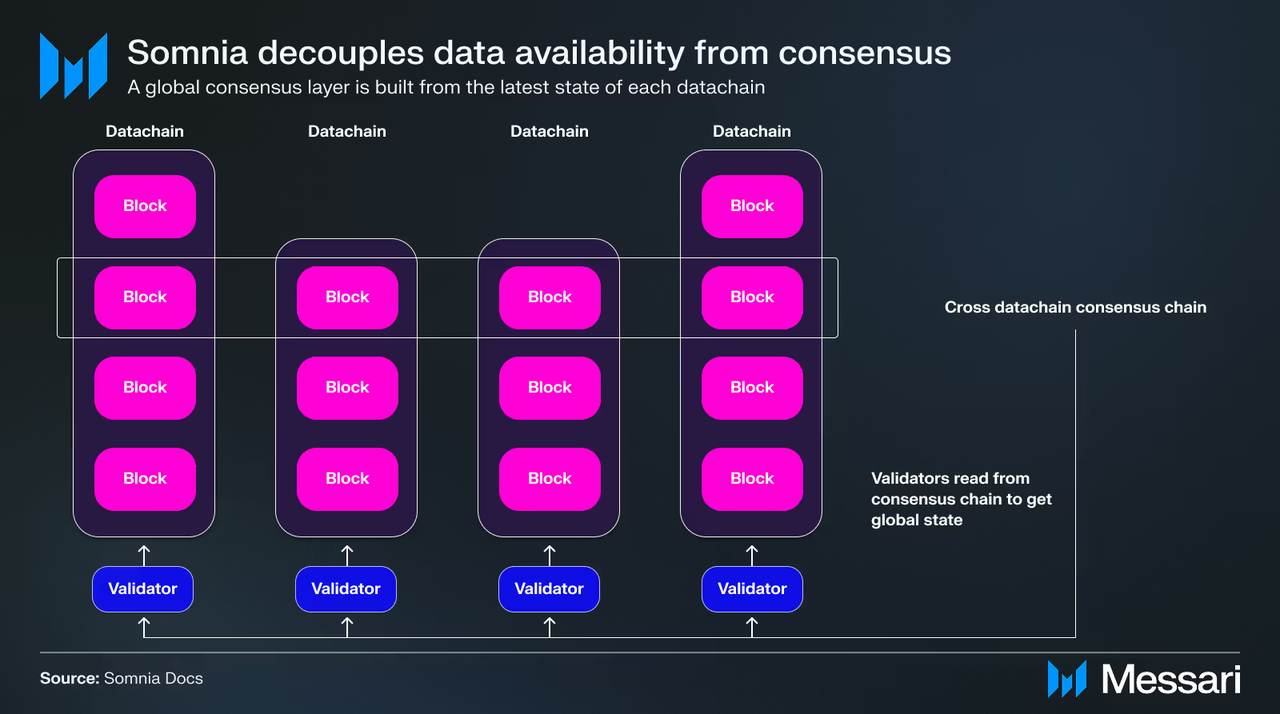
The traditional Ethereum Virtual Machine, or EVM, works like a single-lane road, where every transaction must be executed one after another. Somnia’s parallel execution engine uses pre-execution detection to identify transaction flows that do not interfere with each other, such as transfers between two separate users, and assigns them to different CPU cores for simultaneous processing. This multithreaded processing mechanism greatly improves efficiency, allowing system throughput to scale linearly as the number of hardware cores increases.
IceDB: Rebuilding the Storage Foundation of the EVM
Database read and write speed is often the “invisible ceiling” of blockchain performance. IceDB is a storage engine developed by the Somnia team specifically for the state access patterns of blockchain systems. Its core breakthroughs include:
-
Eliminating I/O bottlenecks: IceDB optimizes how data is laid out on disk, greatly reducing the number of random seeks required when looking up account balances or contract states.
-
Efficient state compression: It uses more advanced compression algorithms to ease the “state explosion” problem common to high-performance chains, without sacrificing read speed.
-
Sub-second read and write response: IceDB is structurally optimized for Sparse Merkle Trees, or SMTs, ensuring that state updates can still maintain millisecond-level response times under large-scale concurrent requests.
How the Parallel Engine and IceDB Work Together
Somnia’s high performance does not come from a single technology, but from the deep coupling between the two. The parallel engine is responsible for “distributing tasks,” keeping multiple cores running at full speed. IceDB is responsible for “supplying ammunition,” ensuring that each core does not sit idle because of database lag when accessing data. This coordination allows the network to maintain sub-second finality even under the extreme load of 1,000,000 TPS, giving users the kind of instant response they expect from the traditional centralized internet.
Somnia’s Advantages Over Traditional Storage Solutions
Compared with blockchains that use general-purpose databases, Somnia’s technical approach shows clear generational advantages:
-
Lower latency: When processing complex smart contracts, IceDB can access state several times faster than traditional solutions.
-
Greater stability: A database designed specifically for high concurrency is less likely to crash or experience sudden latency spikes during peak network traffic.
-
Scalability: It leaves ample computing headroom for more complex fully on-chain AI agents and real-time physics engines in the future.
New Possibilities for Somnia Developers and Its Ecosystem
For developers, IceDB and the parallel engine remove long-standing performance constraints. On Somnia, developers can build:
-
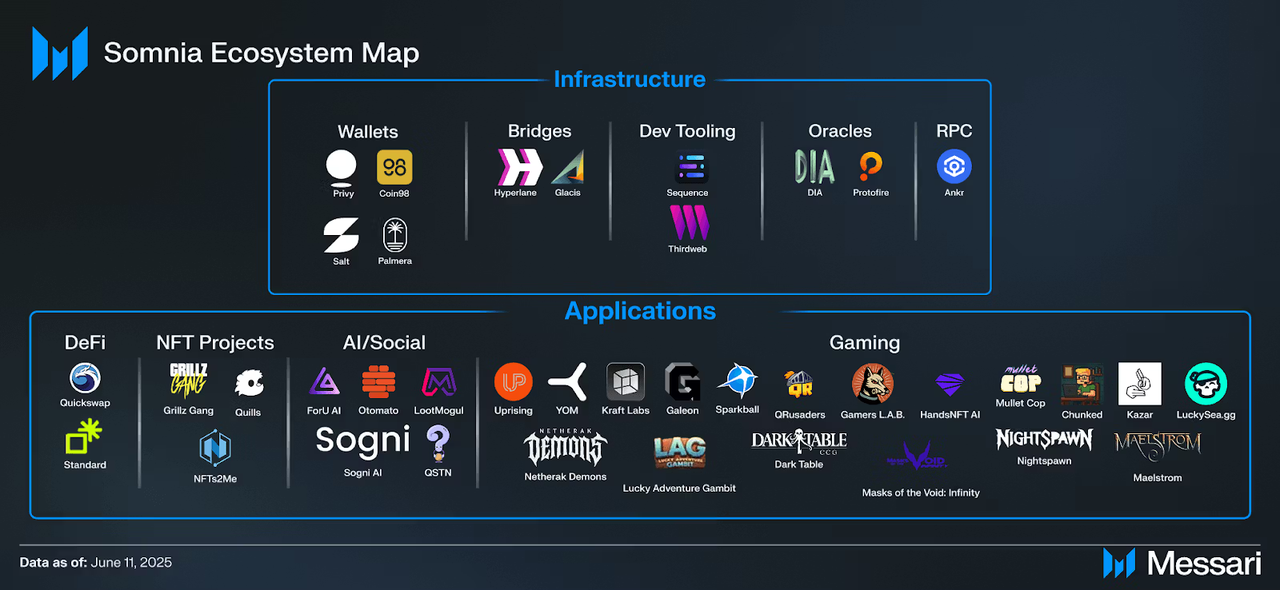
Fully on-chain social graphs: Supporting hundreds of millions of high-frequency interactions, such as likes and comments, being recorded on-chain in real time.
-
Real-time fully on-chain games: Running complex game logic and collision detection entirely on-chain.
-
High-frequency decentralized order books: Building decentralized exchanges with an experience comparable to centralized exchanges.
Conclusion
Somnia’s parallel engine and IceDB mark a shift in blockchain infrastructure from “general-purpose” systems to “specialized high-performance” architecture. By directly addressing the weakest links in both execution and storage, Somnia not only raises performance benchmarks, but also lays the technical foundation for Web3 to enter the era of mass adoption. In the 2026 high-performance public chain landscape, this underlying architecture will become a key benchmark for measuring on-chain capacity.
FAQs
Yes. IceDB’s optimization happens at the underlying storage layer, while the interface layer remains fully compatible with the EVM. This means developers can continue using familiar tools such as Solidity, Truffle, or Hardhat, and enjoy extreme performance without modifying any core code.
Does parallel execution affect transaction security or result determinism?
No. Somnia’s parallel engine includes a strict conflict detection mechanism. If two transactions involve the same account, the system automatically switches them to serial processing, ensuring that the results of all transactions remain fully consistent with Ethereum standards.
Are the hardware requirements high for running a Somnia validator node?
Because Somnia is designed to support million-scale TPS, its validator nodes have relatively high requirements for CPU core count, memory bandwidth, and NVMe disk read and write speed. This ensures that the network can maintain a high level of decentralized security even when processing industrial-grade data streams.







