

Trade
Basic
Futures
Futures
Hundreds of contracts settled in USDT or BTC
TradFi
Gold
Trade global traditional assets with USDT in one place
Options
Hot
Trade European-style vanilla options
Unified Account
Maximize your capital efficiency
Demo Trading
Futures Kickoff
Get prepared for your futures trading
Futures Events
Participate in events to win generous rewards
Demo Trading
Use virtual funds to experience risk-free trading
Earn
Launch
CandyDrop
Collect candies to earn airdrops
Launchpool
Quick staking, earn potential new tokens
HODLer Airdrop
Hold GT and get massive airdrops for free
Launchpad
Be early to the next big token project
Alpha Points
Trade on-chain assets and enjoy airdrop rewards!
Futures Points
Earn futures points and claim airdrop rewards
Investment
Simple Earn
Earn interests with idle tokens
Auto-Invest
Auto-invest on a regular basis
Dual Investment
Buy low and sell high to take profits from price fluctuations
Soft Staking
Earn rewards with flexible staking
Crypto Loan
0 Fees
Pledge one crypto to borrow another
Lending Center
One-stop lending hub
VIP Wealth Hub
Customized wealth management empowers your assets growth
Private Wealth Management
Customized asset management to grow your digital assets
Quant Fund
Top asset management team helps you profit without hassle
Staking
Stake cryptos to earn in PoS products
Smart Leverage
New
No forced liquidation before maturity, worry-free leveraged gains
GUSD Minting
Use USDT/USDC to mint GUSD for treasury-level yields

More


Trending Topics
View More80.06K Popularity
6.56K Popularity
1.96K Popularity
2.93K Popularity
7.5K Popularity



Pin
Gate Square | 2/5 Today's Hot Topic: #BuyTheDipOrWaitNow?
🎁 [Community Perk] Post with the topic or #BTC, 10 lucky users * $100 position Voucher.
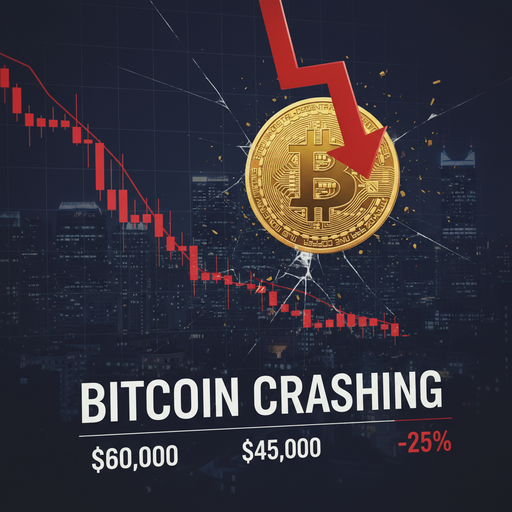
Market volatility continues as BTC breaks below the $74,000 key support level, with altcoins pulling back in sync. Are you buying the dip in batches or waiting for a better entry point?
💬 Today’s Discussion:
1️⃣ Bottom Signals: Where do you see BTC’s bottom — $70,000 or lower?
2️⃣ Market Drivers: Which recent macroeconomic news or rumors are influencing the market?
3️⃣ Dark Horses: Are there any resilient or outperforming tokens worth watching?
ShTap to Trade in Gate Square, Win up to 50 GT & Merch!
Click the trading widget in Gate Square content, complete a transaction, and take home 50 GT, Position Experience Vouchers, or exclusive Spring Festival merchandise.
Click the registration link to join
https://www.gate.com/questionnaire/7401
Enter Gate Square daily and click any trading pair or trading card within the content to complete a transaction. The top 10 users by trading volume will win GT, Gate merchandise boxes, position experience vouchers, and more.
The top prize: 50 GT.
 and gold prices shows a historically strong positive correlation, with occasional deviations, but a tendency to converge over the long term.
An important observation is that gold has a strong correlation with the TIP ETF, which itself correlates strongly with the S&P 500. This invalidates the common notion that gold performs well during recessions. Instead, rising inflation expectations tend to cause both gold and equities to rise simultaneously.
Evidence from Financial Trends and Chart Analysis Supporting a Bullish Market
Long-term gold charts over 50 years reveal two major bullish reversal patterns: the long descending wedge from the 1980s to the 1990s, and the secular cup-and-handle formation from 2013 to 2023.
The recent decade’s bullish reversal pattern is particularly powerful. According to fundamental chart principles, longer consolidation periods tend to lead to stronger subsequent reversals. This provides a robust basis for expecting a sustained upward trend in gold prices over the coming years.
From a 20-year chart perspective, a key pattern emerges: gold’s bullish market tends to start slowly and accelerate toward the end. The previous bull phase unfolded in three stages. Based on the completion of the cup-and-handle pattern from 2013 to 2023, a phased upward movement is anticipated to continue.
Relationship Between Monetary Policy and Money Supply
The monetary base M2 surged sharply in 2021, then stagnated in 2022. Historically, gold and the monetary base tend to move in the same direction, with gold often outperforming the monetary base.
The significant rise in gold prices in 2024 has caused the divergence between M2 and gold to reach an unsustainable level. This divergence did not last long as predicted. Currently, currency inflation is steadily increasing, directly impacting gold prices.
Similarly, CPI (Consumer Price Index) and gold prices are correlated, with temporary divergences followed by re-synchronization. Between 2026 and 2027, CPI and gold are expected to rise together, continuing a gentle upward trend.
Leading Indicators Indicating Gold Market Upside Potential
Indicators that lead gold prices include currency markets and credit markets, especially movements in the euro, government bonds, and the US dollar index.
When the euro is in a bullish trend, gold tends to rise, whereas a rising US dollar exerts downward pressure on gold. The long-term EUR/USD chart shows a constructive formation, creating a favorable environment for gold.
The bond market exhibits a positive correlation with gold, while bond yields are inversely correlated. After bonds bottomed and yields peaked in mid-2023, gold entered an upward phase. With global interest rate cuts anticipated, yields are unlikely to rise further, supporting gold.
Analysis of commercial net short positions in COMEX futures is also a key leading indicator. High levels of these positions tend to suppress gold prices. The current position suggests a moderate upward trend, with room for further sharp increases, as the basic factors like inflation expectations remain supportive.
Market Consensus and Gold Price Forecasts from Major Financial Institutions
Most major financial institutions project gold prices in 2025 within the range of approximately $2,700 to $2,800.
Bloomberg forecasts a broad range of $1,709 to $2,727 for 2025, reflecting market and analyst uncertainty. Goldman Sachs is more specific, predicting around $2,700.
Other key forecasts include:
These forecasts indicate that most institutions see gold in 2025 trading within the $2,700–$2,800 range, forming a clear market consensus.
In contrast, InvestingHaven’s forecast for tomorrow’s gold price is about $3,100, which is more bullish than other institutions. This divergence reflects strong confidence in leading indicators such as rising inflation and increased central bank demand. The highly bullish formation on the long-term gold chart provides a compelling narrative.
InvestingHaven’s Forecast Accuracy: Five Consecutive Years of Success
InvestingHaven’s gold price forecasts have demonstrated remarkable accuracy over the years. The company has correctly predicted gold prices for five consecutive years, attesting to the effectiveness of its analytical approach.
The only exception was the 2021 forecast ($2,200–$2,400), with all other years accurately predicted. This track record underscores that their 15-year methodology is not just a theoretical framework but has been empirically validated.
To maintain forecast accuracy, InvestingHaven continuously refines its methodology, analysis framework, and validation processes, ensuring high-quality analysis that stands apart from irresponsible predictions on social media.
Frequently Asked Questions About Gold Price Predictions
What will be the gold price in 2030?
The peak forecast for gold in 2030 ranges from $4,500 to $5,000. The $5,000 level is psychologically significant and could represent the peak price.
Is there a possibility that gold could reach $10,000?
In extreme market conditions, reaching $10,000 is not entirely out of the question. Environments like uncontrollable inflation similar to the 1970s or extreme geopolitical tensions could push gold to such levels.
What about gold prices beyond 2040?
Forecasting gold prices more than ten years ahead is nearly a fantasy. Every decade brings its own macroeconomic developments, and market conditions can change dramatically. Under normal circumstances, the $5,000 peak forecast for 2030 should be considered an upper limit for the near term.
Summary of Tomorrow’s Gold Price Forecast
From 2025 to 2030, the gold market is expected to enter a structural upward phase driven by rising inflation expectations, increasing currency supply, consensus among global financial institutions, and the completion of technical bullish reversal patterns. The long-term scenario of $3,100 (2025) to $5,000 (2030) is based on multiple analytical methods and a 15-year track record, offering high confidence in its validity.