

Trade
Basic
Futures
Futures
Hundreds of contracts settled in USDT or BTC
TradFi
Gold
Trade global traditional assets with USDT in one place
Options
Hot
Trade European-style vanilla options
Unified Account
Maximize your capital efficiency
Demo Trading
Futures Kickoff
Get prepared for your futures trading
Futures Events
Participate in events to win generous rewards
Demo Trading
Use virtual funds to experience risk-free trading
Earn
Launch
CandyDrop
Collect candies to earn airdrops
Launchpool
Quick staking, earn potential new tokens
HODLer Airdrop
Hold GT and get massive airdrops for free
Launchpad
Be early to the next big token project
Alpha Points
Trade on-chain assets and enjoy airdrop rewards!
Futures Points
Earn futures points and claim airdrop rewards
Investment
Simple Earn
Earn interests with idle tokens
Auto-Invest
Auto-invest on a regular basis
Dual Investment
Buy low and sell high to take profits from price fluctuations
Soft Staking
Earn rewards with flexible staking
Crypto Loan
0 Fees
Pledge one crypto to borrow another
Lending Center
One-stop lending hub
VIP Wealth Hub
Customized wealth management empowers your assets growth
Private Wealth Management
Customized asset management to grow your digital assets
Quant Fund
Top asset management team helps you profit without hassle
Staking
Stake cryptos to earn in PoS products
Smart Leverage
New
No forced liquidation before maturity, worry-free leveraged gains
GUSD Minting
Use USDT/USDC to mint GUSD for treasury-level yields

More


Trending Topics
View More80.05K Popularity
6.56K Popularity
1.96K Popularity
2.93K Popularity
7.5K Popularity



Pin
Gate Square | 2/5 Today's Hot Topic: #BuyTheDipOrWaitNow?
🎁 [Community Perk] Post with the topic or #BTC, 10 lucky users * $100 position Voucher.
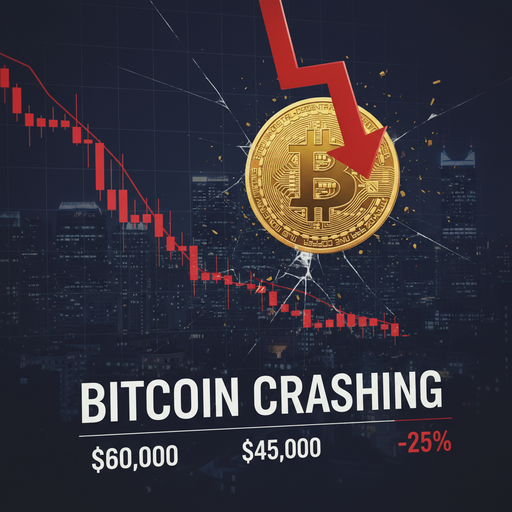
Market volatility continues as BTC breaks below the $74,000 key support level, with altcoins pulling back in sync. Are you buying the dip in batches or waiting for a better entry point?
💬 Today’s Discussion:
1️⃣ Bottom Signals: Where do you see BTC’s bottom — $70,000 or lower?
2️⃣ Market Drivers: Which recent macroeconomic news or rumors are influencing the market?
3️⃣ Dark Horses: Are there any resilient or outperforming tokens worth watching?
ShTap to Trade in Gate Square, Win up to 50 GT & Merch!
Click the trading widget in Gate Square content, complete a transaction, and take home 50 GT, Position Experience Vouchers, or exclusive Spring Festival merchandise.
Click the registration link to join
https://www.gate.com/questionnaire/7401
Enter Gate Square daily and click any trading pair or trading card within the content to complete a transaction. The top 10 users by trading volume will win GT, Gate merchandise boxes, position experience vouchers, and more.
The top prize: 50 GT.
![Spring Festival merchandise](https://exampl
Ethereum Layer 2 High-Performance Scaling: Practical Solutions for Efficient Transaction Activities
The high-level layer architecture of Ethereum has demonstrated outstanding efficiency in handling massive transaction volumes. This model separates different functions into distinct layers, allowing the mainnet to focus on core security while higher layers process complex transactions.
Record-breaking transaction volume with optimized costs
Recently, Ethereum recorded an unprecedented high with approximately 2.88 million transactions in 24 hours, according to Odaily. Notably, despite the surge in transaction volume, the average transaction fee remained low—a unique phenomenon reflecting a balance between high throughput and economic efficiency.
As of February 2026, Ethereum was trading at $2.29K, with a 5.76% decrease over the past 24 hours, indicating typical market volatility. The total transaction volume reached $753.25M, demonstrating ongoing investor interest in the platform.
High-level Layer 2: An efficient financial architecture model
Ethereum’s high-level layer model aligns well with the hierarchical logic of traditional financial infrastructure. In this structure, the base layer focuses on three main factors: security, finality, and settlement. The upper layers handle innovation, test new features, and manage the complexity of advanced transactions.
This modular architecture helps Ethereum operate smoothly even as usage increases. The mainnet has transitioned into a neutral payment layer, enabling Layer 2 solutions like Arbitrum, Optimism, and other protocols to develop independently without hindering the performance of the main chain.
Warning: Distinguishing real transaction activity from data noise
However, reports from analysts warn that the recent surge in transaction volume may include low-value activities, such as address spamming or automated transactions on stablecoins. These actions are especially common in USDC, USDT, and other stablecoin payments.
Therefore, assessing actual economic activity on Ethereum cannot rely solely on raw transaction volume figures. Additional metrics such as the actual transferred value, the number of unique addresses involved, and the rate of repeated interactions should be considered together to gain a more comprehensive view of the network’s true health.
The development of high-level layers continues to play a crucial role in Ethereum’s long-term scalability while maintaining fundamental security principles.