

Trade
Basic
Futures
Futures
Hundreds of contracts settled in USDT or BTC
TradFi
Gold
Trade global traditional assets with USDT in one place
Options
Hot
Trade European-style vanilla options
Unified Account
Maximize your capital efficiency
Demo Trading
Futures Kickoff
Get prepared for your futures trading
Futures Events
Participate in events to win generous rewards
Demo Trading
Use virtual funds to experience risk-free trading
Earn
Launch
CandyDrop
Collect candies to earn airdrops
Launchpool
Quick staking, earn potential new tokens
HODLer Airdrop
Hold GT and get massive airdrops for free
Launchpad
Be early to the next big token project
Alpha Points
Trade on-chain assets and enjoy airdrop rewards!
Futures Points
Earn futures points and claim airdrop rewards
Investment
Simple Earn
Earn interests with idle tokens
Auto-Invest
Auto-invest on a regular basis
Dual Investment
Buy low and sell high to take profits from price fluctuations
Soft Staking
Earn rewards with flexible staking
Crypto Loan
0 Fees
Pledge one crypto to borrow another
Lending Center
One-stop lending hub
VIP Wealth Hub
Customized wealth management empowers your assets growth
Private Wealth Management
Customized asset management to grow your digital assets
Quant Fund
Top asset management team helps you profit without hassle
Staking
Stake cryptos to earn in PoS products
Smart Leverage
New
No forced liquidation before maturity, worry-free leveraged gains
GUSD Minting
Use USDT/USDC to mint GUSD for treasury-level yields

More






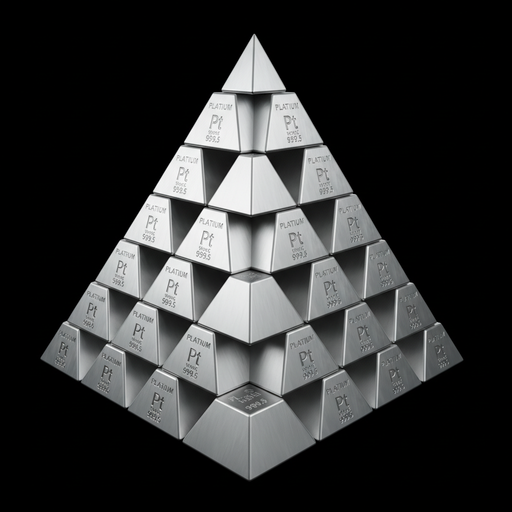
Various Metal Allocation Recommendations: Long-term Upward Potential Ranking — Copper (XCUUSDT) > Aluminum (XALUSDT) > Platinum (XPTUSDT) > Nickel (XNIUSDT) > Palladium (XPDUSDT) > Lead (XPBUSDT). The following analysis is based on supply and demand, macro factors, drivers, and risks.
I. Core Analysis of Industrial Metals
Copper (XCUUSDT) | ★★★★★ Most Stable and Strong
- Supply Side: Insufficient capital expenditure leading to limited new capacity; supply will be rigid by 2026. UBS forecasts a supply-demand gap of 330,000 tons.
- Demand Side: Driven by energy transition (power grids/storage/NEVs) + AI data centers; State Grid’s "14th Five-Year Plan" invests 4 trillion yuan (up 40%), demand lacks price elasticity.
- Macro and Risks: Rate cut cycle supports USD-denominated assets; short-term inventory fluctuations and macro volatility may cause pullbacks but do not alter the long-term upward trend.
- Target Range: London Copper $11,000–$13,000 per ton, with a roughly 25% upward shift in the midpoint.
Aluminum (XALUSDT) | ★★★★☆ Strong and Certain
- Supply Side: Global capacity ceiling + energy cost constraints limit new capacity; forecast gap of 880,000–990,000 tons by 2026.
- Demand Side: Driven by new energy (solar PV/storage) + lightweighting + accelerated "aluminum replacing copper"; AI computing power boosts aluminum demand for power infrastructure.
- Risks: Recycled aluminum supply is highly elastic; short-term high price volatility.
- Target Range: Shanghai Aluminum 23,000–25,000 yuan/ton, with potential gains exceeding 15%.
Nickel (XNIUSDT) | ★★★☆☆ Highly Elastic but Volatile
- Supply Side: Indonesia’s new capacity release leads to rapid supply growth; structural oversupply persists.
- Demand Side: Supported by high-nickel ternary batteries for NEVs, but growth is slowing.
- Risks: High supply elasticity; sharp price fluctuations; long-term dependence on battery technology changes.
Lead (XPBUSDT) | ★★☆☆☆ Weakest but Most Stable
- Supply Side: High proportion of recycled lead, ample supply.
- Demand Side: Mainly used in lead-acid batteries; accelerated renewable energy substitution; growth is sluggish.
- Conclusion: Strong defensive properties; limited long-term upside potential; suitable for bottom-positioning rather than main investment.
II. Core Analysis of Precious Metals
Platinum (XPTUSDT) | ★★★★☆ Significant Upside Potential
- Supply Side: South Africa’s power and labor issues limit mineral growth; from 2026–2030, mine supply CAGR is only 0.1%; low inventory (about 5 months of demand).
- Demand Side: Industrial demand (semiconductors/solar/hydrogen) recovers; hydrogen fuel cell installations increase by 40%; valuation below gold and silver, with room for correction.
- Risks: Possible slight oversupply in 2026; shrinking investment demand; high short-term volatility.
Palladium (XPDUSDT) | ★★☆☆☆ Weak Potential
- Supply Side: Mine supply CAGR from 2026–2030 is -0.7%; recycling supply is highly elastic.
- Demand Side: Automotive catalytic converter demand peaks; hydrogen energy substitution accelerates; demand growth is weak.
- Conclusion: Weaker financial attributes than platinum; supply-demand conflicts are not prominent; long-term upward momentum is insufficient.
III. Summary of Core Drivers and Risks
- Core Drivers: Deepening global rate cut cycles, energy transition and rigid AI computing demand, long-term insufficient capital expenditure on supply.
- Major Risks: Macro volatility, supply elasticity (recycled metals), technological route changes (e.g., battery materials), geopolitical disturbances.
IV. Allocation Recommendations
- Core Holdings: Copper + Aluminum, accounting for 60–70%, with the highest long-term certainty.
- Flexible Allocation: Platinum, accounting for 20–30%, to seize valuation recovery and industrial demand rebound opportunities.
- Cautious Participation: Nickel, small positions with strict stop-loss; Palladium and Lead, only for defensive allocation.
Would you like me to create a portfolio based on your acceptable risk level, such as a "30/50/20" or "50/30/20" ratio list, and mark the take-profit and stop-loss ranges for each category?