

Trade
Basic
Futures
Futures
Hundreds of contracts settled in USDT or BTC
TradFi
Gold
Trade global traditional assets with USDT in one place
Options
Hot
Trade European-style vanilla options
Unified Account
Maximize your capital efficiency
Demo Trading
Futures Kickoff
Get prepared for your futures trading
Futures Events
Participate in events to win generous rewards
Demo Trading
Use virtual funds to experience risk-free trading
Earn
Launch
CandyDrop
Collect candies to earn airdrops
Launchpool
Quick staking, earn potential new tokens
HODLer Airdrop
Hold GT and get massive airdrops for free
Launchpad
Be early to the next big token project
Alpha Points
Trade on-chain assets and enjoy airdrop rewards!
Futures Points
Earn futures points and claim airdrop rewards
Investment
Simple Earn
Earn interests with idle tokens
Auto-Invest
Auto-invest on a regular basis
Dual Investment
Buy low and sell high to take profits from price fluctuations
Soft Staking
Earn rewards with flexible staking
Crypto Loan
0 Fees
Pledge one crypto to borrow another
Lending Center
One-stop lending hub
VIP Wealth Hub
Customized wealth management empowers your assets growth
Private Wealth Management
Customized asset management to grow your digital assets
Quant Fund
Top asset management team helps you profit without hassle
Staking
Stake cryptos to earn in PoS products
Smart Leverage
New
No forced liquidation before maturity, worry-free leveraged gains
GUSD Minting
Use USDT/USDC to mint GUSD for treasury-level yields

More


Bhutan sells $22 million worth of Bitcoin! Mining costs double after halving, significantly reducing output
8h ago
CFTC Overturns Biden Proposal! Prediction Market Ban Reversed, Polymarket Legal Dilemma Temporarily Halted
8h ago
Trending Topics
View More79.56K Popularity
6.4K Popularity
1.92K Popularity
2.95K Popularity
7.42K Popularity



Pin
Gate Square | 2/5 Today's Hot Topic: #BuyTheDipOrWaitNow?
🎁 [Community Perk] Post with the topic or #BTC, 10 lucky users * $100 position Voucher.
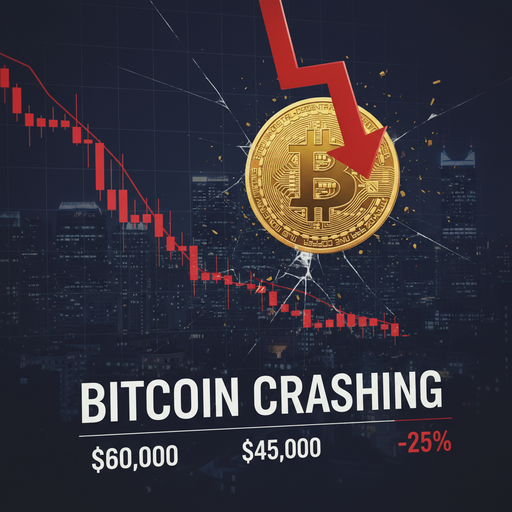
Market volatility continues as BTC breaks below the $74,000 key support level, with altcoins pulling back in sync. Are you buying the dip in batches or waiting for a better entry point?
💬 Today’s Discussion:
1️⃣ Bottom Signals: Where do you see BTC’s bottom — $70,000 or lower?
2️⃣ Market Drivers: Which recent macroeconomic news or rumors are influencing the market?
3️⃣ Dark Horses: Are there any resilient or outperforming tokens worth watching?
ShTap to Trade in Gate Square, Win up to 50 GT & Merch!
Click the trading widget in Gate Square content, complete a transaction, and take home 50 GT, Position Experience Vouchers, or exclusive Spring Festival merchandise.
Click the registration link to join
https://www.gate.com/questionnaire/7401
Enter Gate Square daily and click any trading pair or trading card within the content to complete a transaction. The top 10 users by trading volume will win GT, Gate merchandise boxes, position experience vouchers, and more.
The top prize: 50 GT.
 made clear this was about more than just code. It was political statement.
Satoshi Nakamoto registered domain name bitcoin.org on August 18, 2008, and created website at that address. On January 9, 2009, Nakamoto released version 0.1 of bitcoin software on SourceForge, launching the network by defining genesis block with reward of 50 bitcoins. This marked beginning of cryptocurrency revolution that would spawn thousands of projects and create entirely new asset class.
Satoshi Nakamoto’s Two-Year Public Activity Window
From early 2009 through late 2010, Satoshi Nakamoto was not only active but incredibly hands-on. He released first version of Bitcoin software, communicated with early adopters via emails and online forums, reviewed code contributions, and even managed project’s domain names and repositories. He was polite, technical, and deeply focused on Bitcoin’s mission—but never revealed anything personal. No face. No voice. No name beyond “Satoshi Nakamoto.”
Satoshi Nakamoto responded to questions, explained design decisions, and welcomed feedback, but kept focus strictly on technology. He continued collaborating with other developers on bitcoin’s software, making all modifications to source code himself until mid-2010. He then gave control of source code repository and network alert key to Gavin Andresen, and transferred several related domains to various prominent members of bitcoin community.
Then, just as quietly as he arrived, Satoshi Nakamoto stepped away. By end of 2010, his public activity ceased. In April 2011, he sent final email to developer Mike Hearn, saying simply, “I’ve moved on to other things.” And with that, Satoshi Nakamoto disappeared—for good. His last public post on P2P Foundation profile occurred in 2014, claiming the account had been hacked, raising questions about authenticity.
The $135 Billion Fortune That’s Never Been Touched
One of most fascinating aspects of Satoshi Nakamoto story is massive cache of Bitcoin tied to him. Blockchain analysis suggests Nakamoto mined about 1.1 million BTC in Bitcoin’s first year, most of which remains in addresses that have never moved a coin. At July 2025 prices exceeding $123,000 per BTC, that’s well over $135 billion sitting idle—enough to instantly crash market if ever sold.
But those coins haven’t moved in nearly two decades, and prevailing belief is they never will. Whether out of principle, security, or something else entirely, silence surrounding those wallets is part of what gives Bitcoin its mythic origin. In space filled with scams, rug pulls, and overhyped projects, fact that Bitcoin’s founder walked away without cashing out has become unlikely pillar of trust.
This untouched fortune makes Satoshi Nakamoto one of wealthiest people on planet—at least on paper. In November 2021, when bitcoin reached value over $68,000, his net worth would have been up to $73 billion, making him 15th-richest person in world at time. Current valuation exceeds $135 billion, placing Satoshi Nakamoto among top 20 wealthiest individuals globally if he were to reveal identity and prove ownership.
The question haunting crypto community: Will these coins ever move? Any transaction from Nakamoto’s known addresses would immediately trigger market panic, likely crashing Bitcoin price as investors rush to exit fearing founder liquidation. This creates perverse incentive structure where Nakamoto’s wealth paradoxically depends on never accessing it.
Prime Suspects: Who Could Be Satoshi Nakamoto?
Naturally, world has tried solving mystery. Countless individuals have been accused of being Satoshi Nakamoto, with varying degrees of plausibility.
Hal Finney – The Most Convincing Candidate
Hal Finney (1956-2014) was pre-bitcoin cryptographic pioneer and first person other than Nakamoto himself to use software, file bug reports, and make improvements. His home in Temple City, California, was few blocks from programmer named Dorian Satoshi Nakamoto. Forbes journalist Andy Greenberg had writing analysis consultancy Juola & Associates compare Finney’s writing to Nakamoto’s, finding it closest resemblance yet, closer than other candidates.
Greenberg theorized Finney may have been ghost writer on Nakamoto’s behalf, or used his neighbor’s identity as cover. However, after meeting Finney, seeing emails between him and Nakamoto, reviewing bitcoin wallet history (including first transaction from Nakamoto to Finney), and hearing his denial, Greenberg concluded Finney was telling truth. Finney passed away in 2014, taking any secrets to grave.
Nick Szabo – The Bit Gold Creator
In December 2013, blogger Skye Grey linked Nick Szabo to bitcoin whitepaper using stylometric analysis. Szabo is decentralized-currency enthusiast who published paper on “bit gold,” one of bitcoin’s precursors. He was known to use pseudonyms in 1990s. Financial author Dominic Frisby provides substantial circumstantial evidence but admits no proof that Nakamoto is Szabo.
In May 2011, Szabo said of bitcoin’s creator: “Myself, Wei Dai, and Hal Finney were only people I know of who liked the idea enough to pursue it to any significant extent until Nakamoto (assuming Nakamoto is not really Finney or Dai).” The New York Times’ Nathaniel Popper wrote “the most convincing evidence pointed to reclusive American man of Hungarian descent named Nick Szabo.” However, Szabo has consistently denied being Nakamoto.
Craig Wright – The Discredited Fraud
In December 2015, Wired and Gizmodo published stories suggesting Craig Steven Wright, Australian academic, “either invented bitcoin or is brilliant hoaxer.” Wright’s claim was initially supported by Gavin Andresen and former Bitcoin Foundation director Jon Matonis. However, many prominent bitcoin promoters remained unconvinced, with subsequent reports raising possibility evidence was elaborate hoax.
In March 2024, in Crypto Open Patents Association (COPA) case before High Court, Judge James Mellor ruled Wright was not Satoshi Nakamoto. The written judgment stated documents Wright submitted as evidence were forgeries, and Wright had “lied to court extensively and repeatedly.” On December 19, 2024, Wright was sentenced to one year in prison, suspended for two years, for contempt of court.
Peter Todd – The HBO Documentary Claim
In 2024, HBO documentary “Money Electric: The Bitcoin Mystery” directed by Cullen Hoback named former Bitcoin developer Peter Todd as allegedly being Satoshi Nakamoto. Hoback’s claim relied on chat message where Todd commented on technicality in one of Satoshi’s last posts. Todd denied being Nakamoto, calling it “ludicrous” and criticizing Hoback for “QAnon style coincidence-based conspiracy thinking.” Bitcoin developer community dismissed accusation due to weak circumstantial evidence.
Clues About Satoshi Nakamoto’s True Identity
Though Satoshi Nakamoto never revealed personal information when discussing technical matters, analysis of his communications provides clues. On P2P Foundation profile as of 2012, he claimed to be 37-year-old man who lived in Japan, giving birth date as April 5, 1975. Some theorize date referenced signing of Executive Order 6102 prohibiting gold ownership in United States, with 1975 as year it was repealed.
However, Satoshi Nakamoto was unlikely to be Japanese due to native-level English usage. Bitcoin whitepaper was not initially translated into Japanese. Analysis of post timing indicates activity aligning with western time zone. Stefan Thomas graphed timestamps of each of Nakamoto’s 500+ bitcoin forum posts, showing steep decline to almost none between 5 a.m. and 11 a.m. GMT. This pattern held even on weekends, suggesting Nakamoto was consistently asleep during this time—inconsistent with someone living in Japan.
Evidence Suggesting British or Commonwealth Origin
British English Usage: Source code comments and forum posts used expressions like “bloody hard,” “lad,” and “mate”
Commonwealth Spellings: “Grey,” “colour,” “flat,” and “maths” rather than American variants
Double-Spaced Sentences: British typing convention rather than American single-spacing
Times Newspaper Reference: Genesis block embedded text from London’s Times suggesting UK location
The use of British English and slang in both source code comments and forum postings led to speculation Satoshi Nakamoto is British or citizen of Commonwealth nation. Incorporation of text from London Times in first bitcoin block further suggests UK location.
Why the Mystery Still Matters in 2026
You might wonder: does it really matter who Satoshi Nakamoto is anymore? For many, answer is yes—because Nakamoto’s return could upend ecosystem. If he were to suddenly use his coins or reassert control, it could spook markets and trigger debates over centralization. Any movement from Nakamoto’s known wallets would immediately dominate headlines and likely crash Bitcoin price as panic selling ensues.
On other hand, his absence reinforces Bitcoin’s ethos: no one person controls network. Unlike Ethereum with visible figurehead in Vitalik Buterin, Bitcoin is leaderless by design. That’s part of its appeal and part of what gives it resilience. Fact that no one has ever claimed mantle convincingly helps preserve idea that Bitcoin belongs to no one—and to everyone.
The mystery also protects Bitcoin from regulatory targeting. If Satoshi Nakamoto were known individual, governments could attempt compelling cooperation, seizing assets, or prosecuting for regulatory violations. Anonymity shields Bitcoin from such centralized attacks, maintaining its censorship-resistant properties.
A Legacy Larger Than Any One Person
Regardless of who Satoshi Nakamoto is or was, his legacy is enormous. What started as whitepaper has grown into trillion-dollar asset class, with tens of thousands of developers, millions of users, and growing share of global financial conversation. His invention inspired new industries, disrupted old ones, and forced governments to rethink future of money.
Every time someone makes Bitcoin transaction, mines block, or stores value in BTC rather than fiat currency, they participate in vision first laid out in that nine-page PDF in 2008. And mystery of Nakamoto? That’s just part of story now. Whether he’s gone forever or watching from shadows, Satoshi Nakamoto remains ghost at heart of crypto’s most enduring legend.
The greatest unsolved mystery of digital age may never be solved—and perhaps that’s exactly as intended. Satoshi Nakamoto’s disappearance and refusal to claim $135 billion fortune suggests someone (or some group) who valued Bitcoin’s success over personal recognition or wealth. This selflessness, whether principled choice or practical necessity, elevated Bitcoin beyond typical startup with identifiable founder into decentralized movement transcending individual identity.
FAQ
Who is Satoshi Nakamoto?
Satoshi Nakamoto is pseudonymous person or group who invented Bitcoin, published its whitepaper in 2008, and launched the network in 2009. True identity remains unknown despite extensive investigation. Nakamoto disappeared in 2011 and has never been definitively identified.
How much Bitcoin does Satoshi Nakamoto own?
Satoshi Nakamoto is estimated to own between 750,000 and 1.1 million BTC mined in Bitcoin’s first year. At July 2025 prices exceeding $123,000 per BTC, this fortune exceeds $135 billion. None of these coins have ever moved.
Is Hal Finney Satoshi Nakamoto?
Hal Finney was leading candidate due to his cryptographic expertise, early Bitcoin involvement, and writing style similarity. However, Finney consistently denied being Nakamoto before passing away in 2014. Evidence suggests he may have been ghost writer or close collaborator but not Satoshi himself.
Did Craig Wright prove he’s Satoshi Nakamoto?
No, UK High Court Judge James Mellor ruled in March 2024 that Craig Wright is not Satoshi Nakamoto. The judgment stated Wright’s evidence documents were forgeries and he “lied to court extensively and repeatedly.” Wright was sentenced to suspended prison term for contempt.
Why hasn’t Satoshi Nakamoto touched his Bitcoin?
Unknown. Theories include: lost private keys, principled decision not to profit personally, fear of legal consequences, or being deceased. The untouched fortune strengthens Bitcoin’s credibility, as founder walking away without cashing out demonstrates commitment beyond personal enrichment.
Could Satoshi Nakamoto be a group rather than individual?
Yes, many believe Satoshi Nakamoto represents group of people rather than individual. Code quality, breadth of expertise, and consistent activity patterns suggest potential team effort. Bitcoin whitepaper uses “we” pronoun, supporting group theory.