

Trade
Basic
Futures
Futures
Hundreds of contracts settled in USDT or BTC
TradFi
Gold
Trade global traditional assets with USDT in one place
Options
Hot
Trade European-style vanilla options
Unified Account
Maximize your capital efficiency
Demo Trading
Futures Kickoff
Get prepared for your futures trading
Futures Events
Participate in events to win generous rewards
Demo Trading
Use virtual funds to experience risk-free trading
Earn
Launch
CandyDrop
Collect candies to earn airdrops
Launchpool
Quick staking, earn potential new tokens
HODLer Airdrop
Hold GT and get massive airdrops for free
Launchpad
Be early to the next big token project
Alpha Points
Trade on-chain assets and enjoy airdrop rewards!
Futures Points
Earn futures points and claim airdrop rewards
Investment
Simple Earn
Earn interests with idle tokens
Auto-Invest
Auto-invest on a regular basis
Dual Investment
Buy low and sell high to take profits from price fluctuations
Soft Staking
Earn rewards with flexible staking
Crypto Loan
0 Fees
Pledge one crypto to borrow another
Lending Center
One-stop lending hub
VIP Wealth Hub
Customized wealth management empowers your assets growth
Private Wealth Management
Customized asset management to grow your digital assets
Quant Fund
Top asset management team helps you profit without hassle
Staking
Stake cryptos to earn in PoS products
Smart Leverage
New
No forced liquidation before maturity, worry-free leveraged gains
GUSD Minting
Use USDT/USDC to mint GUSD for treasury-level yields

More


Trending Topics
View More74.65K Popularity
3.83K Popularity
1.5K Popularity
1.92K Popularity
5.89K Popularity



Pin
Gate Square | 2/5 Today's Hot Topic: #BuyTheDipOrWaitNow?
🎁 [Community Perk] Post with the topic or #BTC, 10 lucky users * $100 position Voucher.
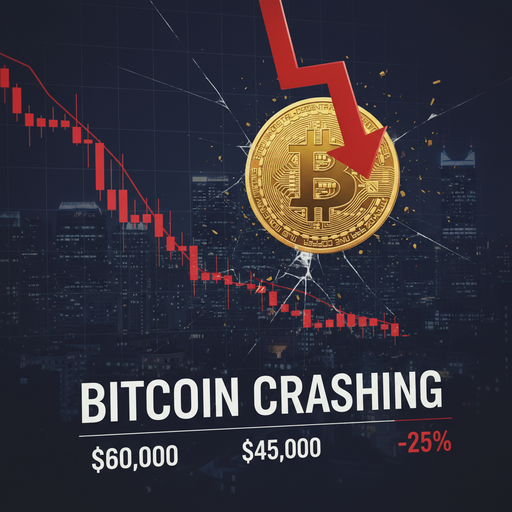
Market volatility continues as BTC breaks below the $74,000 key support level, with altcoins pulling back in sync. Are you buying the dip in batches or waiting for a better entry point?
💬 Today’s Discussion:
1️⃣ Bottom Signals: Where do you see BTC’s bottom — $70,000 or lower?
2️⃣ Market Drivers: Which recent macroeconomic news or rumors are influencing the market?
3️⃣ Dark Horses: Are there any resilient or outperforming tokens worth watching?
ShTap to Trade in Gate Square, Win up to 50 GT & Merch!
Click the trading widget in Gate Square content, complete a transaction, and take home 50 GT, Position Experience Vouchers, or exclusive Spring Festival merchandise.
Click the registration link to join
https://www.gate.com/questionnaire/7401
Enter Gate Square daily and click any trading pair or trading card within the content to complete a transaction. The top 10 users by trading volume will win GT, Gate merchandise boxes, position experience vouchers, and more.
The top prize: 50 GT.
 would give users control over their data, GameFi would let players truly “own their assets.” Back then, everyone’s Twitter timeline was full of discussions on “how Web3 will change the world,” each new project seemed like an entry to the future.
And what about 2025? Friend.tech is dead, Lens Protocol is unused. ENS has become a hype tool; besides wallet addresses, no one really uses DID. The collapse of Axie and StepN proved that “X to Earn” was just a Ponzi scheme in disguise.
But Kyle didn’t completely deny everything. He still believes in stablecoins, DeFi, RWA—these financial applications—and in projects like Helium, and still bets on Zama’s fully homomorphic encryption tech.
The question is: do these things still need “faith”? Or just rational calculation?
Some say Kyle’s departure is a betrayal; I see it as “disenchantment.” From a Crypto Evangelist to a Crypto Realist. This transformation might be the coming-of-age ritual the industry must go through.
Last Time We Lost Money, This Time We Lose Confidence
In 2022, when FTX exploded, the entire industry hit rock bottom. Luna went to zero, Three Arrows Capital went bankrupt, the market halved again and again. But at that time, there was still a belief: The market crashed, but we were not wrong. As long as we persisted, the bull market would prove everything.
Back then, we still believed in Ethereum’s “endgame narrative,” from PoW to PoS, from single chain to modular, thinking it was the only way to become the “world computer.”
We also believed in Solana’s “performance revolution,” thinking that if we endured the bear market, high-performance chains would win.
We believed in Web3’s “paradigm shift,” thinking the next chapter of the internet would be decentralization.
And now, in 2025?
Objectively, the data is much better than the last low point: BTC once broke $100,000, ETFs got approved, crypto is more closely linked with Wall Street.
But subjectively, the feeling is completely different—prices are higher, but confidence is lower.
The “culprit” or “truth mirror” is AI.
When ChatGPT was released in 2023, everyone was talking about “how AI will change the world.” Meanwhile, what was crypto discussing? “Should L2 sequencers be decentralized?” One was talking about productivity revolution, the other debating technical details.
Over the next two years, AI’s progress was dazzling: Gemini, Claude, ChatGPT—three giants competing, with new breakthroughs every day. Recently, everyone’s obsessed with OpenClaw.
And crypto? More and more L2s and chains, but no one can clearly say “why do we need 100 L2s,” even Vitalik has reflected on past mistakes. NFTs, GameFi, SocialFi—fads that come and go.
Today, the biggest innovation in this cycle is actually Meme Coins and “re-inventing gambling.”
I often ask myself late at night: AI is redefining productivity with technology, crypto is redistributing wealth through financial games. The former creates, the latter transfers. What are we really building?
Kyle’s departure is fundamentally a “value choice.”
He chose to pursue AI, longevity tech, robotics—fields that truly “expand human frontiers.” And crypto, at least for now, feels more like an upscale casino.
But I Still Don’t Want to Leave
By now, you might think I’m about to announce I’m quitting too.
But no, I want to place one more “bet.”
Kyle can leave because he’s financially free and can chase bigger dreams. But for someone like me, a young person, crypto still means: a relatively fair “social mobility” channel, a “permissionless” testing ground—no degrees, no background, no connections needed—just cognition and courage. An emerging industry not yet fully monopolized by elites.
More importantly, maybe the grand narrative of Web3 has failed, but that doesn’t mean crypto is valueless.
The revolution in financial infrastructure has already happened: stablecoins’ daily settlement volume surpasses Visa, DeFi enables people worldwide to access financial services and RWA 24/7.
Most critically: I still haven’t figured out my own answer.
Kyle spent 8 years concluding that “Crypto is just an asset ledger, nothing more, nothing less.”
But I’m still just a rookie. Why should I judge now?
Maybe in a few years, I’ll leave too, just like him. But at least for now, I want to stay at the table and see if this industry still hides some possibilities we haven’t seen.
In years to come, crypto might no longer be the “revolution that overturns everything,” but rather the value settlement layer of the AI era.
By then, I’ll order a coffee, chat again, and reflect on the scenery along the way.