

Trade
Basic
Futures
Futures
Hundreds of contracts settled in USDT or BTC
TradFi
Gold
Trade global traditional assets with USDT in one place
Options
Hot
Trade European-style vanilla options
Unified Account
Maximize your capital efficiency
Demo Trading
Futures Kickoff
Get prepared for your futures trading
Futures Events
Participate in events to win generous rewards
Demo Trading
Use virtual funds to experience risk-free trading
Earn
Launch
CandyDrop
Collect candies to earn airdrops
Launchpool
Quick staking, earn potential new tokens
HODLer Airdrop
Hold GT and get massive airdrops for free
Launchpad
Be early to the next big token project
Alpha Points
Trade on-chain assets and enjoy airdrop rewards!
Futures Points
Earn futures points and claim airdrop rewards
Investment
Simple Earn
Earn interests with idle tokens
Auto-Invest
Auto-invest on a regular basis
Dual Investment
Buy low and sell high to take profits from price fluctuations
Soft Staking
Earn rewards with flexible staking
Crypto Loan
0 Fees
Pledge one crypto to borrow another
Lending Center
One-stop lending hub
VIP Wealth Hub
Customized wealth management empowers your assets growth
Private Wealth Management
Customized asset management to grow your digital assets
Quant Fund
Top asset management team helps you profit without hassle
Staking
Stake cryptos to earn in PoS products
Smart Leverage
New
No forced liquidation before maturity, worry-free leveraged gains
GUSD Minting
Use USDT/USDC to mint GUSD for treasury-level yields

More


Trending Topics
View More75.31K Popularity
4.04K Popularity
1.46K Popularity
1.96K Popularity
6.02K Popularity



Pin
Gate Square | 2/5 Today's Hot Topic: #BuyTheDipOrWaitNow?
🎁 [Community Perk] Post with the topic or #BTC, 10 lucky users * $100 position Voucher.
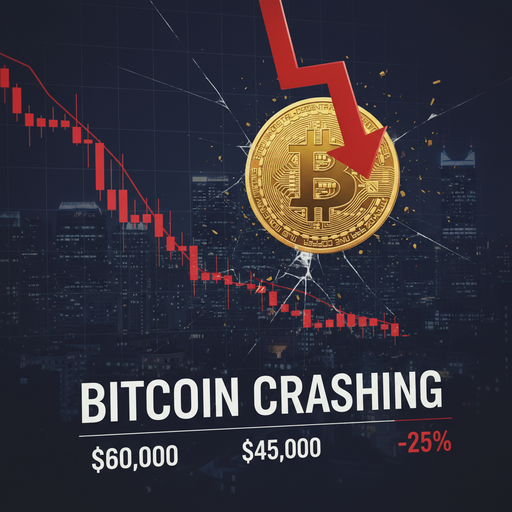
Market volatility continues as BTC breaks below the $74,000 key support level, with altcoins pulling back in sync. Are you buying the dip in batches or waiting for a better entry point?
💬 Today’s Discussion:
1️⃣ Bottom Signals: Where do you see BTC’s bottom — $70,000 or lower?
2️⃣ Market Drivers: Which recent macroeconomic news or rumors are influencing the market?
3️⃣ Dark Horses: Are there any resilient or outperforming tokens worth watching?
ShTap to Trade in Gate Square, Win up to 50 GT & Merch!
Click the trading widget in Gate Square content, complete a transaction, and take home 50 GT, Position Experience Vouchers, or exclusive Spring Festival merchandise.
Click the registration link to join
https://www.gate.com/questionnaire/7401
Enter Gate Square daily and click any trading pair or trading card within the content to complete a transaction. The top 10 users by trading volume will win GT, Gate merchandise boxes, position experience vouchers, and more.
The top prize: 50 GT.
![Spring Festival merchandise](https://exampl
Greenland: The Geopolitical Friction That Could Slow Global Economy to 2.6% Growth
A recent report reveals how tensions surrounding the geopolitical control of an Arctic territory could trigger catastrophic economic consequences on a global scale. The analysis conducted by economists from top research institutions modeled a disturbing scenario: if diplomatic friction between the United States and the European Union over Greenland escalates into a full-blown trade confrontation, global GDP growth could drop to just 2.6%, representing a severe slowdown in economic activity.
The Roots of Friction: Why Greenland Matters Strategically
Greenland is not just a remote, sparsely populated island in the Arctic. Its strategic significance rests on three fundamental pillars that explain why it is at the center of a modern geopolitical dispute. The Arctic location offers control over emerging shipping routes and military oversight of an increasingly contested region among major powers. Additionally, the island holds massive reserves of rare minerals – critical resources for advanced technology and global transitions to clean energy. For the United States, acquiring Greenland would represent a huge strategic gain. For the European Union and Denmark, which holds sovereignty over the territory, any change to the status quo poses a direct threat to European autonomy.
This friction between conflicting strategic visions is exactly the kind of tension that can spill over from politics into markets. When major economic powers face irreconcilable differences over strategic resources, the impulse to impose trade penalties often follows.
The Economic Significance of a US-EU Trade Conflict
If this geopolitical dispute escalated into a full-scale tariff war, the numbers would be devastating. The economic model projects that the United States would suffer a reduction of up to 1.0% in its GDP growth compared to baseline forecasts, while the Eurozone would face a contraction of a similar magnitude – between 0.9% and 1.1%. While these figures may seem modest in isolation, their true significance emerges when considering the economic weight of these two blocs: together, they account for nearly 45% of global GDP.
Historically, the transatlantic economy has grown together. Deep integration of supply chains, reciprocal direct investment, and trade flows have powered mutual expansion for decades. However, in a conflict scenario, this same integration becomes a conduit for simultaneous contraction. The negative effects would not be contained within the US and Europe; they would propagate through interconnected economies worldwide, affecting everything from Asian manufacturers to African exporters.
The projected global growth rate of 2.6% illustrates this cascade. To put it in context: this rate would fall below the average of 2.8% to 2.9% of the three years prior to the report and would represent the lowest annual expansion since the 2009 financial crisis, excluding the exceptionally disruptive year of 2020.
Cascade of Impacts: From Tariffs to Global Unemployment
A tariff war would trigger not only a direct economic shock but a series of secondary and tertiary repercussions that would amplify the damage. Manufacturers would begin to “de-risk” operations, relocating production outside the US and EU in search of safer jurisdictions – a process that would raise costs and reduce global operational efficiency. Currency markets would experience extreme turbulence, with volatility fueled by geopolitical uncertainty. Stock markets would face ongoing downward pressure.
Furthermore, multilateral institutions like the World Trade Organization would become even more marginalized, eroding the rules-based global trading order that has evolved since post-war times. Export-dependent nations – particularly in Africa, Asia, and Latin America – would suffer declines in external demand and destabilization of commodity prices, exacerbating already deep global inequalities.
What Policymakers Need to Understand
The analysis by Oxford Economics experts does not present this scenario as inevitable but as plausible – a possible outcome that must be weighed against the geopolitical gains of the dispute. The caveat is critical: the model quantifies the predictable economic costs of a conflict that has not yet occurred, providing decision-makers with precise data on what is at stake.
The broader significance of this analysis is that the global economy remains deeply interconnected and that geopolitical ambitions can quickly translate into widespread economic suffering. A friction over an Arctic island, left unresolved, could turn into a global economic crisis. The main lesson for policymakers is one of careful risk management: Greenland’s strategic appeal must be weighed against its predictable and severe economic costs.
The next decade will depend on careful diplomacy and mutual recognition that some geopolitical conflicts have economic prices that no party is truly willing to pay.