

Trade
Basic
Futures
Futures
Hundreds of contracts settled in USDT or BTC
TradFi
Gold
Trade global traditional assets with USDT in one place
Options
Hot
Trade European-style vanilla options
Unified Account
Maximize your capital efficiency
Demo Trading
Futures Kickoff
Get prepared for your futures trading
Futures Events
Participate in events to win generous rewards
Demo Trading
Use virtual funds to experience risk-free trading
Earn
Launch
CandyDrop
Collect candies to earn airdrops
Launchpool
Quick staking, earn potential new tokens
HODLer Airdrop
Hold GT and get massive airdrops for free
Launchpad
Be early to the next big token project
Alpha Points
Trade on-chain assets and enjoy airdrop rewards!
Futures Points
Earn futures points and claim airdrop rewards
Investment
Simple Earn
Earn interests with idle tokens
Auto-Invest
Auto-invest on a regular basis
Dual Investment
Buy low and sell high to take profits from price fluctuations
Soft Staking
Earn rewards with flexible staking
Crypto Loan
0 Fees
Pledge one crypto to borrow another
Lending Center
One-stop lending hub
VIP Wealth Hub
Customized wealth management empowers your assets growth
Private Wealth Management
Customized asset management to grow your digital assets
Quant Fund
Top asset management team helps you profit without hassle
Staking
Stake cryptos to earn in PoS products
Smart Leverage
New
No forced liquidation before maturity, worry-free leveraged gains
GUSD Minting
Use USDT/USDC to mint GUSD for treasury-level yields

More


Trending Topics
View More74.67K Popularity
3.83K Popularity
1.52K Popularity
1.92K Popularity
5.89K Popularity



Pin
Gate Square | 2/5 Today's Hot Topic: #BuyTheDipOrWaitNow?
🎁 [Community Perk] Post with the topic or #BTC, 10 lucky users * $100 position Voucher.
Market volatility continues as BTC breaks below the $74,000 key support level, with altcoins pulling back in sync. Are you buying the dip in batches or waiting for a better entry point?
💬 Today’s Discussion:
1️⃣ Bottom Signals: Where do you see BTC’s bottom — $70,000 or lower?
2️⃣ Market Drivers: Which recent macroeconomic news or rumors are influencing the market?
3️⃣ Dark Horses: Are there any resilient or outperforming tokens worth watching?
ShTap to Trade in Gate Square, Win up to 50 GT & Merch!
Click the trading widget in Gate Square content, complete a transaction, and take home 50 GT, Position Experience Vouchers, or exclusive Spring Festival merchandise.
Click the registration link to join
https://www.gate.com/questionnaire/7401
Enter Gate Square daily and click any trading pair or trading card within the content to complete a transaction. The top 10 users by trading volume will win GT, Gate merchandise boxes, position experience vouchers, and more.
The top prize: 50 GT.
![Spring Festival merchandise](https://exampl
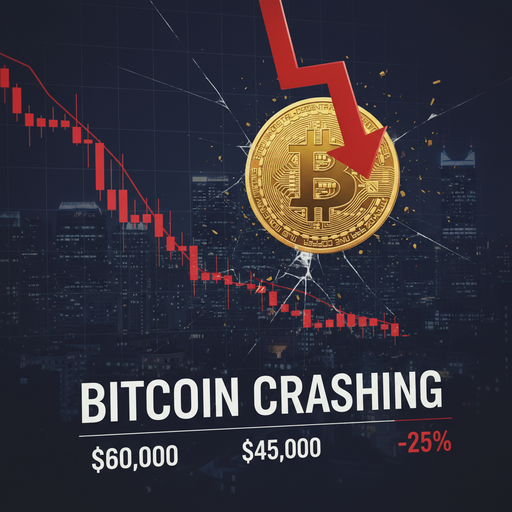
Bitcoin Freefall After October 10: Why Investors Are Choosing Gold Over Crypto
When the crypto market experienced pressure over the past few weeks, an intriguing phenomenon emerged from blockchain analytics data. According to Santiment, a significant decline in the stablecoin market actually indicates a much deeper investor reallocation strategy — they are not waiting to buy the dip, but are fully shifting into traditional stores of value like gold and silver. This capital shift is not just tactical fluctuation, but a strong signal of changing market sentiment following the October 10 event.
What Happened on October 10? The Turning Point of the Crypto Market
October 10 became an unforgettable moment for the modern crypto market. On that day — which fell on a Thursday — a massive deleveraging crisis hit the ecosystem. Over $19 billion in leveraged crypto positions were liquidated in a single, severe trading session. Bitcoin, which had previously hovered around $121,500, sharply corrected past $103,000 in a short period. This was not just ordinary volatility; it was one of the largest margin wipeouts in the current market cycle.
The impact of that flash crash continues to resonate. From the pre-crash peak to now, Bitcoin has further declined to around $71,450 — representing a nearly 41% loss from its high. This ongoing pressure has created market trauma, making investors think twice before taking high-risk positions.
Total Stablecoins Out of the Ecosystem: A Signal of Panic
Santiment identified that over the 10 days since the market shock, total stablecoin capitalization decreased by $2.24 billion. This figure tells a clear story: investors are not just holding back from buying, they are actively converting digital assets back into fiat currency. “The decline in stablecoin market cap indicates liquidity is flowing out of the ecosystem, not available for buying at lower prices,” the analytics firm stated in its official release.
Contrasting with crypto exchange responses, demand for gold and silver shows a dramatic rebound. Gold has appreciated over 20% since October, surpassing and exceeding the $5,000 per troy ounce level. Silver, often a marginalized subject, is even more impressive — its value doubled in the same period. This reflects the fundamental principle of crisis investing: when uncertainty rises, capital flows into proven stores of value, not into markets known for volatility.
Why Precious Metals Outperform Bitcoin in the Capital Race?
Global macroeconomic uncertainty continues to pressure risk assets. Turbulent geopolitics, rising government bond yields, and confusion over the direction of global monetary policy create an environment unfavorable for digital asset holders. In scenarios like this, gold and silver — which have served as hedges for centuries — naturally attract capital flows.
Santiment emphasizes that “when uncertainty increases, money often flows into assets considered as stores of value during economic stress, rather than into markets known for volatility like crypto.” This statement captures the essence of the ongoing fund shift. Despite its evolving store-of-value status, Bitcoin is still perceived as a risky asset in a heavy macro climate.
Tether Makes a Strategic Pivot: Massive Gold Accumulation
The rotation toward precious metals is not limited to retail and traditional institutional investors. Even key players within the crypto ecosystem are following this pattern. Leading stablecoin issuer Tether emerged as a significant institutional gold buyer toward the end of last year. Data shows that Tether acquired 27 metric tons of gold in the fourth quarter alone, with a purchase value of around $4.4 billion.
This strategy was not a hasty decision. Large-scale gold purchases reflect a deep recognition that hard assets — especially precious metals — offer the stability sought by platforms and investors amid market turbulence. Tether, as an entity bridging the crypto and traditional markets, is choosing to reduce pure crypto exposure and increase backing with more conservative assets.
When Will the Crypto Recovery Begin? Santiment Offers Clues
Although current market outlooks are bleak, Santiment provides a historical framework for recovery. According to the firm’s analysis, a meaningful crypto market recovery historically only begins after one thing happens: stablecoin supply starts to grow again. “A strong recovery usually occurs when stablecoin market cap stops falling and begins to rise,” Santiment asserts. “That signals new capital entering the ecosystem and renewed investor confidence.”
The current condition is actually the opposite. With stablecoin liquidity continuing to shrink, risk appetite across the market remains suppressed. Altcoins, which rely on stablecoin liquidity for trading, face disproportionate pressure. Bitcoin itself, although relatively more resilient than altcoins in such environments, remains hindered by limited capital availability. “Bitcoin often fares better than altcoins in this scenario,” Santiment adds, “but the shrinking stablecoin supply still limits the potential for gains across the crypto market.”
Therefore, the path to recovery from the free fall after October 10 will heavily depend on whether investors show enough confidence to start reallocating capital back into the digital ecosystem. Until then, the crypto market will remain shadowed by the striking events of that Thursday.