

Trade
Basic
Futures
Futures
Hundreds of contracts settled in USDT or BTC
TradFi
Gold
Trade global traditional assets with USDT in one place
Options
Hot
Trade European-style vanilla options
Unified Account
Maximize your capital efficiency
Demo Trading
Futures Kickoff
Get prepared for your futures trading
Futures Events
Participate in events to win generous rewards
Demo Trading
Use virtual funds to experience risk-free trading
Earn
Launch
CandyDrop
Collect candies to earn airdrops
Launchpool
Quick staking, earn potential new tokens
HODLer Airdrop
Hold GT and get massive airdrops for free
Launchpad
Be early to the next big token project
Alpha Points
Trade on-chain assets and enjoy airdrop rewards!
Futures Points
Earn futures points and claim airdrop rewards
Investment
Simple Earn
Earn interests with idle tokens
Auto-Invest
Auto-invest on a regular basis
Dual Investment
Buy low and sell high to take profits from price fluctuations
Soft Staking
Earn rewards with flexible staking
Crypto Loan
0 Fees
Pledge one crypto to borrow another
Lending Center
One-stop lending hub
VIP Wealth Hub
Customized wealth management empowers your assets growth
Private Wealth Management
Customized asset management to grow your digital assets
Quant Fund
Top asset management team helps you profit without hassle
Staking
Stake cryptos to earn in PoS products
Smart Leverage
New
No forced liquidation before maturity, worry-free leveraged gains
GUSD Minting
Use USDT/USDC to mint GUSD for treasury-level yields

More


Trending Topics
View More77.9K Popularity
5.55K Popularity
1.66K Popularity
2.39K Popularity
6.92K Popularity



Pin
Gate Square | 2/5 Today's Hot Topic: #BuyTheDipOrWaitNow?
🎁 [Community Perk] Post with the topic or #BTC, 10 lucky users * $100 position Voucher.
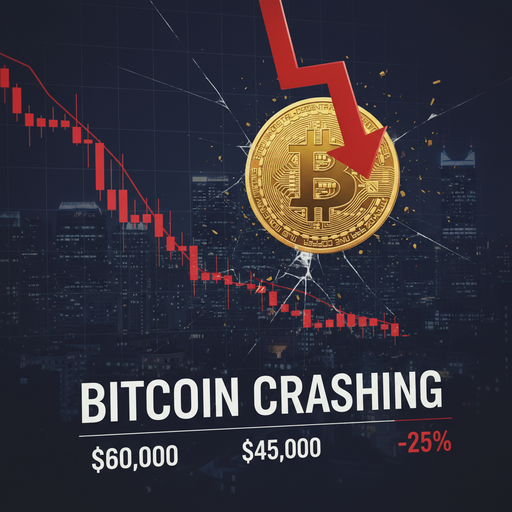
Market volatility continues as BTC breaks below the $74,000 key support level, with altcoins pulling back in sync. Are you buying the dip in batches or waiting for a better entry point?
💬 Today’s Discussion:
1️⃣ Bottom Signals: Where do you see BTC’s bottom — $70,000 or lower?
2️⃣ Market Drivers: Which recent macroeconomic news or rumors are influencing the market?
3️⃣ Dark Horses: Are there any resilient or outperforming tokens worth watching?
ShTap to Trade in Gate Square, Win up to 50 GT & Merch!
Click the trading widget in Gate Square content, complete a transaction, and take home 50 GT, Position Experience Vouchers, or exclusive Spring Festival merchandise.
Click the registration link to join
https://www.gate.com/questionnaire/7401
Enter Gate Square daily and click any trading pair or trading card within the content to complete a transaction. The top 10 users by trading volume will win GT, Gate merchandise boxes, position experience vouchers, and more.
The top prize: 50 GT.
![Spring Festival merchandise](https://exampl
ERC-8004 Launch: Giving AI an ID Card, a New Business for Ethereum?
Deep Tide TechFlow
On January 28th, Ethereum officially announced that the ERC-8004 protocol is about to go live on the mainnet.
We mentioned this standard in our October last year. If you’re not familiar, you can refer to this: “x402 Gradually Overlapping, Exploring New Asset Opportunities in ERC-8004 in Advance”
Actually, it has an official name, called “Trustless Agents,” or trustless proxies. In plain language, it roughly means:
Issuing on-chain ID cards to AI Agents.
The Ethereum Foundation rarely promotes an ERC standard so vigorously. They even established a dedicated team called dAI, included ERC-8004 in their 2026 strategic roadmap, drafted the proposal with Google, Coinbase, MetaMask, and held a Trustless Agents Day at DevConnect in November to build momentum.
The last time Ethereum took such a serious stance on standards was with ERC-20 and ERC-721.
One defined tokens, the other defined NFTs.
Now, is it AI’s turn?
Ethereum’s AI Anxiety
Why the rush?
Look at this data. According to Cookie.fun’s statistics, the market cap distribution of AI Agent tokens shows Solana and Base combined account for 96%. On the Ethereum mainnet, projects with recognizable AI Agents are fewer than you can count on one hand.
Projects with recognizable AI Agents on Ethereum mainnet are fewer than you can count on one hand.
By April 2025, ETH to BTC exchange rate dropped to 0.017, a five-year low. At that time, everyone said Ethereum was not the future.
During the DeFi boom, Ethereum was the main stage. During the NFT craze, Ethereum was still the main stage. But as AI Agent hype heats up, the main stage has shifted.
Solana processes 36 million transactions per day, while Ethereum mainnet handles 1.13 million. High gas fees and slow speeds lead developers to vote with their feet. Virtuals Protocol launched on Base, while earlier, ai16z chose Solana, and even Coinbase’s own AI projects are not on Ethereum mainnet.
Ethereum needs a new story.
ERC-8004 might just be the beginning of that story.
Let’s Review ERC-8004
Back to this standard itself.
How exactly does ERC-8004 issue on-chain IDs to AI Agents?
No need to understand technical details; just know there are three registries.
The first is the Identity Registry. Based on ERC-721, each AI Agent mints an NFT to prove “I am me.”
The second is the Reputation Registry. Records the agent’s historical performance, who has used it, reviews, and whether it has done bad things.
The third is the Verification Registry. Allows third-party organizations to endorse the agent, e.g., “This agent has passed certain security audits.”
These three ledgers together solve a key problem: when two AI Agents meet on-chain, how do they know if the other is trustworthy?
In the past, the answer was: we don’t know, only humans can judge. ERC-8004’s answer is to check on-chain records.
This set of mechanisms is not something Ethereum came up with on its own.
Its underlying logic is derived from Google’s A2A protocol released last year, Agent-to-Agent, enabling AI to communicate and invoke each other. ERC-8004 adds a layer on top:
Blockchain-backed trust.
Google’s A2A solves communication issues; Ethereum’s ERC-8004 addresses trust issues. One manages communication, the other manages identity verification.
Is Issuing IDs a Good Business?
Let’s speculate boldly: Ethereum’s logic might be like this:
For AI Agents to be truly useful, they need to manage their own funds. Not just tweeting or chatting, but directly operating on-chain assets—signing transactions, calling contracts, arbitrage across protocols…
Right now, no one dares to do this at scale. The reason is simple: how do you know this agent won’t transfer your money away? Recently, the popular ClawdBot has already seen community reports of negative incidents.
Web2’s solution is platform endorsement. You use OpenAI’s API, trust comes from OpenAI. If something goes wrong, you find OpenAI.
Web3 has no such thing. Agents are open-source, deployment is permissionless, running on-chain without oversight. When you call a stranger’s agent service, who is behind it? Is the code safe? Has it maliciously acted before? These questions are untraceable.
In essence, ERC-8004 is about bringing traditional financial KYC processes onto the blockchain. Ethereum is betting that once AI Agents start handling real money, this system will become a necessity.
DeFi protocols that want to integrate external agents must first verify their on-chain identity. Institutions using agents for trade execution need to check their history. Auditing firms can issue on-chain certifications for agents, similar to security audits for smart contracts.
This is a strategic positioning move.
Ethereum recognizes it has lost at the execution layer but still holds trust layer assets. Institutional recognition, security audit ecosystems, TVL—these are Ethereum’s existing assets. ERC-8004 packages these assets into a standard, aiming to define “what compliant AI Agents look like” before others do.
The question is: does this need exist now?
Standards Precede Demand
After discussing Ethereum’s strategy, let’s get to reality. What are current on-chain AI Agents doing?
Following the wave of AI memes last year and the rapid progress of leading AI companies’ products over the past year or two, few are still paying attention to on-chain AI Agents.
But they are still making progress.
For example, ai16z has rebranded as ElizaOS, transforming from a single agent into a cross-chain platform; Virtuals Protocol is developing AI DApps, planning to enter physical robotics by 2026; other projects like AI Agents in Surf can automatically execute DeFi trading strategies.
But here’s the question: do they really need ERC-8004?
Luna’s users trust Luna because it’s developed by the Virtuals core team. Agents on ElizaOS are used because they run within ElizaOS’s framework; Surf executes strategies for you, often trusting the application itself.
Trust comes from the platform, not from on-chain identity.
ERC-8004’s envisioned scenario is: a stranger agent approaches you, with no platform endorsement, no brand recognition—you can only judge its trustworthiness through on-chain records.
When will this scenario happen?
When AI Agents truly achieve cross-protocol, cross-platform, cross-organization autonomous invocation. An agent borrows from Aave, trades on Uniswap, then moves to another protocol for yield—all without human approval…
But that scenario doesn’t exist yet.
Current AI Agents, no matter how complex, fundamentally operate within a single platform. They don’t need to prove themselves to unfamiliar protocols because they don’t even attempt to access them.
Given the current crypto market enthusiasm, they have no reason to knock on each other’s doors—unless they can collaboratively create a new narrative.
Therefore, ERC-8004 addresses a future problem.
If AI Agents evolve from toys to tools, Ethereum’s trust infrastructure becomes valuable. If the agent economy grows large enough, cross-platform invocation becomes routine, and ERC-8004 could collect fees.
Many “ifs.”
So, this forward-looking strategy is likely to be first adopted by institutions.
By the end of 2025, SharpLink Gaming announced a $170 million investment into Ethereum staking strategies. Around the same time, net ETH outflows from exchanges exceeded 23,000 ETH, flowing into private wallets and staking protocols.
This capital might be for Ethereum five to six months down the line.
For retail investors, ERC-8004 isn’t a strong catalyst.
Betting on ERC-8004 itself? It’s an open standard, no tokens involved, no direct investment—only some related small projects. Betting on Ethereum is possible, but its price is influenced by many factors; AI Agents are just one narrative.
Therefore, there’s currently no clean target to precisely bet on the proposition that “AI Agents need on-chain identity.”
Ethereum isn’t entirely the infrastructure for AI, and its identity anxiety won’t be fully alleviated by AI. The business of making AI IDs remains a long road.
Join the official ChainCatcher community
_Telegram subscription:
_Official Twitter account: