

Trade
Basic
Futures
Futures
Hundreds of contracts settled in USDT or BTC
TradFi
Gold
Trade global traditional assets with USDT in one place
Options
Hot
Trade European-style vanilla options
Unified Account
Maximize your capital efficiency
Demo Trading
Futures Kickoff
Get prepared for your futures trading
Futures Events
Participate in events to win generous rewards
Demo Trading
Use virtual funds to experience risk-free trading
Earn
Launch
CandyDrop
Collect candies to earn airdrops
Launchpool
Quick staking, earn potential new tokens
HODLer Airdrop
Hold GT and get massive airdrops for free
Launchpad
Be early to the next big token project
Alpha Points
Trade on-chain assets and enjoy airdrop rewards!
Futures Points
Earn futures points and claim airdrop rewards
Investment
Simple Earn
Earn interests with idle tokens
Auto-Invest
Auto-invest on a regular basis
Dual Investment
Buy low and sell high to take profits from price fluctuations
Soft Staking
Earn rewards with flexible staking
Crypto Loan
0 Fees
Pledge one crypto to borrow another
Lending Center
One-stop lending hub
VIP Wealth Hub
Customized wealth management empowers your assets growth
Private Wealth Management
Customized asset management to grow your digital assets
Quant Fund
Top asset management team helps you profit without hassle
Staking
Stake cryptos to earn in PoS products
Smart Leverage
New
No forced liquidation before maturity, worry-free leveraged gains
GUSD Minting
Use USDT/USDC to mint GUSD for treasury-level yields

More


Trending Topics
View More77.9K Popularity
5.55K Popularity
1.66K Popularity
2.39K Popularity
6.92K Popularity



Pin
Gate Square | 2/5 Today's Hot Topic: #BuyTheDipOrWaitNow?
🎁 [Community Perk] Post with the topic or #BTC, 10 lucky users * $100 position Voucher.
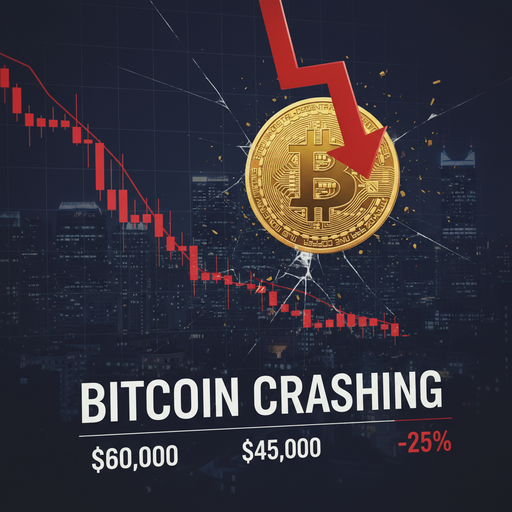
Market volatility continues as BTC breaks below the $74,000 key support level, with altcoins pulling back in sync. Are you buying the dip in batches or waiting for a better entry point?
💬 Today’s Discussion:
1️⃣ Bottom Signals: Where do you see BTC’s bottom — $70,000 or lower?
2️⃣ Market Drivers: Which recent macroeconomic news or rumors are influencing the market?
3️⃣ Dark Horses: Are there any resilient or outperforming tokens worth watching?
ShTap to Trade in Gate Square, Win up to 50 GT & Merch!
Click the trading widget in Gate Square content, complete a transaction, and take home 50 GT, Position Experience Vouchers, or exclusive Spring Festival merchandise.
Click the registration link to join
https://www.gate.com/questionnaire/7401
Enter Gate Square daily and click any trading pair or trading card within the content to complete a transaction. The top 10 users by trading volume will win GT, Gate merchandise boxes, position experience vouchers, and more.
The top prize: 50 GT.
 silver futures hit the daily limit-down, closing at 21,446 yuan/kg, a total decline of 16.71%. From the perspective of the domestic and international silver price spread, on that day, London silver spot prices closed at $79.2 per ounce. After considering import VAT, the premium of SHFE silver futures over LME silver decreased from 29.8% at the end of January to 7.46% at the close on February 3. In the early hours of February 4, the main SHFE silver contract’s night session closed up 5.93%, at 22,393 yuan/kg.
Key Points
Silver futures end their limit-down streak, indicating that the current liquidity shock is essentially over. Since November 2025, silver has taken over from gold and copper to enter a major upward wave, becoming a key indicator of bullish sentiment in the commodity markets. “Silver, copper, lithium” have become the three main pillars of strong commodity market momentum. The upward trend in silver has also activated the rotation sequence among commodities. Since 2026, the bullish momentum in commodities has followed a transmission chain: “Precious metals (gold, silver, platinum, palladium) → base metals (copper, aluminum, tin, nickel) → oil and petrochemical industries,” with even agricultural products showing signs of movement. However, commodity rotation also involves downward movement. The core commodity in this decline is silver futures. For example, on February 2, the sequence of commodity market limit-downs was: “Silver/Tin → Platinum/Palladium → Shanghai Nickel → Copper/Aluminum → Crude Oil/Fuel Oil → Lithium Carbonate.” The transmission logic of downward movement across commodity categories mainly follows two paths: 1) Silver futures hitting the limit-down triggers margin calls in the futures market, leading to the selling of related positions and commodities to meet margin requirements, causing related sectors and varieties to decline; 2) Silver futures hitting the limit-down prevents position reduction or stop-loss, prompting short positions in related varieties to hedge silver holdings, leading to their decline. When silver futures hit the limit-down overnight from February 2 to 3, the liquidity risk transmission mechanism in the commodity market was triggered, with sectors highly correlated with silver experiencing a wave of limit-downs. Therefore, the process of liquidity clearing in silver is also a process of market risk alleviation. The opening of the limit-down on SHFE silver futures during the day session on February 3 signals the end of this liquidity shock.
From a volatility perspective, silver futures have not yet fully overcome liquidity risks. During the strong rally in January, both gold and silver implied volatilities rose rapidly. During this decline, silver futures even experienced “rising wave followed by limit-down.” On February 2, the at-the-money implied volatility of silver futures options reached 148%. After silver futures hit the limit-down on February 3, volatility remained above 100%, far exceeding the 2025 average of 27%, indicating that although silver futures opened the limit-down, they still need to “reduce volatility” to stabilize from emotional and liquidity perspectives. Gold futures options volatility is also at historically high levels. As of the close on February 3, the implied volatility of gold futures at the money remained near 40%, higher than the 2025 average of 19%. Gold still needs time, and silver still needs space, to fully resolve the unresolved liquidity risks.
After the liquidity shock, the core logic of the commodity sector remains unchanged. Each round of liquidity shocks and panic-driven sharp declines in the commodity market, after clearing high-leverage and high-risk overextended varieties, also saw some products driven by supply-demand and industrial chain improvement logic being “misaffected” by liquidity risks. As the risk center gradually subsides, these misjudged or mispriced commodities and sectors tend to revert to their fundamental valuation logic, presenting better entry opportunities than during the rotation-driven upward phases. In our 2026 macro asset allocation outlook report “Liquidity and Technology-Driven Capital Markets,” we outlined three main themes for the 2026 commodity market. After experiencing liquidity shocks, commodities with solid fundamentals still hold investment value throughout the year.
Precious metals sector: Long-term narrative remains unchanged, shifting from broad-based gains to a digestion phase. Looking ahead to 2026, due to the “double easing” of US fiscal and monetary policies, the global political rightward shift, and fiscal easing, the weakening trend of global sovereign currency credit persists. The “de-dollarization” narrative remains an important driver supporting gold prices. In the short term, the sudden change in Federal Reserve monetary policy expectations and liquidity clearing ended the “crazy rally” of precious metals in January. Currently, the market needs time to digest the uncertainty in Fed policy paths, but under the long-term narrative, gold is likely to oscillate around key support levels, accumulating energy for a future breakout. Attention should be paid to the support levels of CME and LME gold at the 60-day moving average.
Non-ferrous metals: Liquidity shocks are over, and supply-demand valuation anchors remain solid. After gold signaled the start of commodity rotation upward in 2022, more economically sensitive non-ferrous metals like copper and aluminum became the primary transmission targets. Since 2025, the prosperity of “new economy” sectors such as AI computing power, chips, and green energy has improved demand expectations, pushing copper, aluminum, and other non-ferrous commodities to new highs. From the supply-demand perspective, during China’s “14th Five-Year Plan” period and beyond, cultivating “new productive forces” remains a key trend for economic growth. The active development of AI, new energy, robotics, chips, and other “new economy” sectors will continue to benefit copper, aluminum, and similar varieties. The demand growth and supply shortages driven by these emerging industries form a “shortage narrative” that anchors their value. Despite the significant adjustments caused by the sudden liquidity shock in early 2026, the pricing mechanism of non-ferrous metals remains rooted in real industry supply and demand. Commodities with solid fundamentals still have long positions worth holding.
Chemical sector: The “anti-involution” theme extends, and the sector’s prosperity may continue to rise in 2026. In the second half of 2025, rising prices of precious and non-ferrous metals transmitted to the chemical sector. Due to the complexity and fragmentation of chemical products and supply chains, the increase in chemical prices is supported both by the “anti-involution” theme—supply-side capacity reductions—and expectations of demand improvement. On the cost side, geopolitical conflicts in January boosted crude oil prices, improving downstream chemical industry price expectations. On the demand side, downstream demand in the chemical industry shows structural differentiation: traditional sectors like construction and textiles remain subdued, but emerging industries such as energy storage are experiencing rapid growth. The structural change in demand for emerging industries has ended the long “price reduction and destocking” phase since 2025. In 2026, the expectation of downstream “active inventory replenishment” has boosted the chemical sector’s prosperity. Since 2026, the chemical sector has also become an important target for capital inflows. Although the plunge in precious metals dragged down chemical stocks, the main driver of chemical prices remains their industry fundamentals and inventory cycles. The improvement in supply-demand structure in fine chemicals could sustain industry prosperity, making the chemical sector an important area that might be “mispriced” during the “anti-involution” theme.
New energy metals: Dual support from industry cycles and policy incentives. In July 2025, under the “anti-involution” rally, lithium carbonate and other new energy metals gradually emerged from the lows. By the end of 2025, lithium carbonate prices had increased by over 120% from their lows earlier in the year. As the core variety of the “anti-involution” theme, excess capacity in lithium carbonate is expected to improve as new capacity is brought online and existing capacity is optimized. Under the combined effects of demand growth stabilization and capacity restructuring, the “anti-involution” core varieties are gradually moving toward supply-demand balance. The new energy metals sector still offers long opportunities, with potential for continued leadership in the “anti-involution” theme.