


Futures
Access hundreds of perpetual contracts
TradFi
Gold
One platform for global traditional assets
Options
Hot
Trade European-style vanilla options
Unified Account
Maximize your capital efficiency
Demo Trading
Introduction to Futures Trading
Learn the basics of futures trading
Futures Events
Join events to earn rewards
Demo Trading
Use virtual funds to practice risk-free trading
Launch
CandyDrop
Collect candies to earn airdrops
Launchpool
Quick staking, earn potential new tokens
HODLer Airdrop
Hold GT and get massive airdrops for free
Launchpad
Be early to the next big token project
Alpha Points
Trade on-chain assets and earn airdrops
Futures Points
Earn futures points and claim airdrop rewards


More






UK Suspends Cryptocurrency Political Donations: Regulatory Pause, Campaign Impacts, and Industry Implications
#UKToSuspendCryptoPoliticalDonations The intersection of cryptocurrency and political finance has emerged as one of the most debated topics in modern governance, particularly as digital assets gain widespread adoption across multiple sectors. Cryptocurrencies, by design, offer speed, borderless transfers, and decentralized mechanisms that have revolutionized how value is exchanged globally. Yet, when applied to political donations, these same characteristics introduce unique challenges that lawmakers and regulators are still grappling with. The United Kingdom’s recent decision to suspend cryptocurrency political donations marks a critical moment in this ongoing evolution, signaling a cautious approach to integrating emerging technologies with the democratic process. This announcement reflects both the potential risks associated with unregulated digital contributions and the growing recognition that digital assets are no longer peripheral to mainstream financial and political systems. Historically, political donations have been closely regulated to maintain transparency, accountability, and fairness in democratic processes. In the UK, these regulations have been codified over decades, with stringent reporting requirements designed to prevent undue influence from individuals, corporations, or foreign entities. The rise of cryptocurrencies, however, challenges these frameworks. Unlike traditional bank-based contributions, crypto transactions can be pseudonymous, instantaneous, and irreversible, complicating efforts to trace the source, evaluate the amount, and ensure compliance with legal limits. While blockchain technology provides a transparent ledger, its decentralized nature and potential use of privacy-enhancing tools create an inherent tension between innovation and regulatory oversight. As political campaigns increasingly look to digital-first methods to engage donors, the need to reconcile these issues has become urgent. The adoption of cryptocurrency donations in political campaigns was initially seen as a niche, tech-forward initiative. Enthusiasts argued that it democratized access to fundraising, allowing younger and more digitally savvy supporters to participate in ways that were previously inaccessible. Crypto donations also offered potential benefits in terms of efficiency, cost reduction, and international participation. Small political movements and grassroots campaigns, in particular, viewed digital assets as an alternative to traditional fundraising, providing a means to compete with established parties that relied on conventional financial channels. Early experiments with crypto donations demonstrated both the promise and the pitfalls of this approach. While campaigns were able to collect funds quickly, challenges such as valuation volatility, reporting discrepancies, and potential legal ambiguity soon became apparent. The UK’s political ecosystem, with its long-standing commitment to transparency and electoral integrity, has watched these developments closely. Policymakers have expressed concern that cryptocurrencies, if left unregulated in the political context, could enable circumvention of established laws, allowing foreign entities or undisclosed actors to exert influence through opaque contributions. In response, the government has moved to temporarily suspend crypto donations, providing time to evaluate and develop a robust regulatory framework. This approach reflects a broader principle observed in global financial governance: the need to strike a balance between enabling technological innovation and protecting public trust in institutions. The debate over crypto political donations is also part of a wider discussion on the role of digital assets in society. Beyond politics, cryptocurrencies are increasingly integrated into banking, remittances, decentralized finance, and investment portfolios. Governments and regulatory bodies worldwide are tasked with managing the dual objectives of fostering innovation while mitigating risks such as money laundering, fraud, and financial instability. Political contributions, due to their direct link to democratic legitimacy, present a particularly sensitive case. The UK’s suspension is emblematic of the broader challenge: establishing rules that permit the use of digital assets in socially beneficial ways without undermining the institutions and norms that sustain public confidence. Several other countries have already confronted similar dilemmas, albeit with differing strategies. In the United States, federal law permits crypto donations to political campaigns, but rigorous disclosure requirements and reporting rules are strictly enforced to ensure transparency. In parts of the European Union, certain jurisdictions have outright restricted or banned digital asset contributions, while others have allowed them under tightly regulated conditions. These examples illustrate the global diversity of approaches and highlight the difficulties of creating a standardized model. The UK’s decision, therefore, must be understood not only in domestic terms but also within the context of international regulatory trends, where lessons from other jurisdictions are carefully considered in policy formulation. From a political perspective, the suspension has immediate and potential long-term consequences for campaigns and political actors. Parties that had embraced digital-first fundraising strategies may experience short-term reductions in contributions and must adapt quickly to comply with the new framework. At the same time, the suspension serves as a signal to the broader public that electoral integrity remains a top priority, reinforcing trust in democratic processes. By pausing crypto donations, the government buys time to engage stakeholders, examine technical and legal challenges, and build mechanisms that could eventually allow compliant, secure use of digital assets in political fundraising. The UK government’s approach also reflects a careful, staged method of policymaking. Rather than immediately banning cryptocurrency in all contexts, the suspension acts as a controlled intervention, allowing regulators to conduct impact assessments, consult experts, and develop a comprehensive legislative framework. This measured approach acknowledges the potential benefits of crypto contributions while mitigating the risks of unregulated adoption. It also provides a precedent for how governments can approach other areas of digital finance—where innovation is rapid, but public accountability and transparency cannot be compromised. In conclusion, the suspension of cryptocurrency political donations in the United Kingdom represents a landmark moment at the intersection of finance, technology, and democracy. It underscores the transformative potential of digital assets, the challenges they present to traditional regulatory systems, and the careful balancing act required to integrate innovation without undermining public trust. As the UK develops a regulatory framework for crypto political contributions, the world will be watching closely. This decision has implications not only for domestic politics but also for global approaches to digital finance, highlighting the growing significance of cryptocurrencies as both a financial and societal force. The Announcement and Policy Details The announcement by the United Kingdom government to suspend cryptocurrency political donations represents a significant intervention in the evolving relationship between digital assets and democratic finance. It was issued as part of a broader review of political finance rules, intended to address concerns about transparency, compliance, and the potential for digital assets to circumvent traditional regulatory safeguards. Officials emphasized that the suspension is temporary, aimed at creating a controlled environment in which policymakers can fully assess the risks and develop a robust framework that allows for responsible, regulated use of crypto in political campaigns. This approach demonstrates a careful balance: acknowledging the innovative potential of cryptocurrency while prioritizing the integrity of the democratic process. At its core, the suspension specifically targets donations made in the form of decentralized digital currencies such as Bitcoin, Ethereum, and other widely traded tokens that can be transferred pseudonymously. The government has clarified that existing fiat contributions, credit card donations, and other conventional fundraising mechanisms remain fully operational, ensuring that political campaigns are not deprived of traditional funding channels. By narrowing the scope to digital assets that lack full traceability, the policy seeks to mitigate the risk of anonymous or foreign influence while leaving room for potential future inclusion once a transparent and auditable system is established. The decision follows extensive consultation with regulatory bodies, political parties, blockchain experts, and civil society groups. These discussions highlighted several key challenges associated with crypto donations. First, the volatile nature of cryptocurrency valuations can lead to discrepancies in reporting and compliance, complicating the calculation of contribution limits and required disclosures. Second, the pseudonymous nature of blockchain transactions makes it difficult to verify donor identities, raising concerns about compliance with anti-money-laundering and counter-terrorism financing requirements. Third, the decentralized nature of digital assets introduces technical and operational hurdles for enforcement, as monitoring and auditing contributions requires specialized tools and expertise that are not yet universally available to electoral oversight authorities. Under the suspension, political parties and candidates are prohibited from accepting new contributions in crypto, and those who have already received digital donations are required to report them to the relevant electoral authorities and convert them into fiat currency or withhold them until a compliant framework is in place. Enforcement mechanisms include penalties for non-compliance, which may range from fines to restrictions on campaign activity. Regulatory authorities are expected to monitor adherence closely, using a combination of blockchain analysis, transaction reporting, and independent audits. This temporary suspension acts as both a preventive measure and a preparatory step toward more structured regulation. The UK government has also highlighted the intention to use this suspension period to develop a comprehensive legislative framework that integrates the advantages of blockchain technology while addressing the inherent risks. Proposed measures under consideration include mandatory identity verification for donors, reporting requirements aligned with fiat donation standards, and mechanisms to ensure accurate valuation at the time of contribution. Additional considerations involve the design of specialized digital wallets that can only accept compliant contributions, integration with electoral commission oversight systems, and protocols to prevent circumvention through third-party intermediaries or offshore platforms. Political analysts note that the timing of the announcement is strategic. With general elections approaching and political fundraising increasingly competitive, the suspension serves as both a regulatory safeguard and a signal to campaigns that compliance and transparency remain paramount. By acting preemptively, the government avoids reactive measures that could disrupt campaigns mid-cycle or create uncertainty about the legality of ongoing fundraising activities. Furthermore, the announcement reinforces the principle that technological innovation must operate within the boundaries of public accountability, particularly when it intersects with core democratic processes. The suspension also carries implications for campaign strategy and donor engagement. Political campaigns that had embraced cryptocurrency donations as a means of connecting with younger or more digitally active supporters must adapt quickly. Many parties may pivot toward alternative digital fundraising channels, such as online fiat contributions, crowdfunding platforms, or engagement-driven membership programs. Meanwhile, campaigns must implement compliance measures to ensure that existing crypto funds are properly reported and managed in accordance with the suspension rules. This transition period is likely to be a test of operational agility for political organizations, as well as a demonstration of their commitment to transparency and legal compliance. From a broader policy perspective, the suspension highlights the UK government’s intention to lead in defining best practices for the intersection of digital finance and political regulation. The move has drawn attention internationally, as other countries monitor the UK’s approach to determining the extent to which cryptocurrencies can participate in regulated political systems. Policymakers have emphasized that while the suspension limits immediate use, it is not an outright ban. The government envisions a future framework in which secure, transparent, and auditable crypto donations could be permitted, provided they meet rigorous compliance standards. In this sense, the suspension functions as a temporary pause, creating space for careful regulatory design rather than stifling innovation altogether. Furthermore, the announcement details ongoing efforts to engage with technical experts, electoral commissions, and blockchain platforms to develop practical solutions. These include proposals for digital wallets with built-in compliance features, reporting tools that can automatically convert and value contributions in fiat terms, and integration with existing donation reporting systems. By addressing both the legal and technological dimensions of crypto donations, the UK aims to establish a model that is replicable across other sectors of digital finance, demonstrating that innovation and accountability can coexist in a regulated framework. Finally, the suspension reflects broader societal and political priorities. In an era where cryptocurrencies are gaining traction not only as investment vehicles but also as instruments of influence, governments are increasingly focused on maintaining public trust in democratic institutions. The temporary pause in crypto political donations underscores a recognition that while innovation is desirable, it must not compromise transparency, fairness, or accountability. By carefully managing the introduction of digital assets into political finance, the UK is setting a precedent for responsible, measured adoption of emerging technologies in sensitive areas of governance.
Impact on Political Campaigns The United Kingdom’s temporary suspension of cryptocurrency political donations represents a pivotal moment for political campaigns, introducing both challenges and opportunities. Campaigns that had embraced digital assets as part of their fundraising strategy are now forced to adapt to a regulatory environment that emphasizes compliance, transparency, and traceability. The immediate impact is evident in multiple dimensions, including financial planning, donor engagement, operational processes, and strategic positioning. Understanding these effects is critical for political parties and candidates who wish to navigate this period successfully while maintaining momentum in their campaigns. One of the most immediate consequences of the suspension is the reduction in available funding streams for campaigns that had actively solicited cryptocurrency donations. For younger, technology-driven campaigns, this shift can be particularly significant. Cryptocurrencies had enabled smaller parties and grassroots movements to access a broader, digitally native donor base that was previously difficult to reach through traditional fundraising channels. These contributions were often faster, lower-cost, and more flexible than conventional fiat donations. With the suspension in effect, campaigns must redirect efforts toward alternative channels, such as credit card donations, direct bank transfers, or online crowdfunding platforms. This transition may require the development of new infrastructure and communication strategies to maintain donor engagement. Campaigns must also consider the operational challenges posed by the suspension. Teams responsible for compliance, reporting, and financial management must now integrate new procedures to handle existing cryptocurrency contributions. These procedures include accurately documenting donations already received, converting digital assets into fiat currencies, and ensuring that all reporting obligations are met in accordance with electoral law. The suspension effectively introduces a dual operational model: one for conventional donations and another for cryptocurrency contributions pending regulatory clarity. This additional complexity can strain campaign resources, particularly for smaller organizations that may lack dedicated compliance departments. Strategically, the suspension forces campaigns to reassess their engagement tactics with digital-first audiences. Crypto donations were not merely a funding mechanism; they were also a symbol of technological sophistication and inclusivity. Younger voters and tech-savvy supporters often view digital assets as emblematic of innovation and modernization in politics. Campaigns that previously highlighted crypto participation as part of their identity may need to recalibrate messaging and outreach strategies to maintain appeal. This could involve emphasizing alternative forms of digital engagement, such as social media-driven micro-donations, interactive online events, or gamified supporter programs. The suspension also introduces a temporal element to campaign planning. Parties must evaluate which contributions fall under the new rules, determine how to manage in-progress donations, and anticipate future adjustments once a compliant framework is established. This uncertainty can complicate budgeting, forecasting, and financial projections, as the timing and magnitude of contributions may fluctuate based on regulatory developments. Campaign managers must develop contingency plans to ensure operational continuity while remaining adaptable to evolving guidance from electoral authorities. Another critical aspect of impact relates to compliance risk. Political campaigns that fail to adhere to the suspension could face legal and reputational consequences. Penalties may include fines, restrictions on fundraising activities, or disqualification from receiving certain types of public funding. Consequently, campaign teams must implement robust monitoring systems to ensure that all crypto-related activity aligns with the suspension guidelines. This includes internal audits, transaction tracking, and possibly coordination with blockchain analytics firms to verify that contributions originate from compliant sources. The heightened scrutiny underscores the broader message that innovation cannot circumvent established accountability mechanisms. Beyond immediate operational and financial implications, the suspension carries long-term strategic considerations. Political parties are now prompted to evaluate the role of digital assets within broader campaign strategies. While crypto contributions may be temporarily unavailable, the eventual establishment of a regulated framework could present renewed opportunities. Forward-thinking campaigns may invest in infrastructure that anticipates future regulatory compliance, including digital wallets with built-in reporting features, donor identity verification tools, and integration with electoral reporting systems. By positioning themselves as early adopters of compliant digital fundraising mechanisms, parties can gain a competitive advantage once crypto donations are reinstated. The suspension also affects coalition-building and cross-party dynamics. Parties that previously relied on crypto contributions as part of joint fundraising initiatives must renegotiate financial agreements and operational coordination. This may involve revising joint campaign budgets, redefining donor communication strategies, and ensuring consistent compliance across participating organizations. The regulatory pause introduces a leveling effect: campaigns that were previously advantaged by tech-forward fundraising now operate under the same constraints as more traditional parties, potentially shifting competitive dynamics. In addition to structural and financial impacts, there is a significant psychological effect on both campaigns and donors. Supporters who were motivated to contribute using digital assets may feel temporarily excluded from participation. Maintaining engagement during this suspension period requires proactive communication, reassurance about compliance measures, and transparency regarding how crypto contributions will be handled once regulations are clarified. Campaigns must strike a balance between educating donors, preserving enthusiasm, and ensuring adherence to the suspension. Case studies from other jurisdictions provide valuable insights into managing these challenges. In the United States, for example, campaigns that previously solicited Bitcoin contributions had to implement conversion and reporting protocols to comply with Federal Election Commission rules. Parties that invested in infrastructure to manage crypto donations effectively were able to resume digital fundraising quickly once regulations were clarified. Conversely, campaigns without robust systems experienced delays, compliance difficulties, and reduced fundraising efficiency. The UK’s suspension offers a similar opportunity: parties that proactively develop compliant digital fundraising mechanisms will be positioned to capitalize on future regulatory clarity. The suspension also has potential implications for electoral equity. Smaller, grassroots campaigns that relied heavily on crypto contributions may face financial strain, potentially limiting their ability to compete with well-funded, established parties. This highlights the need for complementary policies or guidance to support equitable fundraising opportunities, ensuring that the suspension does not inadvertently disadvantage emerging political voices. At the same time, the move may strengthen the perception of fairness and transparency, reinforcing public trust in the political process by preventing untraceable or foreign contributions. Finally, the suspension emphasizes the interconnectedness of campaign finance, technological innovation, and regulatory foresight. Political campaigns operate in a complex ecosystem where legal compliance, donor engagement, and technological infrastructure intersect. The UK’s temporary suspension provides a controlled environment in which campaigns can adjust, experiment with alternative fundraising models, and prepare for a future in which digital assets may be reintegrated under a compliant, transparent framework. By addressing both operational and strategic implications, political organizations can turn this regulatory challenge into an opportunity to modernize, enhance compliance, and strengthen engagement with a digitally engaged electorate.
In conclusion, the United Kingdom’s temporary suspension of cryptocurrency political donations represents far more than a regulatory pause—it is a reflection of the evolving intersection between technology, governance, and democracy. From legal frameworks to campaign strategy, industry adaptation, and technical infrastructure, this decision has highlighted both the opportunities and challenges posed by integrating digital assets into political finance. It underscores the necessity of balancing innovation with transparency, accountability, and public trust, ensuring that the benefits of cryptocurrency can be harnessed responsibly without compromising the integrity of the electoral process. The ripple effects of this suspension extend beyond politics. For the crypto industry, it signals a clear demand for compliance-ready solutions, smart contract auditing, and secure donation tracking. For political campaigns, it emphasizes adaptability, strategic planning, and maintaining engagement with digital-native supporters. For policymakers, it presents an opportunity to craft forward-looking legislation that reconciles the decentralized nature of cryptocurrencies with the structured demands of governance. Looking ahead, the temporary nature of this suspension suggests a vision for regulated, transparent, and technologically integrated political fundraising. The frameworks and systems developed during this period could serve as a blueprint for international standards, bridging the gap between innovation and accountability. Campaigns, platforms, and investors who embrace these changes proactively are likely to emerge stronger, more resilient, and more effective in leveraging digital assets in a compliant and ethical manner. Ultimately, the conversation around cryptocurrency in political financ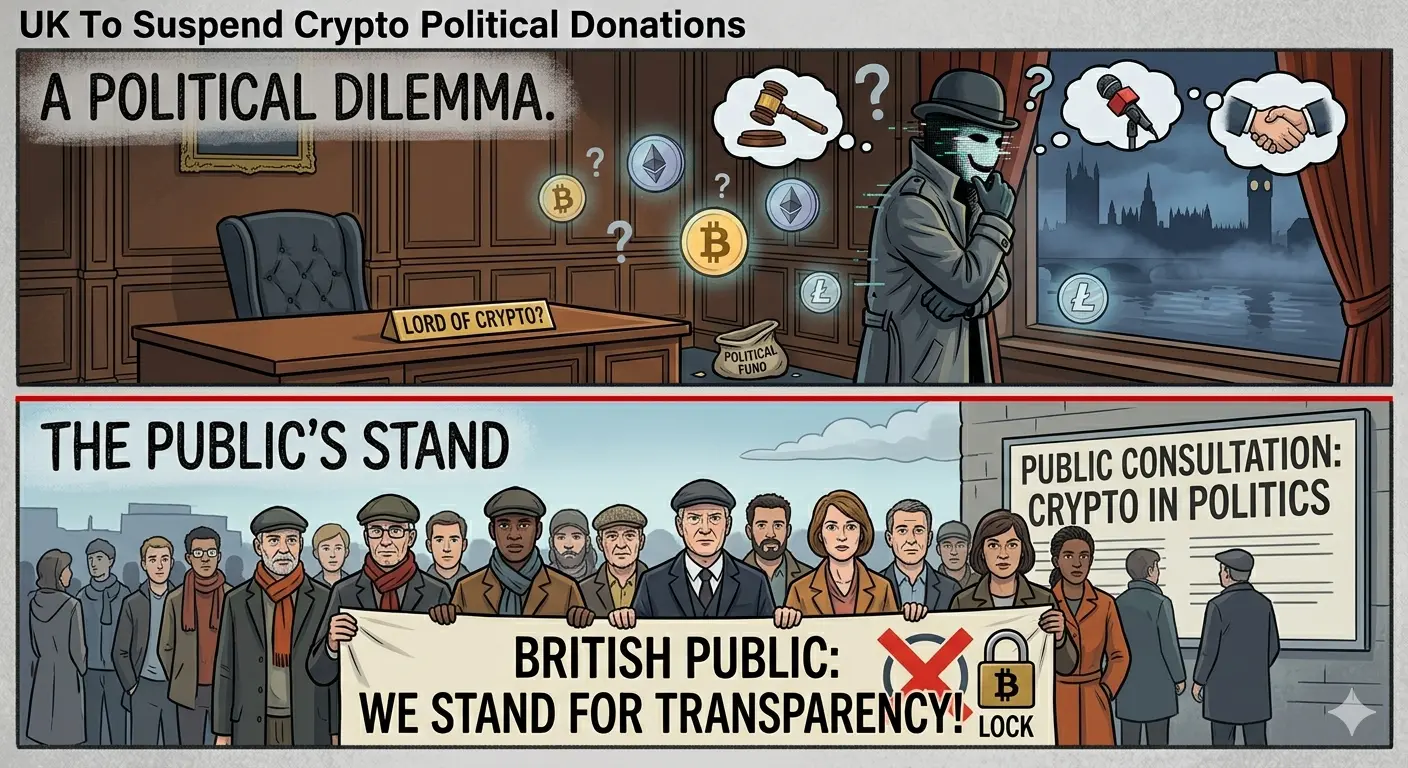
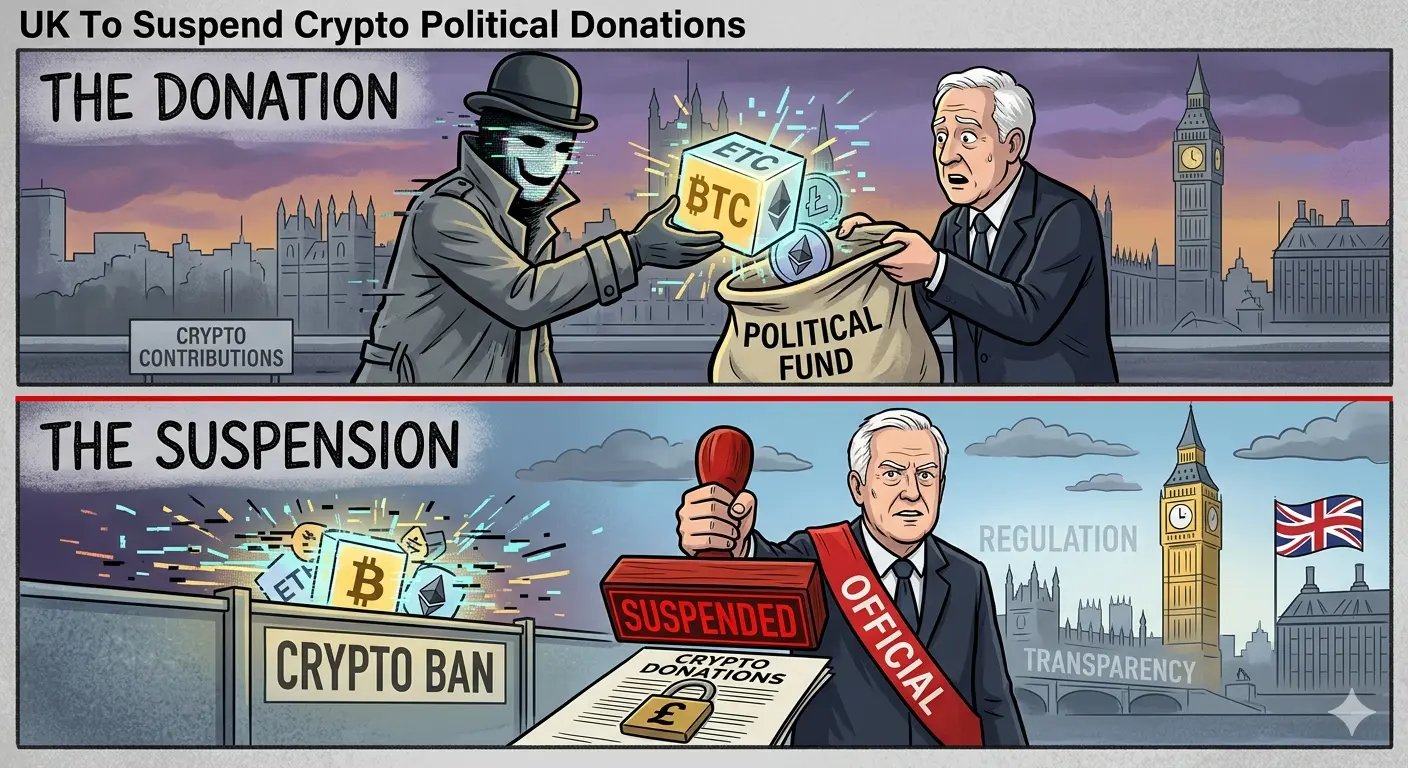 e is far from over. The UK’s approach demonstrates that innovation and regulation are not mutually exclusive; rather, they can coexist to enhance democratic participation while safeguarding electoral integrity. By carefully navigating legal, operational, technical, and societal considerations, the nation is laying the foundation for a future in which digital assets are a legitimate, secure, and transparent part of the political ecosystem—a model that could influence global practices for years to come.
The temporary suspension is not an endpoint but a starting point: a deliberate, measured step toward integrating emerging technologies into governance while protecting the principles that underpin democracy. For campaigns, industry players, and voters alike, the lessons learned during this period will shape the next chapter of political finance, where innovation meets accountability, and opportunity is matched by responsibility.
e is far from over. The UK’s approach demonstrates that innovation and regulation are not mutually exclusive; rather, they can coexist to enhance democratic participation while safeguarding electoral integrity. By carefully navigating legal, operational, technical, and societal considerations, the nation is laying the foundation for a future in which digital assets are a legitimate, secure, and transparent part of the political ecosystem—a model that could influence global practices for years to come.
The temporary suspension is not an endpoint but a starting point: a deliberate, measured step toward integrating emerging technologies into governance while protecting the principles that underpin democracy. For campaigns, industry players, and voters alike, the lessons learned during this period will shape the next chapter of political finance, where innovation meets accountability, and opportunity is matched by responsibility.