Dragon_fly3

vip
Age 0.2 Year
Peak Tier 0
No content yet
#BitcoinSpotVolumeNewLow
BITCOIN SPOT VOLUME COLLAPSE — THE SILENT LIQUIDITY FREEZE THAT MOST TRADERS ARE MISREADING
We are currently not inside a hype phase, not inside a panic phase, and not even inside a normal consolidation phase.
We are inside something far more important and far more dangerous for unprepared traders: a structural liquidity contraction phase where market participation is quietly disappearing while price action continues to create an illusion of stability.
This is exactly the kind of environment that looks boring on the surface but becomes violently directional when liqui
BTC0.53%
  • Reward
  • Comment
  • Repost
  • Share
#WCTCTradingKingPK 📌
WCTC trading community event on Gate Square.
It generally represents:
WCTC → World Trading Competition / Challenge (season-based trading event)
Trading King → Traders competing to show skill, profit, and strategy excellence
PK → Pakistan community participation or regional tagging
👉 In simple words, it means:
“Pakistan traders participating in WCTC competition to prove trading skills and win rewards.”
It is mainly used to:
Share trading results
Post strategies
Join competition activities
Earn rewards through engagement and performance
Build visibility in the trading com
GT1.63%
  • Reward
  • Comment
  • Repost
  • Share
#WCTCTradingKingPK 📌
WCTC trading community event on Gate Square.
It generally represents:
WCTC → World Trading Competition / Challenge (season-based trading event)
Trading King → Traders competing to show skill, profit, and strategy excellence
PK → Pakistan community participation or regional tagging
👉 In simple words, it means:
“Pakistan traders participating in WCTC competition to prove trading skills and win rewards.”
It is mainly used to:
Share trading results
Post strategies
Join competition activities
Earn rewards through engagement and performance
Build visibility in the trading com
GT1.63%
  • Reward
  • Comment
  • Repost
  • Share
  • Reward
  • Comment
  • Repost
  • Share
#OilBreaks110 .
The Recent Surge in Global Oil Prices Above $110:
The global oil market has entered a highly sensitive and structurally tight phase, with Brent crude consistently trading in the $108–$116 per barrel range, reflecting one of the strongest macro-driven rallies in recent years. This is not a simple supply-demand imbalance — it is a multi-layered geopolitical, financial, and macro liquidity event that is now actively influencing inflation, central bank policy, equities, and even crypto markets.
We are effectively witnessing oil re-emerge as the dominant global macro variable of 20
BTC0.53%
ETH-0.59%
HighAmbition
#OilBreaks110 .
The Recent Surge in Global Oil Prices Above $110:
The global oil market has entered a highly sensitive and structurally tight phase, with Brent crude consistently trading in the $108–$116 per barrel range, reflecting one of the strongest macro-driven rallies in recent years. This is not a simple supply-demand imbalance — it is a multi-layered geopolitical, financial, and macro liquidity event that is now actively influencing inflation, central bank policy, equities, and even crypto markets.
We are effectively witnessing oil re-emerge as the dominant global macro variable of 2026.
1. Structural Core of the Rally: Why Oil Is Sustaining Above $110
A) OPEC+ Controlled Supply Compression
OPEC+ continues to enforce disciplined production cuts, estimated at 1–2 million barrels per day, creating an artificial scarcity layer in the global market.
Key implications:
Spare capacity is historically low
Output flexibility is reduced
Any shock immediately reflects in price spikes
This is not just policy — it is strategic price management.
B) Geopolitical Risk Premium Explosion
A major structural driver is the embedded geopolitical risk premium centered around key maritime chokepoints, especially:
Strait of Hormuz
This single corridor handles ~20–25% of global seaborne oil flows (~20 million barrels/day).
Even without physical disruption, markets price in:
Insurance premium spikes
Freight cost inflation
Supply delay risk
Military escalation probability
Iran’s Strategic Role
Iran remains a central variable due to:
Regional influence
Leverage over shipping routes
Ability to escalate or de-escalate tensions quickly
Result: markets continuously price a “fear buffer” of $8–$15 per barrel into oil.
C) Structural Underinvestment Shock
For nearly a decade:
Upstream oil exploration investment has been underfunded
ESG pressure slowed fossil fuel expansion
New supply pipelines are limited and delayed
This created a long-term constraint:
Demand rebounds faster than supply can respond.
D) Demand Resilience from Asia
China and India remain core consumption engines
Combined demand growth: ~3–5% annually
Industrial + transport fuel demand remains sticky
Even with global slowdown fears, oil demand refuses to collapse.
E) Financialization of Oil Markets
Oil is no longer purely physical — it is heavily driven by:
Hedge fund positioning
Algorithmic momentum trading
Macro hedge allocations
This creates:
Overshooting rallies
Faster sentiment shifts
Strong trend persistence
2. Macro Economic Transmission Effects
Inflation Shock Channel
Oil above $110 directly feeds:
Transportation costs
Food logistics
Industrial input pricing
Estimated macro effect:
+1% to +3% headline inflation impact globally
Delayed disinflation in developed economies
Central Bank Pressure Loop
Higher oil leads to:
Sticky inflation expectations
Delayed interest rate cuts
“Higher for longer” narrative reinforcement
This creates a feedback loop:
Oil ↑ → Inflation ↑ → Rates ↑ → Liquidity ↓
GDP Growth Drag
Global GDP drag: 0.5%–1%
Emerging markets more vulnerable due to import dependency
3. Cross-Asset Impact: Equities, Crypto, and Risk Markets
A) Equity Market Reaction
Energy sector: strong outperformance (+20–50%)
Airlines & transport: margin compression
Tech: valuation pressure via higher discount rates
₿ B) Crypto Market Sensitivity
Bitcoin ($78K) and Ethereum ($2.3K equivalent regionally referenced pricing) are reacting through liquidity channels:
Negative short-term effects:
Strong USD environment
Tighter liquidity conditions
Risk-off rotation
Medium-term narrative:
Inflation hedge positioning
Scarcity asset comparison strengthens
Crypto behaves less like oil hedge, more like liquidity beta asset in the short term.
4. Market Psychology (“Trader Layer” Reality)
Current sentiment among professional traders is best described as:
“Bullish structurally, paranoid tactically”
Common desk-level thinking:
“Trend is real, but geopolitics can flip it overnight.”
“Oil can hit $130 fast, but collapse just as quickly.”
“Volatility is the real product now.”
Key behavioral shifts:
Reduced leverage usage
Increased options trading
Preference for hedged exposure
5. Advanced Trading Framework (Professional Layer)
A) Geopolitical Trend Riding Strategy
Trade momentum with news confirmation
Use trailing stops (2–4%)
Avoid holding full exposure over weekend geopolitical risk windows
B) Volatility Extraction Strategy
Use straddles / strangles around:
OPEC meetings
Middle East developments
Inventory reports
Core idea:
Profit from movement, not direction.
C) Spread-Based Risk Reduction
Calendar spreads to capture time decay efficiency
Crack spreads to benefit refining margins
Inter-market spreads (Brent vs WTI divergence)
D) Portfolio Hedging Layer
For equities/crypto investors:
5–15% exposure to energy assets as inflation hedge
Partial hedge using inverse volatility exposure
Reduce beta exposure during spikes
E) Inventory & Data Monitoring System
Key indicators:
EIA / API weekly inventories
Shipping tanker tracking data
Asian import demand flows
USD index strength correlation
6. Scenario Modeling (Critical for Decision Making)
Bull Case (Escalation Cycle)
Triggers:
Hormuz disruption risk escalation
Iran geopolitical escalation
OPEC+ deeper cuts
Outcome:
$120 → $130+ oil
Energy equities outperform
Inflation spike continuation
Base Case (Controlled Tension)
Managed geopolitical friction
Stable OPEC+ discipline
No major supply disruption
Outcome:
Range-bound $100–$115
High volatility but no breakout trend
Bear Case (De-escalation Shock)
Triggers:
Diplomatic resolution
Demand slowdown signals
OPEC+ output increase
Outcome:
Fast drop to $85–$95
Short-term equity relief rally
Energy sector correction
7. Strategic Conclusion: What This Market Really Represents
The current oil surge is not just an energy cycle — it is a global macro stress test combining:
Geopolitical fragility
Supply chain rigidity
Inflation re-acceleration risk
Liquidity tightening dynamics
Oil is now acting as:
A real-time barometer of global risk sentiment.
Final Trading Mindset Summary
This is not a prediction market — it is a reaction market
Survival depends more on risk control than direction
Volatility is permanent, not temporary
Flexibility beats conviction

repost-content-media
  • Reward
  • Comment
  • Repost
  • Share
#BitcoinSpotVolumeNewLow
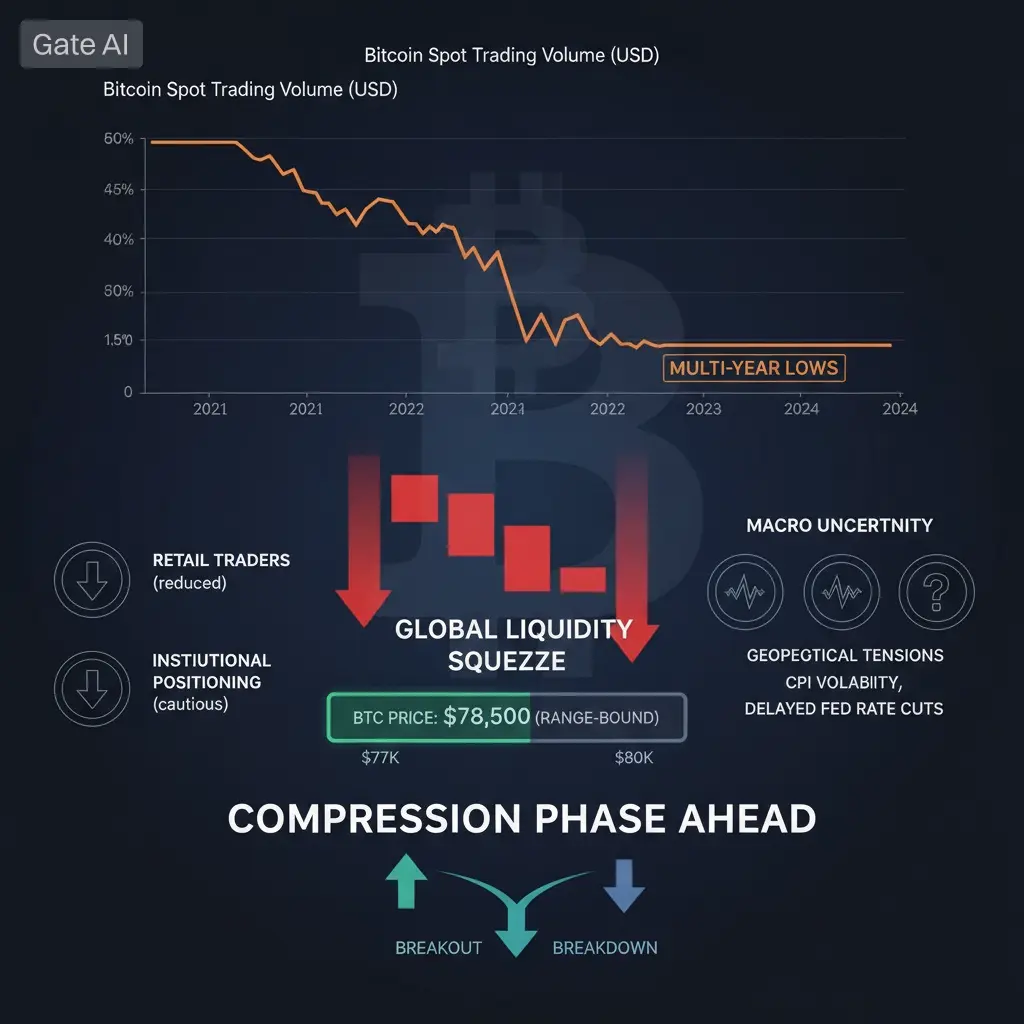
Bitcoin Spot Trading Volume at Multi-Year Lows
The global Bitcoin market is currently undergoing a deep liquidity contraction phase, where spot trading volume has collapsed to multi-year lows, signaling not just reduced activity but a structural pause in risk-taking behavior across both retail and institutional participants. This is one of the most important silent phases in crypto cycles—where price may appear stable on the surface, but underlying market participation is significantly weakened, creating conditions for either explosive future expansion or prolonged s
BTC0.53%
HighAmbition
#BitcoinSpotVolumeNewLow
Bitcoin Spot Trading Volume at Multi-Year Lows
The global Bitcoin market is currently undergoing a deep liquidity contraction phase, where spot trading volume has collapsed to multi-year lows, signaling not just reduced activity but a structural pause in risk-taking behavior across both retail and institutional participants. This is one of the most important silent phases in crypto cycles—where price may appear stable on the surface, but underlying market participation is significantly weakened, creating conditions for either explosive future expansion or prolonged sideways compression depending on macro triggers.
At present, Bitcoin spot activity has dropped sharply across major exchanges, with daily volumes reportedly falling below the $8B–$10B range in recent observations, compared to significantly higher activity during prior momentum phases. This decline reflects a market where coins are not actively changing hands, and conviction trading has been replaced by waiting behavior, capital preservation, and macro-driven hesitation.
1. Macro Shock Layer — Geopolitics, Iran Tensions, and Global Risk Aversion
One of the strongest external forces shaping this environment is escalating geopolitical uncertainty, particularly involving Iran-related tensions and broader Middle Eastern instability risks, which directly influence global energy markets and liquidity flows.
When geopolitical stress rises:
Oil prices surge → inflation expectations increase
Global shipping and supply chains tighten
Risk assets face capital withdrawal
Investors move toward USD, bonds, and cash equivalents
Oil trading near elevated zones around $110–$115 per barrel in recent spikes has intensified inflation fears and reduced speculative appetite across crypto markets. This environment does not directly “kill” Bitcoin demand, but it reduces aggressive spot participation, causing liquidity to dry up.
Result:
Spot volume down 35%–55% vs mid-cycle averages
Order books thinning across exchanges
Increased slippage in medium trades
2. CPI Inflation Dynamics — Uncertainty Keeps Capital Frozen
CPI data remains one of the most powerful macro triggers for Bitcoin. The issue is not just inflation itself—it is uncertainty about inflation persistence.
If CPI:
Comes higher than expected → risk assets sell off
Comes mixed → volatility increases but conviction stays low
Comes lower → still requires Fed confirmation before rallying
This leads to a psychological effect in markets: 👉 Traders stop committing large spot positions
👉 Liquidity gets parked in stablecoins or short-term yield instruments
👉 Market becomes reactive instead of directional
Impact on Bitcoin:
Spot participation down 20%–40% from pre-CPI uncertainty phases
Volatility becomes headline-driven instead of flow-driven
3. Federal Reserve Policy Delay — Liquidity Vacuum Effect
The expectation of Fed rate cuts has been repeatedly pushed forward, creating a prolonged liquidity vacuum environment.
When rates remain high:
USD stays strong
Risk appetite weakens
Capital rotates out of speculative assets
Bitcoin historically performs best during liquidity expansion cycles—but currently:
Policy is uncertain, delayed, and data-dependent
No clear easing cycle confirmation exists
Market effect:
Spot inflows reduced by ~30%–50% vs easing expectations periods
Institutional hesitation increases
Price momentum weakens even during bullish news
4. Retail Exhaustion — The Silent Volume Collapse Engine
Retail participation has structurally declined due to repeated cycle fatigue.
Reasons:
Multiple liquidation events in prior cycles
Reduced hype environment compared to earlier bull markets
Shift toward passive holding or stablecoin yield strategies
Higher complexity of trading (derivatives dominance)
Retail-driven impact:
Spot volume contribution down 40%–60% vs previous bull phases
Lower order book depth
More false breakout conditions
This is critical:
👉 Without retail flow, crypto loses its “fuel layer” for volatility expansion.
5. Institutional Behavior — Silent Accumulation Behind Weak Volume
While public spot volume declines, institutional activity tells a different story.
Key trend:
Accumulation via OTC desks
ETF-based exposure (long-term allocation strategies)
Structured derivatives positioning
This creates a paradox: 📉 Visible market volume drops
Hidden long-term holdings increase
Institutional estimate impact:
OTC + ETF accumulation potentially absorbing 20%–35% of circulating liquidity pressure
Reduces downside volatility spikes
Creates “compression before expansion” structure
6. Current Price Structure — Tight Compression Zone
Bitcoin is currently moving in a compressed consolidation range, reflecting liquidity imbalance.
Key structure:
Support: $72,000 – $75,000
Resistance: $80,000 – $83,000
Recent movement characteristics:
Weekly volatility: 2% – 6% range
Breakouts failing without volume confirmation
Price reacting more to macro headlines than internal crypto flows
This is a classic: 👉 “Low volume compression regime”
7. Aggressive Price Scenario Model (Enhanced % Breakdown)
Bullish Liquidity Expansion Scenario
If macro conditions improve (CPI stabilization + geopolitical easing + Fed pivot signals):
Expected upside: +20% to +45%
Target range: $95,000 → $115,000
Volume recovery: +60% to +120% surge in spot activity
Trigger conditions:
Inflation cooling confirmation
Rate cut probability rising
Geopolitical tension reduction
Neutral Compression Scenario (Base Case)
If uncertainty continues without resolution:
Price range: $70,000 – $85,000
Movement: 5% – 12% swings
Volume: remains historically low
This is the “waiting zone” market: 👉 No breakout, no breakdown, only rotation
Bearish Liquidity Drain Scenario
If geopolitical escalation + sticky inflation + strong USD continue:
Downside risk: -10% to -25%
Potential range: $55,000 – $65,000
Panic wick scenario: deeper temporary spikes possible
This occurs if:
Risk-off acceleration returns
Liquidity exits crypto rapidly
ETF inflows slow significantly
8. Strategic Trading Framework (Low Volume Environment)
In this regime, strategy must shift completely:
✔ Range Trading Dominance
Buy near support zones
Sell near resistance zones
Avoid chasing breakouts without volume confirmation
✔ Capital Efficiency Model
Reduce leverage exposure significantly
Use partial entries instead of full positioning
Preserve liquidity for volatility expansion phase
✔ Macro Trigger Awareness
Key events that move this market:
CPI releases
Fed speeches / dot plot updates
Geopolitical escalation headlines
Oil price shocks
✔ Volume Confirmation Rule
No trade unless: 👉 Volume confirms direction
Otherwise → fake breakout probability remains high
9. Risk Management Upgrade (Critical Layer)
Maintain 40%–70% dry capital buffer
Avoid emotional reaction trading
Track spot volume + derivatives open interest together
Respect invalidation levels strictly
Treat low volume rallies as “fragile moves”
10. Final Market Interpretation — What This Really Means
This is not a collapse in Bitcoin demand. It is a liquidity reset phase inside a global macro uncertainty cycle.
Key truth: 👉 Price is stable, but participation is missing
👉 Institutions are accumulating quietly
👉 Retail has stepped back
👉 Macro uncertainty is freezing risk appetite
Historically, these environments often precede:
Strong directional expansion phases
Rapid volume recovery cycles
Aggressive trend formation once clarity returns
Final Insight
Bitcoin is currently in a compressed energy state market structure:
Low volume
High uncertainty
Hidden accumulation
Macro-driven hesitation
When liquidity returns, the move is typically fast, aggressive, and trend-defining.
The key question is not whether Bitcoin moves next—but: 👉 “In which direction will liquidity return first?”
repost-content-media
  • Reward
  • Comment
  • Repost
  • Share
#GateSquareMayTradingShare
BITCOIN (BTC) NEXT MOVE — ADVANCED PROBABILITY MODEL (MAY 2026)
Current Price: $78,500 — A Critical Liquidity Zone Where Decisions Define Outcomes
This is not just another moment in the market where price randomly fluctuates and traders chase green candles or panic during red ones, this is a structurally important phase where Bitcoin is compressing within a high-stakes zone, and beneath this calm-looking price action, a complex battle is unfolding between institutional positioning, algorithmic execution, and retail psychology, and the outcome of this phase will def
BTC0.53%
HighAmbition
#GateSquareMayTradingShare
BITCOIN (BTC) NEXT MOVE — ADVANCED PROBABILITY MODEL (MAY 2026)
Current Price: $78,500 — A Critical Liquidity Zone Where Decisions Define Outcomes
This is not just another moment in the market where price randomly fluctuates and traders chase green candles or panic during red ones, this is a structurally important phase where Bitcoin is compressing within a high-stakes zone, and beneath this calm-looking price action, a complex battle is unfolding between institutional positioning, algorithmic execution, and retail psychology, and the outcome of this phase will define the next major directional move that can either reward prepared traders or completely wipe out those who are operating on emotions instead of structured thinking.
Most traders at this level are still stuck in a binary mindset, constantly asking whether Bitcoin will go up or down next, but that approach is fundamentally flawed because the market does not operate on certainty, it operates on probabilities, and the only way to stay consistently profitable in such an environment is to break the market into multiple scenarios, assign realistic percentage expectations, and prepare actionable strategies for each outcome instead of reacting late when the move has already happened
At the current $78,500 level, Bitcoin is sitting at a pivot zone where liquidity is building both above and below the price, meaning the market has incentives in both directions, which increases volatility potential and decreases predictability, and this is exactly why we shift from prediction to probability-based execution models.
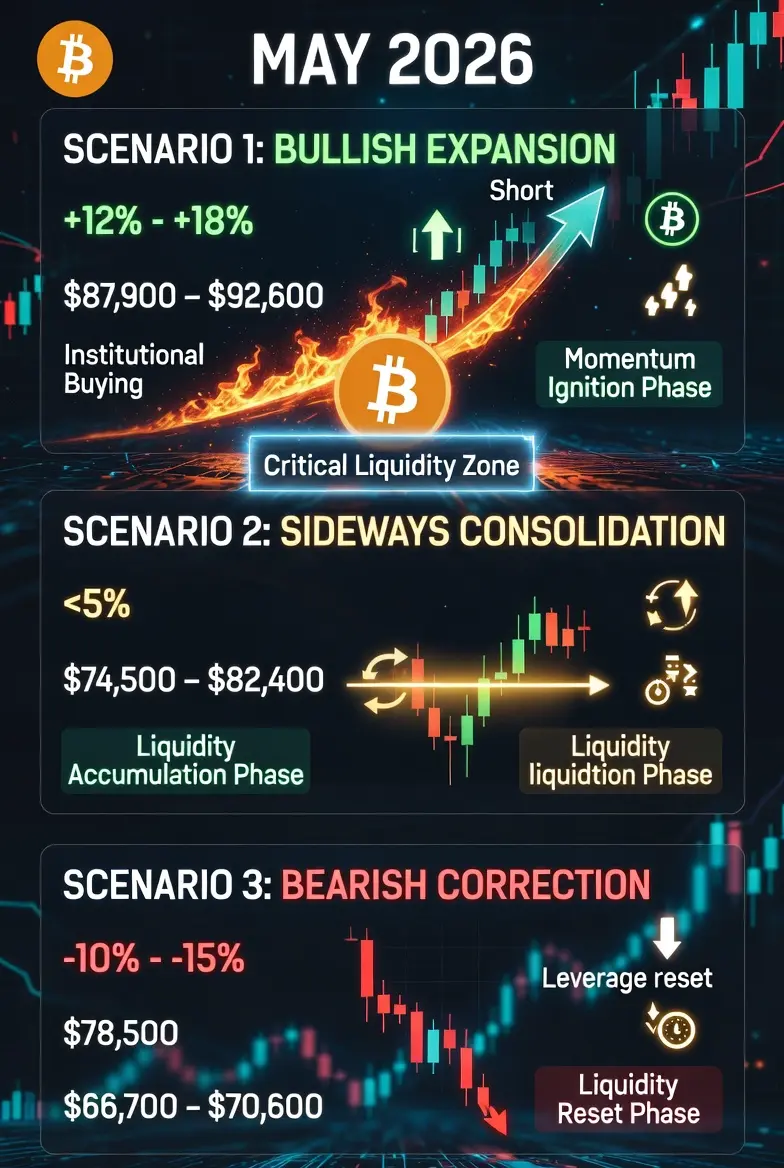
SCENARIO 1: BULLISH EXPANSION (+12% to +18%) — MOMENTUM IGNITION PHASE
In this scenario, Bitcoin successfully defends its support structure and begins to attract aggressive buying pressure, not only from retail participants but more importantly from institutional flows that are quietly positioning themselves before a breakout becomes obvious to the majority, and once price starts pushing above key resistance zones, the market transitions from accumulation to expansion, triggering a chain reaction of momentum-driven buying and short liquidations.
From the current $78,500, a +12% to +18% move projects Bitcoin into the range of:
$87,900 → $92,600
This move is not just a simple upward trend, it is typically characterized by acceleration phases, where price moves faster as it rises due to the presence of liquidity clusters above resistance levels, and these clusters act like magnets, pulling price toward them as market makers exploit stop-loss orders and forced exits from short sellers.
However, one of the biggest misconceptions about bullish markets is that they are easy to trade, when in reality, they are filled with manipulative micro pullbacks, sudden volatility spikes, and fake breakdowns designed to remove weak hands before continuation, which means that traders without a clear plan often exit early and miss the majority of the move.
In this environment, patience and structure are more valuable than speed, and traders who scale into positions instead of chasing entries are the ones who extract the most value.
Bullish Strategic Insight:
If Bitcoin breaks above resistance with strong volume and holds above it, the probability of continuation toward $88K–$92K increases significantly, but success depends on disciplined execution rather than emotional reaction.
SCENARIO 2: SIDEWAYS CONSOLIDATION (±5%) — LIQUIDITY ACCUMULATION PHASE
This is the most deceptive phase of the market, where Bitcoin appears stable on the surface but is internally building the conditions necessary for a larger move, and during this time, price oscillates within a relatively tight range, creating multiple false signals that trap traders on both sides.
From $78,500, a ±5% range defines:
👉 Lower Range: ~$74,500
👉 Upper Range: ~$82,400
This phase is often misunderstood as “boring” or “inactive,” but in reality, it is one of the most strategically important zones, because it is where large players accumulate positions without significantly moving the market, while retail traders exhaust themselves through overtrading and inconsistent decision-making
The defining characteristics of this phase include:
Frequent fake breakouts above resistance followed by quick reversals
Sudden dips below support that recover rapidly
Lack of sustained momentum in either direction
Declining emotional conviction among traders
This environment punishes impatience and rewards precision, and traders who understand this phase shift their focus from aggressive trend trading to range-based strategies, smaller position sizes, and strict risk management.
Sideways Strategic Insight:
Bitcoin moving between $74K–$82K is not a signal of weakness, it is a preparation phase, and those who preserve capital here gain a significant advantage when the breakout eventually occurs.
SCENARIO 3: BEARISH CORRECTION (-10% to -15%) — LIQUIDITY RESET PHASE
If Bitcoin fails to maintain its current support structure and selling pressure intensifies, the market can enter a controlled corrective phase where price moves downward with purpose, targeting liquidity zones below and resetting the overall structure
From $78,500, a -10% to -15% move places Bitcoin in the range of:
$70,600 → $66,700
This phase is often perceived as a collapse by inexperienced traders, but in reality, it is a necessary market function, where excess leverage is removed, funding rates normalize, and long positions that were built without proper risk control are forced out of the system
The transition into this phase is typically confirmed by:
Strong breakdown below support with increased volume
Weak recovery attempts that fail to reclaim lost levels
Rapid shift in sentiment from optimism to fear
This is where the majority makes critical mistakes, either by panic selling near the bottom or attempting to catch reversals without confirmation, both of which result in losses, while experienced traders either capitalize on the downside with controlled risk or patiently wait for high-probability re-entry zones.
Bearish Strategic Insight:
A move toward $66K–$70K is not the end of Bitcoin’s structure, it is a recalibration phase that creates future opportunity for those who remain patient and calculated.
DEEP MARKET REALITY — UNDERSTAND THIS OR GET LEFT BEHIND
At $78,500, Bitcoin is not simply choosing a direction, it is building a decision environment, and traders who fail to adapt to this complexity will continue to operate with outdated thinking patterns that no longer work in modern markets.
The truth is harsh but clear:
👉 The market is engineered to exploit emotional behavior
👉 Liquidity exists where traders are most vulnerable
👉 Price moves toward pain, not comfort
And this is why probability-based thinking is not optional, it is essential.
repost-content-media
  • Reward
  • Comment
  • Repost
  • Share
#GateSquareMayTradingShare
WHY YOUR STOP LOSS ALWAYS GETS HIT BEFORE THE MARKET MOVES IN YOUR DIRECTION
This is not bad luck. This is not randomness. This is engineered market structure, smart money psychology, and liquidity mechanics working in perfect harmony to extract value from predictable retail behavior.
In today’s Bitcoin market hovering around $78,500, we are in a classic consolidation zone where both bullish and bearish positions are heavily clustered. Price isn’t wandering aimlessly — it is deliberately probing liquidity pools on both sides before committing to the next major dir
BTC0.53%
HighAmbition
#GateSquareMayTradingShare
WHY YOUR STOP LOSS ALWAYS GETS HIT BEFORE THE MARKET MOVES IN YOUR DIRECTION
This is not bad luck. This is not randomness. This is engineered market structure, smart money psychology, and liquidity mechanics working in perfect harmony to extract value from predictable retail behavior.
In today’s Bitcoin market hovering around $78,500, we are in a classic consolidation zone where both bullish and bearish positions are heavily clustered. Price isn’t wandering aimlessly — it is deliberately probing liquidity pools on both sides before committing to the next major directional leg. Most traders lose here not because their analysis is wrong, but because they fail to understand that their stop loss is often the very fuel the market needs.
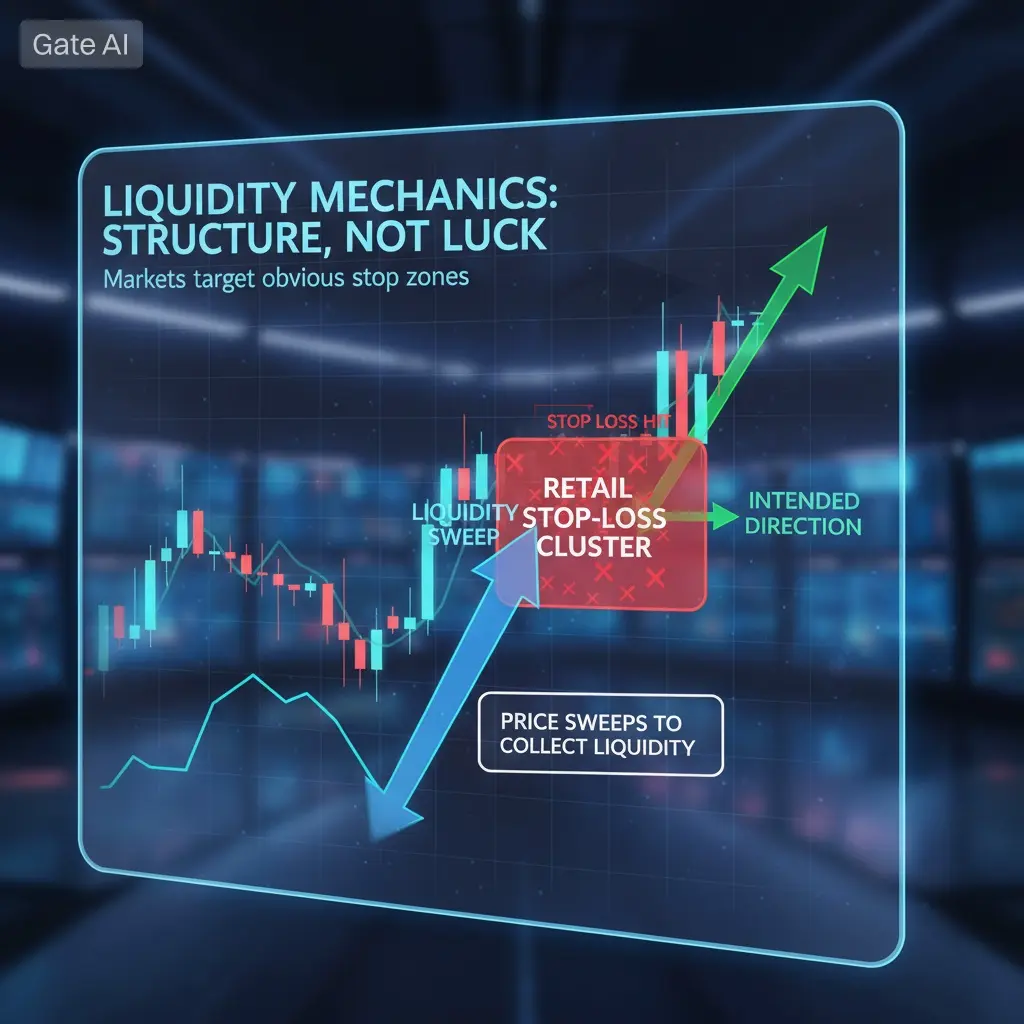
THE CORE TRUTH: STOP LOSSES = LIQUIDITY POOLS
Large institutions, whales, and market makers cannot enter or exit multi-million or billion-dollar positions without sufficient liquidity. They need opposing orders to absorb their size without massive slippage.
Where does this liquidity come from?
Retail stop losses
Panic sells/buys
Overleveraged liquidations
Late breakout entries
Emotional FOMO/FUD reactions
Your stop loss is not hidden. In aggregated order flow data, clustered stops appear as clear liquidity zones. Algorithms and smart money target these zones first because that’s where the easiest order execution happens.
Markets do not move toward “fair value” — they move toward liquidity. Once liquidity is swept (collected), the real directional move often begins.
THE CLASSIC STOP LOSS HUNT MECHANISM — STEP BY STEP
Retail identifies obvious level
Example: Support at $75,000 or Resistance at $80,000.
Predictable placement
Longs put stops 1-2% below support ($74,500–$74,800)
Shorts put stops above resistance
Breakout traders set buy-stops or limit orders at round numbers
The hunt phase
Price is driven toward the cluster with increasing speed. Volume spikes as liquidations cascade and fuel the move.
Liquidity collection
Stops are triggered → large block of orders executed → smart money enters/exits the opposite side.
Reversal & real move
Price reverses sharply. The original directional bias you expected now plays out — but without you in the trade.
This pattern repeats across timeframes: 15-minute wicks, daily fakeouts, and weekly liquidity sweeps.
UPWARD STOP HUNT (BULL TRAP / SHORT SQUEEZE LIQUIDATION)
Scenario at $78,500:
Resistance cluster at $80,000 (psychological round number)
Short sellers’ stops and retail breakout buy orders stacked above
Price raids $81,000–$82,500 on strong volume and green candles
Social media turns euphoric, FOMO buying accelerates
Short liquidations add rocket fuel
Then the trap:
Sharp rejection candle with long upper wick
Price collapses back below $78,500, often targeting the lower liquidity pool
Result:
Late longs trapped at highs
Shorts liquidated at worst possible moment
Smart money distributed into strength
DOWNWARD STOP HUNT (BEAR TRAP / LONG LIQUIDATION)
Opposite scenario:
Support at $75,000 breaks
Panic selling + long liquidations drive price to $74,000 or $72,000–$70,000 zone
Headlines scream “Bitcoin crash”
Weak hands capitulate
Then the reversal:
Aggressive buying appears from lower liquidity pool
Price sweeps lows, reverses, and climbs back through $78,500 toward $80K+
Result:
Cheap accumulation by smart money
Panic sellers miss the rebound
Bears who shorted the low get squeezed
WHY YOUR STOPS ARE “TOO OBVIOUS”
Retail behavior is highly correlated because:
Same YouTube channels, Twitter accounts, and TradingView setups
Same textbook support/resistance rules
Same risk management teachings (tight stops below/above candles)
Emotional clustering around round numbers ($70K, $75K, $80K, $100K)
This creates liquidity symmetry that institutions can map and exploit with high precision.
VOLUME + WICK STRUCTURE — THE TELLTALE SIGNS
During a hunt:
Explosive volume spike
Long wick (upper or lower)
Fast move into obvious level
Immediate reversal on decreasing volume
After liquidity sweep:
Volume dries up
Price consolidates or trends cleanly
Higher probability continuation
Many traders get stopped out, then watch the market move in their original direction with perfect structure — the classic “wrong twice” feeling.
PSYCHOLOGY: THE INVISIBLE FUEL
Greed → Late entries at breakouts
Fear → Premature exits at breakdowns
Hope → Holding through hunts
FOMO → Chasing wicks
Smart money doesn’t fight this psychology — they engineer it.
PROFESSIONAL APPROACH — HOW TO STOP FEEDING LIQUIDITY
Wait for the sweep: Enter after obvious liquidity has been taken, not before.
Wider invalidation: Use structural levels (higher timeframe swing points) instead of tight candle-based stops.
Avoid round numbers for stops — place them in less obvious zones.
Lower leverage in consolidation/uncertain zones.
Think in liquidity terms: Ask “Where will stops be clustered?” instead of “Where will price go?”
Multiple timeframe confirmation: Look for alignment across daily + 4H + 1H.
Position sizing: Risk less when liquidity hunts are probable.
Fakeout trading: Some advanced traders deliberately trade the manipulation phase.
CURRENT BTC LIQUIDITY MAP — MAY 2026 ($78,500)
Upper Liquidity Pool: $80,000 – $83,000+
(Short stops, breakout buys, FOMO targets)
Lower Liquidity Pool: $74,000 – $70,000
(Long stops, panic liquidation clusters, support breaks)
Most probable near-term behavior:
Sweep one side aggressively → trap participants → reverse and target the opposite pool → then expansion into the real trend.
THE HARDEST TRUTH
Your stop loss isn’t being hunted personally. It is simply part of a statistically predictable liquidity map that the market clears before its next major move.
The market is mechanical, not emotional.
If your placement is obvious, your exit was already priced in.
ULTIMATE POWER LINE:
“The market does not punish your stop loss — it collects what was always predictable. Master liquidity, or remain part of the liquidity.”
Trade less. Observe more. Think like the institutions, not like the crowd.
Once you internalize that price is the distraction and liquidity is the truth, your entire trading psychology shifts — and so do your results.
Stay disciplined.#GateSquare #CreatorCarnival #ContentMining
repost-content-media
  • Reward
  • Comment
  • Repost
  • Share
#WCTCTradingKingPK
The Silent Setup Before the Next Explosive Move
Market Overview and Current Positioning
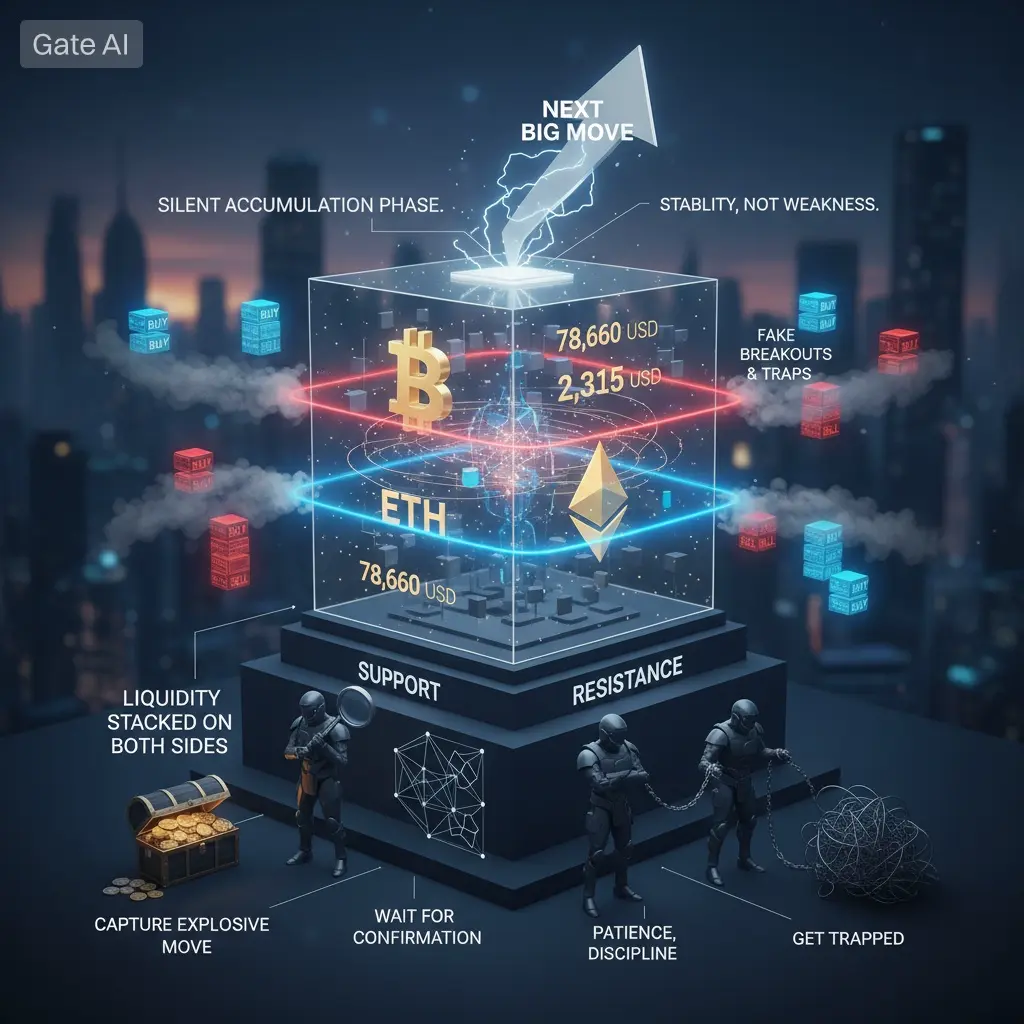
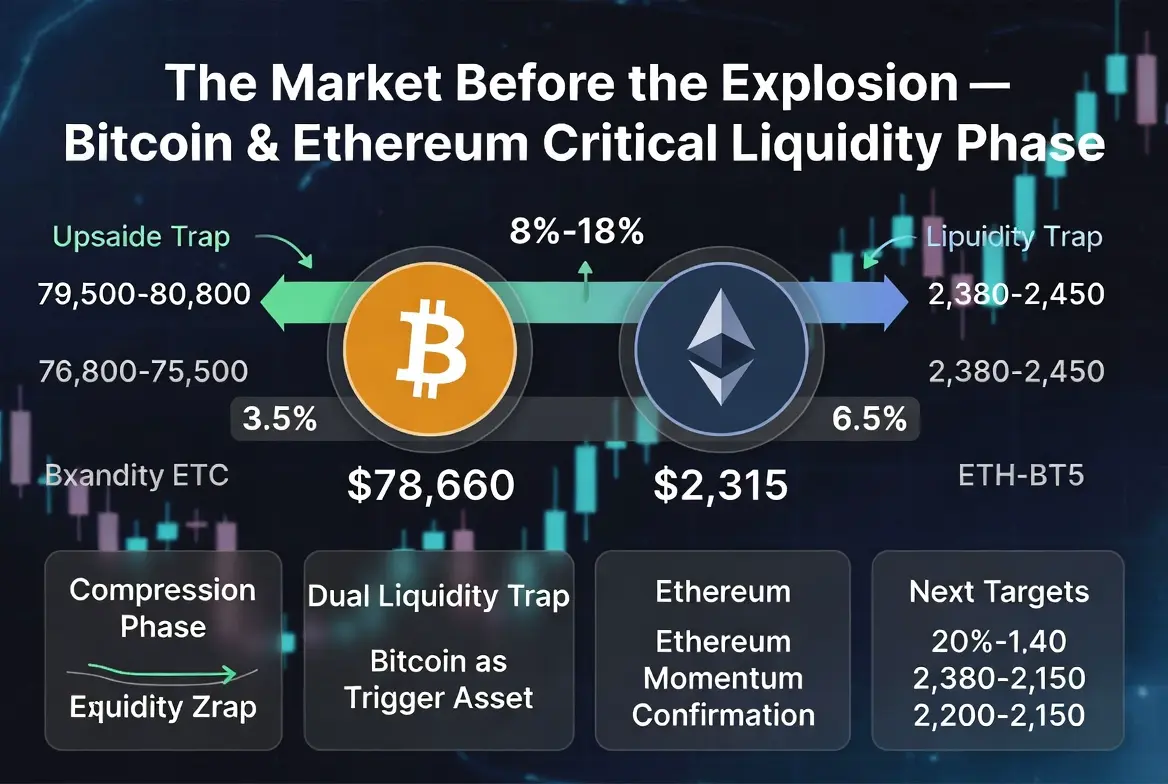
The market is currently in a critical phase where price action appears slow, but beneath the surface, a powerful setup is forming. Bitcoin is trading around 78,660, Ethereum is holding near 2,315, and Solana continues to maintain strength above the 80 region. This alignment across major assets reflects stability, not weakness. It shows that the market is holding structure while quietly preparing for its next directional move.
This phase is often ignored by most traders because volatility
BTC0.53%
ETH-0.59%
SOL3.14%
HighAmbition
#WCTCTradingKingPK
The Silent Setup Before the Next Explosive Move
Market Overview and Current Positioning
The market is currently in a critical phase where price action appears slow, but beneath the surface, a powerful setup is forming. Bitcoin is trading around 78,660, Ethereum is holding near 2,315, and Solana continues to maintain strength above the 80 region. This alignment across major assets reflects stability, not weakness. It shows that the market is holding structure while quietly preparing for its next directional move.
This phase is often ignored by most traders because volatility is low and there is no obvious trend. However, this is exactly where smart positioning happens. This is not the time to chase trades. This is the time to stay sharp, patient, and ready.
Market Structure and Compression Phase
The current structure is a textbook example of compression. Price is holding above key support levels while repeatedly testing resistance zones. This type of behavior indicates that sellers are losing strength while buyers are slowly building pressure.
Compression phases are extremely important because they act like a spring. The longer the market stays compressed, the stronger the eventual breakout tends to be. Bitcoin holding above its current range confirms that the trend is not broken. Ethereum stabilizing near 2.3K shows capital is still active, and Solana holding its level confirms that altcoins are not in a distribution phase.
This kind of alignment increases the probability that the next move will be expansion, but only after liquidity is fully built.
Liquidity Dynamics and Market Reality
The market does not move randomly. It moves toward liquidity. Right now, liquidity is positioned on both sides.
Above current Bitcoin price, there are breakout traders and short sellers whose stop losses can fuel an upward move. Below current levels, there are long positions with stop losses that can trigger a downside move.
This is why the market feels confusing. You see fake breakouts, sudden spikes, and quick reversals. These are not random moves. They are liquidity grabs designed to trap traders before the real move begins.
Understanding this gives you an edge. Instead of reacting emotionally, you start reading the intention behind price action.
Execution Strategy: Trade with Confirmation
A high-level trader does not predict blindly. The strategy is simple: react to confirmation.
If Bitcoin breaks above resistance with strength, the correct approach is to wait for a strong push, then a small pullback, and then continuation before entering. This confirms real momentum.
If the market drops below support, do not panic sell. Many breakdowns are traps. Let the move happen, watch for rejection, and only enter if the market shows signs of reversal.
If price stays within the current range, then the best approach is range trading. Buy near support, sell near resistance, and avoid overtrading. In this phase, capital protection is more important than aggressive gains.
Momentum and Volume Truth
Real moves are never weak. A true breakout comes with strong candles, increasing volume, and minimal rejection. If price moves slowly or without energy, it is usually a trap.
The same applies to downside moves. A sharp drop shows intent, while a slow decline shows uncertainty. Recognizing this difference helps you avoid low-quality trades and focus only on high-probability setups.
Intermarket Alignment
Bitcoin leads the market, but Ethereum and Solana confirm direction. When Bitcoin holds strong and Ethereum starts pushing higher, it signals hidden bullish momentum. If Solana follows, it confirms that risk appetite is increasing.
If Bitcoin weakens and altcoins drop faster, it shows a defensive market. Watching this relationship gives you early signals before the big move happens.
Psychology: The Real Battle
This phase is not testing your strategy. It is testing your discipline.
Most traders lose here because they: Overtrade out of boredom
Enter without confirmation
Exit due to fear
Professionals do the opposite. They wait, stay calm, and act only when the setup is clear. The ability to do nothing is a powerful skill in trading.
Risk Management
No setup is guaranteed. That is why risk management is everything. Define your risk before entering any trade. Keep losses small and controlled. Avoid overexposure in uncertain conditions.
In a compressed market, volatility can expand suddenly. Without proper risk control, one bad trade can wipe out multiple gains.
Final Insight
The market is building pressure. This phase will not last forever. When the move comes, it will be fast and aggressive.
Most traders will miss it because they will act too early or react emotionally. A small percentage will capture it because they stayed patient, waited for confirmation, and executed with precision.
This is not just a quiet market phase. This is the setup before the next big move. The opportunity will come, but only for those who are prepared, disciplined, and ready to act at the right moment.
repost-content-media
  • Reward
  • Comment
  • Repost
  • Share
#GateSquareMayTradingShare
The Market Before the Next Decision – Will Bitcoin Break 80K or Reject?
Current Market Structure and Price Context
Bitcoin is currently trading around 78,660, sitting very close to a critical psychological and technical level at 80,000. This zone is not just a round number, it represents a major liquidity and decision area where the market has to choose between continuation or rejection. Ethereum is holding near 2,315, confirming that the broader market is also in a consolidation state, waiting for Bitcoin’s direction
At this stage, the market is in a tight compress
BTC0.53%
ETH-0.59%
HighAmbition
#GateSquareMayTradingShare
The Market Before the Next Decision – Will Bitcoin Break 80K or Reject?
Current Market Structure and Price Context
Bitcoin is currently trading around 78,660, sitting very close to a critical psychological and technical level at 80,000. This zone is not just a round number, it represents a major liquidity and decision area where the market has to choose between continuation or rejection. Ethereum is holding near 2,315, confirming that the broader market is also in a consolidation state, waiting for Bitcoin’s direction
At this stage, the market is in a tight compression phase where volatility has reduced and price is moving in a controlled structure. This means the next major move will likely be sharp, not gradual
Will Bitcoin Break 80K or Reject?
There are two clear possibilities, and both are valid depending on liquidity behavior and volume confirmation
Bullish Scenario – Break Above 80K
If Bitcoin successfully breaks and holds above 80,000 with strong volume, it would confirm a bullish continuation structure. This break is important because 80K is not just resistance, it is also a liquidity magnet where breakout traders and short positions are clustered.
A confirmed breakout above 80K could lead to a fast expansion move of approximately 3% to 8% initially, targeting levels around 82,500 to 86,000. If momentum continues, extended upside can even stretch further depending on market participation
However, the key condition here is confirmation. A weak breakout without volume or immediate rejection after crossing 80K would not be a valid signal.
Bearish Scenario – Rejection from 80K
If Bitcoin approaches 80,000 but fails to hold above it and shows rejection, then the market may enter a liquidity sweep phase. In this case, price could drop back into the 77,500 to 76,800 zone, representing a downside movement of approximately 2% to 4%
This scenario often happens when the market uses the 80K level to trap breakout buyers before reversing. These moves are fast and emotional, designed to trigger stop losses and collect liquidity before any real upward attempt
Sideways Scenario – Fake Breakouts and Range Expansion
There is also a third possibility where Bitcoin repeatedly tests the 80K level without breaking it properly. In this case, the market remains in a range between 77,000 and 80,000, creating fake breakouts on both sides.
This type of structure confuses most traders because it shows no clear direction. However, it is actually a liquidity-building phase where both sides of the market are being prepared for a stronger move later
Ethereum Confirmation Role
Ethereum at 2,315 is currently in a similar consolidation zone. If ETH starts showing strength above its resistance area while Bitcoin approaches 80K, it increases the probability of a bullish breakout
If Ethereum weakens while Bitcoin tests 80K, it increases the chance of rejection and downside correction.
Ethereum is acting as a confirmation signal, not the primary driver
Key Insight – What Really Matters at 80K
The real question is not whether Bitcoin touches 80K, but whether it sustains above it with strength
A clean breakout requires: Strong volume expansion
Minimal rejection
Follow-through momentum
Without these conditions, 80K becomes a rejection zone rather than a breakout trigger.
Final Market Understanding
Bitcoin at 78,660 is extremely close to a major decision point. The 80K level will act as a liquidity battlefield where the next directional move will be decided
A breakout above 80K can trigger 3% to 8% upside expansion, while rejection can lead to 2% to 4% downside correction before stabilization
Right now, the market is not giving certainty, it is building pressure. And in such conditions, patience and confirmation will decide the outcome, not prediction.
repost-content-media
  • Reward
  • Comment
  • Repost
  • Share
  • Pin