

Trade
Basic
Futures
Futures
Hundreds of contracts settled in USDT or BTC
TradFi
Gold
Trade global traditional assets with USDT in one place
Options
Hot
Trade European-style vanilla options
Unified Account
Maximize your capital efficiency
Demo Trading
Futures Kickoff
Get prepared for your futures trading
Futures Events
Participate in events to win generous rewards
Demo Trading
Use virtual funds to experience risk-free trading
Earn
Launch
CandyDrop
Collect candies to earn airdrops
Launchpool
Quick staking, earn potential new tokens
HODLer Airdrop
Hold GT and get massive airdrops for free
Launchpad
Be early to the next big token project
Alpha Points
Trade on-chain assets and enjoy airdrop rewards!
Futures Points
Earn futures points and claim airdrop rewards
Investment
Simple Earn
Earn interests with idle tokens
Auto-Invest
Auto-invest on a regular basis
Dual Investment
Buy low and sell high to take profits from price fluctuations
Soft Staking
Earn rewards with flexible staking
Crypto Loan
0 Fees
Pledge one crypto to borrow another
Lending Center
One-stop lending hub
VIP Wealth Hub
Customized wealth management empowers your assets growth
Private Wealth Management
Customized asset management to grow your digital assets
Quant Fund
Top asset management team helps you profit without hassle
Staking
Stake cryptos to earn in PoS products
Smart Leverage
New
No forced liquidation before maturity, worry-free leveraged gains
GUSD Minting
Use USDT/USDC to mint GUSD for treasury-level yields

More


Trending Topics
View More75.31K Popularity
4.04K Popularity
1.46K Popularity
1.96K Popularity
6.02K Popularity



Pin
Bitcoin or Gold: An Investment Choice That Continues to Confuse Investors
In the modern investment landscape, the age-old question about defensive assets continues to evolve. Should investors choose time-tested gold or the relatively new Bitcoin? This comparison is not just academic—it’s an investment question with real financial implications for millions seeking to protect their wealth.
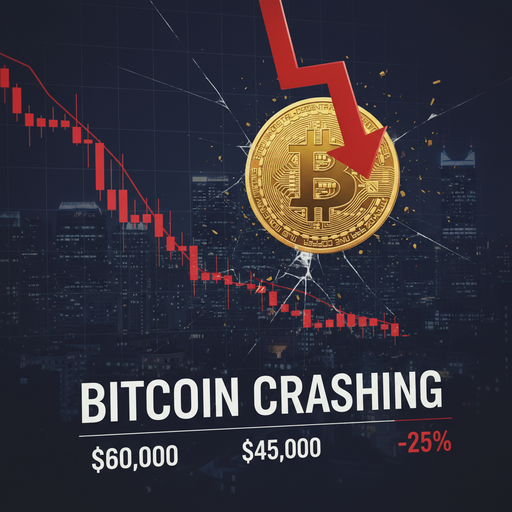
The current market disparity is clear: Bitcoin has recorded a negative performance of 27.42% over the past 12 months, while gold continues to demonstrate impressive resilience. As of February 2026, Bitcoin’s market value reached only $1.42 trillion out of a total gold market capitalization of $41.69 trillion—Bitcoin accounts for just about 3.4% of gold’s dominance. However, this figure itself contains intriguing potential for investors who understand market dynamics.
Supply Mechanisms: Gold Continues to Grow, Bitcoin Is Strictly Limited
The fundamental difference between these two assets lies in their production mechanisms. Bitcoin has an unchangeable supply cap: exactly 21 million coins, with approximately 95.16% already in circulation as of 2026. In contrast, gold has no such cap.
Global gold production has shown a steady growth trend over 25 years. From 1995 to 2018, production increased from 2,300 tons to 3,500 tons, reaching a record high of 3,672 tons in 2025. When gold prices rise, gold producers are incentivized to increase investment in new mining projects, which in turn dilutes the relative value of gold above ground.
Unlike gold, Bitcoin issuance follows a predetermined schedule set from the start. The halving system gradually reduces issuance until reaching the hard cap of 21 million coins. According to Bitcoin Bond Company CEO Pierre Rochard, this is the crucial difference: gold has no halving or difficulty adjustment mechanisms, while Bitcoin has both as immutable design features.
Bitcoin Inflation Rate: A Measured Guarantee of Scarcity
For investors seeking currency hedging and long-term purchasing power protection, inflation metrics are vital. By the end of 2025, Bitcoin’s annual inflation rate is around 0.81%, with 93% of all Bitcoin mined.
This figure will continue to decrease. After the next halving scheduled for March 2028, inflation is expected to drop to 0.41%, nearly half of the current level. This creates an unprecedented deflationary outlook in the traditional investment markets, including gold, whose production continues to increase each year.
Marginal Allocation: How Gold Investments Could Shift to Bitcoin
Despite the significant market disparity, Jeff Walton, Chief Risk Officer at Strive (a Bitcoin treasury management firm), emphasizes a perspective often overlooked: Bitcoin only needs a very small portion of gold-type investment demand to create exponential impact.
Why? Because Bitcoin’s market capitalization is much smaller, and marginal allocation results in a significant percentage increase. Imagine a simple scenario: if just 5% of global gold investment shifts into Bitcoin, it would equate to inflows of over $2 trillion. With current valuation levels, this scenario could lead to approximately a 116% increase in Bitcoin’s market cap, pushing the theoretical price target to around $192,000.
Broader Investment Context
It’s important to understand that Bitcoin is competing not only with gold but with the entire spectrum of defensive assets. Investors seek exposure to hard assets for various reasons: currency hedging, geopolitical risk mitigation, or portfolio diversification. Gold has served this purpose for thousands of years, while Bitcoin has only emerged 16 years ago.
However, demand for this hedging continues to grow. If Bitcoin manages to claim even a small portion of gold investment allocation—say, from new investors comparing both assets as investment options—the growth potential remains substantial given its relative market size.
Conclusion: Not a Narrow Choice, But a Spectrum
The question “Bitcoin or gold?” might be better answered with “how much of each?” For long-term investments seeking scarcity and purchasing power protection, both assets serve different roles. Gold offers a 5,000-year track record as a store of value. Bitcoin offers programmed scarcity with decreasing inflation. When investors compare traditional and digital assets, each brings a unique proposition toward achieving long-term wealth goals.