


Futures
Access hundreds of perpetual contracts
TradFi
Gold
One platform for global traditional assets
Options
Hot
Trade European-style vanilla options
Unified Account
Maximize your capital efficiency
Demo Trading
Introduction to Futures Trading
Learn the basics of futures trading
Futures Events
Join events to earn rewards
Demo Trading
Use virtual funds to practice risk-free trading
Launch
CandyDrop
Collect candies to earn airdrops
Launchpool
Quick staking, earn potential new tokens
HODLer Airdrop
Hold GT and get massive airdrops for free
Launchpad
Be early to the next big token project
Alpha Points
Trade on-chain assets and earn airdrops
Futures Points
Earn futures points and claim airdrop rewards


More



Tech Billionaires' Political Gamble: How Michael Dell and His Peers Navigate the 2024 Election
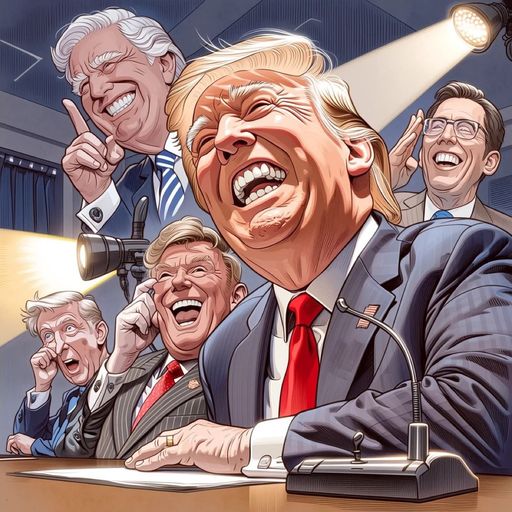
When it comes to America’s presidential elections, the nation’s richest citizens wield outsized influence. According to the Financial Times, the 2024 election cycle witnessed billionaires contributing at least $695 million—roughly 18% of the total campaign funds raised. With over $3.8 billion in total spending by candidates and advocacy groups, the super-rich have become kingmakers. Michael Dell and other tech titans are at the center of this political earthquake, yet their positions reveal surprising fractures within the world’s wealthiest class.
The Republican Financiers: Trump’s Silicon Valley Backers
The clearest political alignment in this election cycle involves a handful of mega-wealthy entrepreneurs openly backing Donald Trump. Among them, Elon Musk stands out as the most aggressive supporter.
As the world’s richest man with a net worth of $263.3 billion, Elon Musk has become Trump’s most generous financial contributor. The Tesla and SpaceX CEO publicly campaigned alongside Trump at rallies and donated at least $75 million to America PAC, a super political action committee dedicated to supporting the former president. Political analysts suggest that a Trump victory could mean significant government contracts for SpaceX and favorable regulatory treatment for Tesla.
Larry Ellison, the Oracle Corporation co-founder worth $207.1 billion, represents old-guard Republican money. Though he hasn’t formally endorsed Trump, insiders note his longtime ties to the Republican Party and his close relationship with the former president. Ellison embodies the traditional tech mogul who sees alignment with Republican economic policies as beneficial to business interests.
The Silent Majority: Michael Dell and Tech’s Neutral Camp
Despite leading Dell Technologies as both founder and CEO, Michael Dell has chosen strategic silence on his political preferences. With an estimated net worth of $107.9 billion, Dell exemplifies a growing segment of American billionaires: those with significant political influence but deliberate restraint in exercising it. Rather than championing a candidate, Dell has focused on policy issues affecting technology and economic growth—a stance suggesting pragmatism over ideology.
Warren Buffett, the legendary Berkshire Hathaway CEO worth $142.2 billion, recently announced he will not endorse any candidate in this cycle. His investment philosophy extends to politics: “Mr. Buffett will not endorse any investment portfolio or political candidate, now or in the future,” according to his company’s official statement.
Steve Ballmer, former Microsoft chief executive valued at $121.9 billion, launched USAFacts, a nonpartisan website transforming government data into accessible information for citizens. When asked by Scripps News who he would support, Ballmer deflected: “I will vote, because I am an American citizen. But I will vote privately.” Jensen Huang of Nvidia ($118.2 billion) adopted similar neutrality, telling CNBC that regardless of tax policies proposed by either candidate, “we’re going to support it.”
The Ambiguous Middle: Bezos, Zuckerberg, and Google’s Founders
Some billionaires blur the lines between support and neutrality. Jeff Bezos praised Donald Trump’s “courage” following an assassination attempt in July but has not publicly backed any candidate. Amazon, his company, donated $1.5 million to Kamala Harris’ campaign—suggesting internal organizational support even as Bezos maintains personal distance. Bezos celebrated Joe Biden’s 2020 victory, revealing past Democratic sympathies.
Mark Zuckerberg presents another paradox. According to Trump’s public statements, the Meta CEO has expressed support for the former president, contrasting sharply with their bitter history. Zuckerberg repeatedly removed Trump’s posts from Facebook over COVID misinformation and banned him from the platform for two years. Yet Zuckerberg has also stated publicly that he would not lean toward any candidate in 2024.
Larry Page, the former Google CEO valued at $142.1 billion, has maintained complete silence, neither endorsing Trump nor Harris. His Google co-founder Sergey Brin ($136 billion) follows a similar pattern, though OpenSecrets records show past donations to Democratic candidates including Barack Obama.
What Billionaire Behavior Reveals About 2024
The fragmentation among America’s wealthiest reveals deeper truths about this election cycle. Unlike previous contests where billionaire money flowed primarily along ideological lines, 2024 shows a billionaire class divided by industry, philosophy, and personal relationships with candidates.
The tech industry’s billionaires particularly resist monolithic political alignment. Where Elon Musk aggressively backs Trump, others like Michael Dell, Buffett, and Ballmer prefer civic engagement without formal endorsement. This divergence suggests that even at the pinnacle of wealth and influence, no single candidate or party commands universal support among America’s richest individuals.
With Forbes reporting that at least 144 of the nation’s 800 billionaires are “spending money” on this race, the question isn’t whether the super-rich will influence the outcome—they already are. The real story is how divided they’ve become in their political preferences, with figures like Michael Dell representing a new breed of politically cautious billionaire who understands that maximum influence sometimes means strategic silence.