


Futures
Access hundreds of perpetual contracts
TradFi
Gold
One platform for global traditional assets
Options
Hot
Trade European-style vanilla options
Unified Account
Maximize your capital efficiency
Demo Trading
Introduction to Futures Trading
Learn the basics of futures trading
Futures Events
Join events to earn rewards
Demo Trading
Use virtual funds to practice risk-free trading
Launch
CandyDrop
Collect candies to earn airdrops
Launchpool
Quick staking, earn potential new tokens
HODLer Airdrop
Hold GT and get massive airdrops for free
Launchpad
Be early to the next big token project
Alpha Points
Trade on-chain assets and earn airdrops
Futures Points
Earn futures points and claim airdrop rewards


More

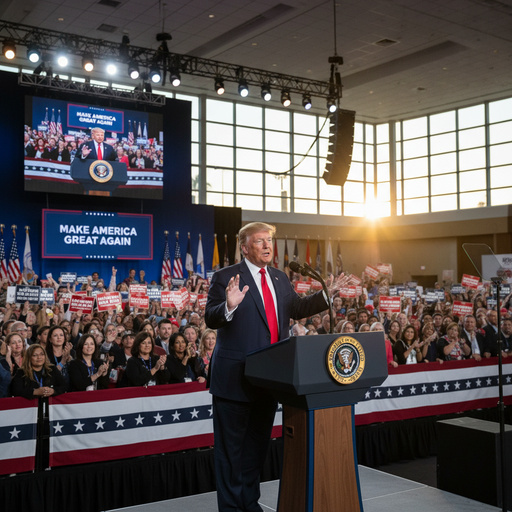



Trump: Wars always have surprises. "Some wars that should have been won were lost." NATO isn't helping the U.S. this time, and the U.S. won't help NATO in the future!
According to CCTV International News, on March 27 local time, U.S. President Trump stated that since NATO did not support the U.S. in its actions against Iran, there is no need for the U.S. to stand up for NATO in the future.
Trump said, “Wars always come with surprises, bad surprises. Some wars that should have been won are lost; many wars will be lost. A country trying to eliminate others may end up being eliminated itself, so there is always a lot of risk involved.”
Trump indicated that NATO’s absence in this war is a huge mistake. The U.S. spends hundreds of billions of dollars each year protecting NATO, yet NATO chose not to help the U.S. this time, so the U.S. will not help NATO. “If they don’t help us, then why should we help them?”
On March 26 local time, U.S. President Trump publicly complained again during a cabinet meeting about NATO allies not actively responding to his earlier so-called demand for “escort in the Strait of Hormuz,” reiterating that NATO is a “paper tiger.” He posted on social media that day expressing dissatisfaction with NATO, stating in all capital letters that the U.S. “asks nothing from NATO,” but “will never forget” this important point.
It is reported that during the cabinet meeting that day, Trump stated that the “German head of state” said the Iran conflict “is not our war,” which he deemed an “improper” statement. According to Trump, in response to the German stance, he said, “Well, then Ukraine is not our war either.”
In addition, Trump also specifically mentioned another ally, Australia: “Australia is not good; I was somewhat surprised by Australia’s (response to the conflict).”
German Chancellor Merz stated on March 27 that if “regime change” is the goal of the U.S. and Israel’s military actions against Iran, he does not believe that this goal can be achieved.
Merz expressed hope that this conflict would end soon, but noted that the U.S. and Israel are “getting deeper and deeper.” He questioned whether the U.S. and Israel have a strategy to end the conflict; if so, whether it can be successfully implemented.
Merz stated that the economic consequences of the Middle East conflict are “very direct,” and Germany is one of the parties bearing the burden. If a ceasefire agreement is reached, Germany could consider organizing military escorts related to the Strait of Hormuz with others, but this would require international authorization and approval from the German Bundestag and government cabinet resolution. However, as long as the conflict continues, this is “not an option” for Germany.
Source: Daily Economic News
Risk Warning and Disclaimer