

Trade
Basic
Futures
Futures
Hundreds of contracts settled in USDT or BTC
TradFi
Gold
Trade global traditional assets with USDT in one place
Options
Hot
Trade European-style vanilla options
Unified Account
Maximize your capital efficiency
Demo Trading
Futures Kickoff
Get prepared for your futures trading
Futures Events
Participate in events to win generous rewards
Demo Trading
Use virtual funds to experience risk-free trading
Earn
Launch
CandyDrop
Collect candies to earn airdrops
Launchpool
Quick staking, earn potential new tokens
HODLer Airdrop
Hold GT and get massive airdrops for free
Launchpad
Be early to the next big token project
Alpha Points
Trade on-chain assets and enjoy airdrop rewards!
Futures Points
Earn futures points and claim airdrop rewards
Investment
Simple Earn
Earn interests with idle tokens
Auto-Invest
Auto-invest on a regular basis
Dual Investment
Buy low and sell high to take profits from price fluctuations
Soft Staking
Earn rewards with flexible staking
Crypto Loan
0 Fees
Pledge one crypto to borrow another
Lending Center
One-stop lending hub
VIP Wealth Hub
Customized wealth management empowers your assets growth
Private Wealth Management
Customized asset management to grow your digital assets
Quant Fund
Top asset management team helps you profit without hassle
Staking
Stake cryptos to earn in PoS products
Smart Leverage
New
No forced liquidation before maturity, worry-free leveraged gains
GUSD Minting
Use USDT/USDC to mint GUSD for treasury-level yields

More


Trending Topics
View More75.57K Popularity
4.22K Popularity
1.6K Popularity
1.96K Popularity
6.02K Popularity




Pin
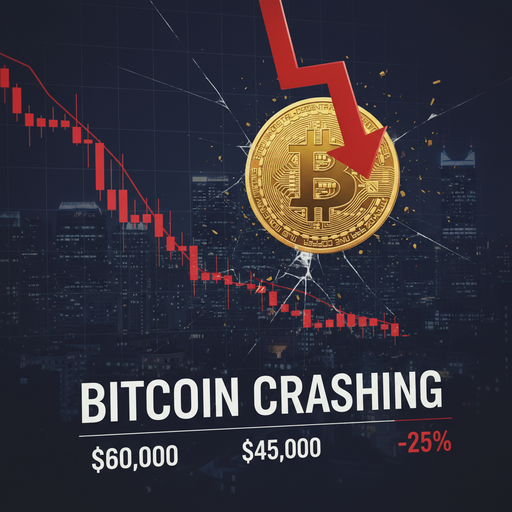
Bitcoin Drops Below $77K: Gold Rotation Accelerates, and Elliptic Cryptography Becomes a Point of Debate
Bitcoin continues to face ongoing difficulties around the $77.72K zone, with recent data showing a 1.42% decline over the past 24 hours. As crypto momentum weakens, elliptic cryptography is at the center of a new debate about whether the threat of quantum computing has already begun to influence market investor behavior. While some believe that quantum risks are now priced in, on-chain analysts and long-term Bitcoin developers maintain that current pressures stem from much more conventional factors: massive profit-taking, waves of selling from long-term HODLers, and shifts in liquidity toward traditional hedging instruments.
Gold and Silver Dominate Capital Flows While Bitcoin Struggles to Hold
As the global markets seek protection from uncertainty, traditional assets have shown performance far surpassing Bitcoin. Since the November 2024 elections, the divergence between Bitcoin and conventional instruments has widened dramatically:
Gold reached a historic high near $4,930 per ounce, while silver continued its flight to $96, reflecting investor preference for safe assets amid geopolitical tensions that trigger sovereign default risks and massive accumulation by global central banks. Bitcoin, on the other hand, remains about 30% below its peak in 2025, reinforcing the perception that crypto is more akin to a high-risk asset rather than a store of value during volatile macro phases.
Is Quantum Computing Risk Truly Triggering Bitcoin Sell-Off?
The ongoing weakness in Bitcoin has reopened longstanding discussions about the existence of quantum computing. Nic Carter of Castle Island Ventures brought up this topic last week, suggesting that Bitcoin’s weakness reflects growing market awareness of quantum threats. “Poor performance of Bitcoin is triggered by quantum awareness,” Carter wrote in his analysis, “the market is screaming — but developers are not listening.”
However, this statement was quickly challenged by the on-chain analysis community and institutional Bitcoin investors. They argue that linking Bitcoin’s stagnation to quantum fears is a fundamental misinterpretation of current market dynamics.
Supply Structure, Not Technology Fears, Explains Price Pressure
On-chain researcher Checkmatey identified a more tangible cause: “Gold is rising because countries are choosing to buy gold instead of sovereign bonds. Meanwhile, Bitcoin has experienced heavy HODLer selling waves throughout this year — enough to significantly dampen previous bullish momentum multiple times.”
Bitcoin analyst Vijay Boyapati confirms this analysis with specific points: “The real explanation is much simpler: massive selling occurs when we pass the psychological level of $100,000. Whales take profits at this point, releasing supply that is absorbed by new ETF flows and institutional funds, but not enough to continue the upward momentum.”
On-chain data supports this hypothesis — long-term holders have significantly increased their holdings in this zone, creating substantial supply barriers against further rallies.
Charles Edwards, founder of Capriole Investments, has calibrated extensive bullish projections for gold. According to his analysis, gold could reach targets of $12,000 to $23,000 per ounce within three to eight years, citing:
“If this cycle triggers the historic asset expansion of the 20th century, gold’s appreciation potential still has a very significant runway,” Edwards writes. While the monthly RSI for gold has reached its most expensive valuation since the 1970s, structural demand — not momentum speculation — is identified as the main driver behind this massive rally.
Developer: Elliptic Cryptography Threat Still Decades Away, Not Quarters
However, the Bitcoin developer community continues to maintain that, although attention to quantum computing has resurfaced, this risk remains long-term and well-managed. Elliptic cryptography is the security foundation of Bitcoin today, and Shor’s algorithm could theoretically compromise elliptic curve cryptography — but capable quantum machines are still years or even decades away from realization.
Blockstream co-founder Adam Back has repeatedly emphasized that even worst-case scenarios would not result in rapid losses or network-wide collapse. Bitcoin Improvement Proposal BIP-360 has outlined a migration pathway toward quantum-resistant addresses, enabling gradual upgrades long before the actual threat materializes. Developers stress that such transitions would span years, not market cycles — making quantum computing implausible as a driver of near-term price weakness.
Traditional Finance Raises Concerns, But Timeline Remains Long
Some voices in mainstream finance still suggest that quantum computing warrants consideration. Earlier this month, Jefferies’ Christopher Wood removed Bitcoin from his portfolio model, citing quantum risk as one of his long-term concerns. However, industry analysts note that the real question isn’t whether Bitcoin can adapt — but how long such adaptation would take if needed.
That timeline is measured in decades, not quarters.
Macro Environment Still Dominates Bitcoin
For now, market participants are focusing on much more pressing macro factors:
As a result, traders remain focused on critical technical levels rather than long-term disaster scenarios. Bitcoin needs to reclaim the $91,000–$93,500 zone to initiate a recovery momentum. Failure at this level leaves accumulated support between $85,000–$88,000.
Until monetary or geopolitical clarity improves, Bitcoin is likely to remain reactive to macro conditions rather than directional — while gold continues to benefit from massive shifts in global capital flows.