

Trade
Basic
Futures
Futures
Hundreds of contracts settled in USDT or BTC
TradFi
Gold
Trade global traditional assets with USDT in one place
Options
Hot
Trade European-style vanilla options
Unified Account
Maximize your capital efficiency
Demo Trading
Futures Kickoff
Get prepared for your futures trading
Futures Events
Participate in events to win generous rewards
Demo Trading
Use virtual funds to experience risk-free trading
Earn
Launch
CandyDrop
Collect candies to earn airdrops
Launchpool
Quick staking, earn potential new tokens
HODLer Airdrop
Hold GT and get massive airdrops for free
Launchpad
Be early to the next big token project
Alpha Points
Trade on-chain assets and enjoy airdrop rewards!
Futures Points
Earn futures points and claim airdrop rewards
Investment
Simple Earn
Earn interests with idle tokens
Auto-Invest
Auto-invest on a regular basis
Dual Investment
Buy low and sell high to take profits from price fluctuations
Soft Staking
Earn rewards with flexible staking
Crypto Loan
0 Fees
Pledge one crypto to borrow another
Lending Center
One-stop lending hub
VIP Wealth Hub
Customized wealth management empowers your assets growth
Private Wealth Management
Customized asset management to grow your digital assets
Quant Fund
Top asset management team helps you profit without hassle
Staking
Stake cryptos to earn in PoS products
Smart Leverage
New
No forced liquidation before maturity, worry-free leveraged gains
GUSD Minting
Use USDT/USDC to mint GUSD for treasury-level yields

More


Trending Topics
View More76.4K Popularity
4.68K Popularity
1.64K Popularity
2.29K Popularity
6.02K Popularity



Pin
When Gold Reaches $10,000: The Truth About Actual Purchasing Power
The figure “10,000 USD/oz” seems to be the goal many investors are aiming for. But does a higher gold price really mean you’re getting richer? The answer might surprise you.
The Illusion Effect: High Prices but Weaker Purchasing Power
If you compare gold prices not in nominal currency units, but in the amount of money circulating in the economy, the real peak of gold was actually in 1982. At that time, 1 ounce of gold had about 16% more purchasing power than it does today — even though gold prices have soared to new heights.
This happens for a simple reason: money is printed much faster than gold prices increase. When the money supply doubles, asset prices measured in money also rise, but the real purchasing power of each unit decreases.
Let’s look at a concrete example from reality. In 1982, 1 ounce of gold could buy a small house. Back then, the total money supply was relatively low, so gold was very “expensive” relative to the economy. Today, 1 ounce of gold costs around $5,200, but a similar house has risen to $500,000. Conclusion: gold no longer can buy a house like before, even though the nominal price has increased many times.
Who Benefits When Money Loses Value?
As the economy continuously issues new money, different groups will have different fates:
Those holding “tangible assets” — such as real estate or growth companies — will become very wealthy quickly. They not only preserve value but also increase their position within the expanding monetary system. In Vietnam from the 1990s, that was real estate.
Those who only hold gold or “conservative” assets will stay put. They protect nominal value, but their relative position in society declines.
Those who only hold cash — the worst case — will see their value continuously erode.
In a society that is constantly developing and where the money supply keeps expanding, “standing still” is a losing game. You will see increasingly staggering figures: a 20 billion VND house is no longer shocking, a 5 billion VND car is normal, $10,000/oz gold is not unusual. But your salary? It can’t keep up.
The Real Danger: Money Loses Value, Not Just Expensive Assets
The feeling that “everything is getting more expensive” isn’t because assets are inherently becoming more valuable. In reality, money is losing value. This is an illusion created by the expansion of the money supply.
Buying gold helps you preserve your assets’ value. But within the dollar monetary system, buying gold doesn’t necessarily make you better off. In fact, you might fall behind as money continues to be issued.
Breaking the “Money Loop”: Is Bitcoin an Opportunity?
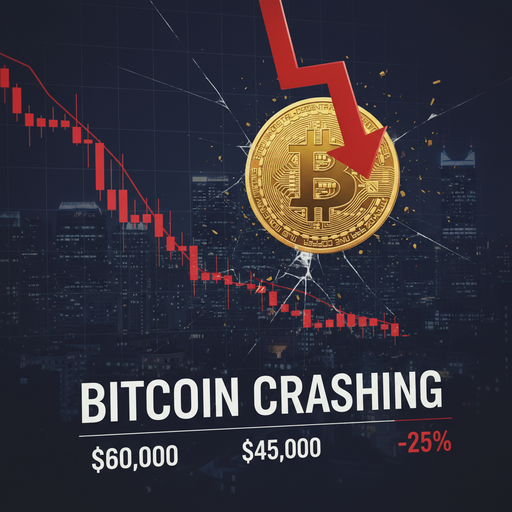
To truly escape this situation, you need an asset with a “bounce” potential greater than gold — an asset that preserves value and has growth potential within an expanding monetary system. Bitcoin is currently seen as a promising candidate.
Unlike gold, Bitcoin is designed to have absolute scarcity — only 21 million BTC. When fiat currencies experience inflation, BTC has the potential to better maintain its value, even increasing its position within developing digital financial systems. That’s why Bitcoin is called the “digital gold” of the 21st century.
The lesson here isn’t that gold is bad or Bitcoin is good. It’s that: simply holding gold is not enough to escape the weakening of currency. You need an asset with a growth mechanism, one that not only protects your current interests but also enhances your position in the future.