


Futures
Access hundreds of perpetual contracts
TradFi
Gold
One platform for global traditional assets
Options
Hot
Trade European-style vanilla options
Unified Account
Maximize your capital efficiency
Demo Trading
Introduction to Futures Trading
Learn the basics of futures trading
Futures Events
Join events to earn rewards
Demo Trading
Use virtual funds to practice risk-free trading
Launch
CandyDrop
Collect candies to earn airdrops
Launchpool
Quick staking, earn potential new tokens
HODLer Airdrop
Hold GT and get massive airdrops for free
Launchpad
Be early to the next big token project
Alpha Points
Trade on-chain assets and earn airdrops
Futures Points
Earn futures points and claim airdrop rewards


More




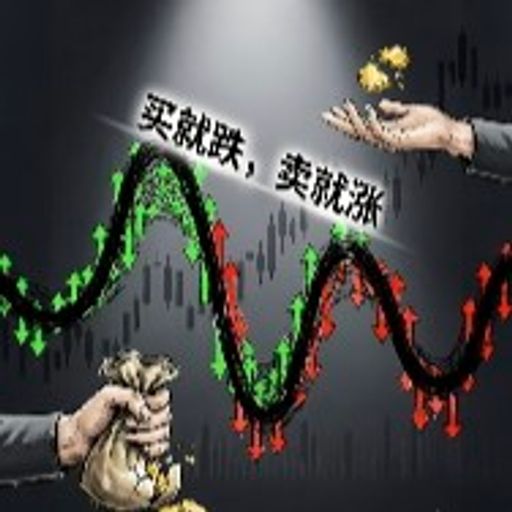

When others are fearful, I am greedy—so why can't you still make money?
There is a long-standing golden rule in the investment world, originating from Warren Buffett’s wisdom—“Be fearful when others are greedy, be greedy when others are fearful.” This phrase is revered as a bible by countless traders, but it is also most thoroughly misunderstood by the majority. The issue isn’t that Buffett’s advice is wrong, but that most people fail to execute it properly. Do you really know when to be greedy? Can you truly stay rational and greedy when others are fearful?
The Investment Realities That Many Hear But Can’t Do
In actual trading, every day we perform a human dilemma drama.
You have an open position with floating profits, watching your account balance grow, then panic sets in—fearful that the gains will disappear. You hurriedly close the position to lock in profits. What happens next? Less than three days later, the market soars, and the gains you could have had are taken by others.
And when a similar situation occurs again, you decide this time to hold firm, not to close early, letting profits run. But then the market unexpectedly reverses, your account starts to recover, and in the end, you end up empty-handed or even losing part of your principal. At this point, you might beat your chest—blaming greed for your failure.
The real problem isn’t greed or fear itself, but that you haven’t truly understood the meaning behind “be fearful when others are greedy, be greedy when others are fearful.”
Misinterpretation of Buffett’s Words
Many interpret “be fearful when others are greedy, be greedy when others are fearful” as: when the market falls, I buy; when it rises, I sell—simply doing the opposite. This is a superficial understanding.
The true meaning should be: when others are irrationally fearful, I make decisions based on rational analysis; when others are irrationally greedy and chasing highs, I stay calm to avoid risks. Here, greed and fear refer to a planned, bounded attitude adjustment, not just simple reverse speculation.
Buffett himself never blindly trades against the crowd. He does this: when the market offers “cheap prices,” he adds positions; when prices are “overvalued,” he reduces or waits. The key difference is—he has a strict valuation system.
Retail traders often mistake “be fearful when others are greedy” as an emotional hedge. When the market drops and many are scared, they rush in, thinking they are doing contrarian smartly; when the market rises and everyone chases, they buy along, only to lose money and blame greed. In reality, both behaviors are not based on systematic decisions but on emotional gambling.
The Four Most Common Deadly Trading Behaviors
Over the years, I’ve observed countless failed traders—they mostly fall into these four patterns:
1. Taking profits too early, cutting losses too late.
Making a little profit and rushing out; holding on to losses stubbornly. This is classic fear-driven behavior—afraid of profits slipping away, so they exit early; afraid of admitting losses, so they keep telling themselves “long-term hold will turn around.” The result? Successful trades yield tiny profits, while losing trades become huge.
2. Averaging down against the trend.
When prices move against your position and your account turns red, many respond by “bottom-fishing”—adding more to lower the average cost. This is based on luck—like a gambler doubling down after a loss, hoping to recover. In reality, this only enlarges losses.
3. Blindly following the herd without stop-loss boundaries.
Chasing after others’ gains, or selling when others are falling. No personal trading plan, no clear entry or exit rules, just swaying with market emotions. Such trades might occasionally make small profits, but ultimately lead to major losses.
4. Heavy position trading.
Putting most of your capital into a single direction or asset, aiming for huge gains, but risking total wipeout. Many young traders are obsessed with this, thinking they can “get rich quick,” but they forget that risk is amplified infinitely.
The commonality among these behaviors? Lack of systematic constraints, relying solely on subjective emotions.
The True Use of “Be Fearful When Others Are Greedy”
Rather than viewing “be fearful when others are greedy” as a trading strategy, it’s better understood as a mindset—an attitude of discipline. The core is: build a strict trading system, using rules to suppress emotions.
A complete trading system includes key elements: clear entry signals, defined take-profit points, strict stop-loss levels, and proper capital management ratios. All are pre-set, not decided on the fly by feelings.
The benefit? When others make mistakes out of fear, your system’s protection allows you to stay calm and make rational judgments; when others lose control out of greed, your profit-taking rules automatically safeguard you. “Be fearful when others are greedy” becomes an automated, rational behavior, no longer an emotional outburst.
For example: if your rule is “take 50% profit when the position gains 15%,” then as the market continues to rise to 30%, you’ve already sold half, locking in gains. The remaining position might lose less if the market reverses. If it drops, you’ve already secured part of your profit. This is using a system to replace greed-driven decisions.
Similarly, if your rule is “scale into positions near support levels,” even if most traders panic and cut, you can steadily add to your position according to your plan, unaffected by others’ emotions.
Human Nature’s Dilemma and the Breakthrough
From agriculture to industry to today’s information society, human society advances rapidly, but one thing remains unchanged—human nature. Fear, greed, hope, luck—these instincts still control our decisions.
But this doesn’t mean there’s no way out. Although human nature hasn’t evolved, individuals can gradually transcend their weaknesses through practice and discipline. Successful traders are those who, through repeated failures, reflection, and adjustment, have conquered their human flaws.
There are no shortcuts. It requires constant practice, recording each decision and outcome, honestly reviewing whether your choices were based on system logic or emotional impulse. Over time, you’ll find that those old struggles with greed and fear begin to loosen.
How to Truly Achieve “Be Fearful When Others Are Greedy”
First, respect the market. Recognize that the market is far smarter than you; your role is to tilt the odds in your favor, not win every trade. This mindset keeps you calm, not panicked by a few losses.
Second, develop clear trading rules: when to enter, where to take profits, where to cut losses, and how much capital to risk per trade. These rules should be validated through historical data, ensuring they support “cut losses short and let profits run.”
Third, execute these rules unconditionally. This is the hardest part—during execution, you’ll question yourself: “Why did I take profit so early?” or “Why did I cut losses now?” But it’s precisely this “early” that protects your account.
Fourth, review and adjust regularly. Rules are not set in stone; every quarter or month, review your trades, assess their effectiveness, and fine-tune your system to better adapt to market changes.
When you truly implement these steps, “be fearful when others are greedy” ceases to be just a slogan—it’s embedded in every rational decision you make. You’ll find that making money in investment isn’t as mysterious as it seems; the core is—use systems to conquer emotions, discipline to conquer human nature.