
Futures
Access hundreds of perpetual contracts
TradFi
Gold
One platform for global traditional assets
Options
Hot
Trade European-style vanilla options
Unified Account
Maximize your capital efficiency
Demo Trading
Introduction to Futures Trading
Learn the basics of futures trading
Futures Events
Join events to earn rewards
Demo Trading
Use virtual funds to practice risk-free trading
Launch
CandyDrop
Collect candies to earn airdrops
Launchpool
Quick staking, earn potential new tokens
HODLer Airdrop
Hold GT and get massive airdrops for free
Launchpad
Be early to the next big token project
Alpha Points
Trade on-chain assets and earn airdrops
Futures Points
Earn futures points and claim airdrop rewards


More





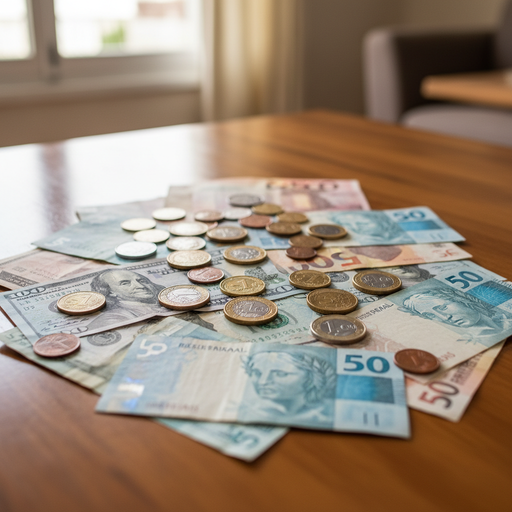
Investing in the stock market: how to identify haram activities
Before investing in the stock market, every Muslim asks a crucial question: do my trading activities comply with the principles of Islam? The concept of haram stock is one that deserves a deep understanding, as ignorance of Sharia rules can turn a promising investment into a prohibited transaction.
Investing in the financial markets is not inherently forbidden. However, certain common stock market practices are strictly haram according to Islamic law. Understanding the distinction between halal trading and haram stock requires knowledge of the fundamental principles governing lawful financial transactions in Islam.
Forbidden Economic Sectors in the Stock Market
Before buying a stock, you must first analyze the business sector of the company. If the company operates in areas contrary to Islamic teachings, investing in its stocks automatically becomes haram. This concerns companies that produce or market alcohol, gambling, usurious banking services, or immoral entertainment.
Conversely, investments in sectors of legitimate trade, industry, technology, health, or services remain permissible according to Sharia. The main criterion lies in the nature of the activity: if the company manufactures or sells haram products or services, its financing is prohibited, regardless of its stock performance.
The Central Trap: Usury (Riba) Makes Trading Haram
Riba, the Arabic term for interest or usury, constitutes one of the gravest transgressions in Islam. When a stock market transaction involves loans with interest, or when the structure of the investment includes usurious income, the entire operation becomes haram.
Margin trading is a perfect example of this trap. This practice requires borrowing funds from the broker to amplify investments, with interest involved. Even if the trader makes considerable profits, the presence of usury renders the trading haram. Consulting an expert in Islamic finance before engaging in margin trading is therefore essential.
Similarly, certain old commercial contracts or bonds containing fixed interest rates remain haram investments. Only financial instruments structured according to Sharia standards, without usurious components, are allowed in the stock market.
Speculation: Where Does Gambling Begin?
The line between halal investment and haram speculation is not always clear. A Muslim can invest in the stock market with the aim of generating profits, but only if prudent management is exercised and a real understanding of the market is maintained.
Excessive speculation, characterized by random buying and selling without prior analysis, is akin to gambling (Maysir in Arabic), a practice strictly forbidden in Islam. Trading without analytical foundation, simply hoping to “benefit from luck,” turns investment into haram stock. A Muslim investor must deepen their stock market knowledge, analyze financial data, and assess risks before any transaction.
Forex and Currency Trading: Conditions for Halal
The foreign exchange market (Forex or FX) can be halal or haram depending on the execution conditions. For currency trading to remain lawful, the two currencies must be exchanged simultaneously and immediately, without delivery delay. This simultaneous exchange ensures that no usury intervenes in the transaction.
However, if the transaction involves a settlement delay or if interest is applied in case of position rollover, the transaction automatically becomes haram. Muslim traders must verify with their brokers that the Forex conditions meet these Sharia requirements.
Trading Commodities and Precious Metals
Buying and selling gold, silver, or other commodities can be halal in the stock market, provided the transaction adheres to Islamic standards. The exchange must occur on an immediate delivery basis (spot), without the sale of non-owned goods.
If a trader sells an amount of gold they do not physically own, hoping to buy it back cheaper later (a practice known as “short selling”), this operation becomes haram as it contravenes Sharia principles. Similarly, uncontrolled delivery postponement introduces risks of implicit usury.
Mutual Funds and CFDs: Handle with Caution
Collective investment funds can be halal if they strictly adhere to Sharia controls and invest exclusively in permissible assets and sectors. However, many funds incorporate usurious components or diversify their portfolios into prohibited sectors (alcohol, gambling, etc.), making them automatically haram.
Contracts for difference (CFDs) constitute a particularly problematic category for Muslim investors. These derivative instruments rarely involve actual delivery of the assets, generally incorporate interest fees, and encourage excessive speculation. The majority of Islamic jurists consider CFDs haram due to their highly speculative and usurious nature.
Practical Tips for Navigating Halal Stock Markets
To invest in the stock market while respecting your faith, adopt a methodical approach. Start by analyzing the economic sector of each company. Favor investment funds certified halal by recognized Sharia experts. Stay attentive to the trading conditions offered by your broker, particularly the absence of interest on open positions.
Before any significant commitment, consult a religious scholar or an expert in Islamic finance to ensure that your transactions fully comply with Sharia principles. This investment in advice will prevent you from turning your stock market activity into haram transactions through ignorance.
The stock market is not inherently haram: it simply requires diligence, knowledge, and strict adherence to Islamic financial rules.