
Futures
Access hundreds of perpetual contracts
TradFi
Gold
One platform for global traditional assets
Options
Hot
Trade European-style vanilla options
Unified Account
Maximize your capital efficiency
Demo Trading
Introduction to Futures Trading
Learn the basics of futures trading
Futures Events
Join events to earn rewards
Demo Trading
Use virtual funds to practice risk-free trading
Launch
CandyDrop
Collect candies to earn airdrops
Launchpool
Quick staking, earn potential new tokens
HODLer Airdrop
Hold GT and get massive airdrops for free
Pre-IPOs
Unlock full access to global stock IPOs
Alpha Points
Trade on-chain assets and earn airdrops
Futures Points
Earn futures points and claim airdrop rewards


More


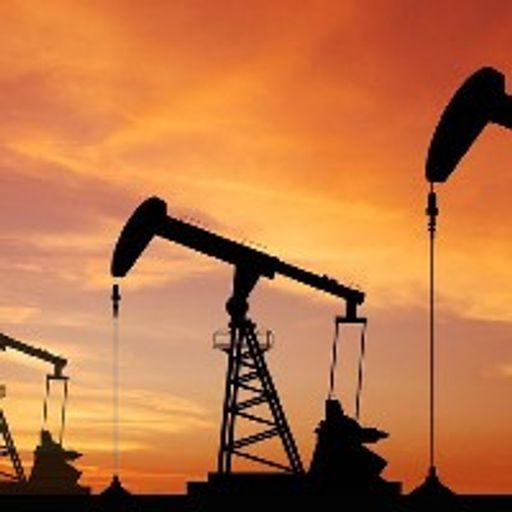


Strange to say, but the country with the largest oil reserves in the world is one of the least capable of exploiting them. Venezuela sits on about 303 billion barrels, nearly one-fifth of proven global reserves, yet produces less than 1 million barrels per day. Most of this oil is extra-heavy crude from the Orinoco Belt, difficult and costly to refine. Politics, international sanctions, and instability have turned this geographical advantage into a burden.
But Venezuela is not an isolated case. If we look at the top 10 oil-producing countries by reserves, the global geopolitical map becomes much clearer. The Middle East dominates completely, controlling about 48% of global reserves. Saudi Arabia, Iran, Iraq, the United Arab Emirates, and Kuwait are all in the top 10. Only two regions can compete: Venezuela in South America and North America with Canada and the United States together.
Saudi Arabia, with its 267 billion barrels, remains the true operational giant. Unlike Venezuela, Saudi crude is light, accessible, and inexpensive to extract. This gives Riyadh disproportionate influence over the global market. As a balancing producer in OPEC+, Saudi Arabia adjusts production to stabilize prices when the market moves. That’s why every Saudi move is scrutinized by traders.
Iran, third with 209 billion barrels, represents an interesting anomaly. Despite international sanctions limiting sales in global markets, in 2025 Iranian exports reached the highest levels in the past seven years. This means Tehran has found alternative channels, probably toward Asian buyers. Iran’s economy depends on oil, but geopolitical tensions continue to restrain its production potential.
Canada, fourth with 163 billion barrels, tells a different story. Most of its reserves are in Alberta’s oil sands, technically extractable but costly and energy-intensive. Canada remains a significant exporter, especially to the United States. Recently, the possibility of Venezuelan oil returning to U.S. markets has worried Canadian producers about competition.
Iraq, fifth with 145 billion barrels, is a Middle Eastern oil power, but political instability and weak infrastructure limit production. Exports remain vital to Iraq’s economy, but the country cannot reach its maximum potential. United Arab Emirates and Kuwait each have over 100 billion barrels, while Russia exceeds 80 billion.
When you look at the top 10 oil-producing countries by reserves, a pattern emerges: owning oil doesn’t mean controlling the market. Technology, political stability, extraction costs, and market access matter as much as the reserves themselves. Venezuela demonstrates this perfectly. The United States, tenth with relatively modest reserves, remains one of the largest producers thanks to shale technology. This is the real game: it’s not just what you have underground, but how you use it and at what price.