# WhenisBestTimetoEntertheMarket

977.29K
Risk Appetite Rebounds? U.S. Stocks Rise, Hong Kong ADRs Up 35 Points
After weeks of market jitters, signs of rebounding risk appetite emerged on February 23, 2026, as U.S. stocks closed higher and Hong Kong-listed American Depositary Receipts (ADRs) surged by 35 points. The S&P 500 gained 1.2%, driven by tech and consumer discretionary sectors, while the Nasdaq rose 1.5%, buoyed by AI-related stocks like Nvidia and Meta.
This uptick comes amid mixed economic signals: robust job data contrasted with lingering inflation concerns. Investors appear to be betting on a soft landing, with the Federa
CryptoSelfvip
Risk Appetite Rebounds? U.S. Stocks Rise, Hong Kong ADRs Up 35 Points
After weeks of market jitters, signs of rebounding risk appetite emerged on February 23, 2026, as U.S. stocks closed higher and Hong Kong-listed American Depositary Receipts (ADRs) surged by 35 points. The S&P 500 gained 1.2%, driven by tech and consumer discretionary sectors, while the Nasdaq rose 1.5%, buoyed by AI-related stocks like Nvidia and Meta.
This uptick comes amid mixed economic signals: robust job data contrasted with lingering inflation concerns. Investors appear to be betting on a soft landing, with the Federal Reserve hinting at potential rate cuts later in the year. "The fear from last month's sell-off is fading as earnings reports exceed expectations," said a strategist at Goldman Sachs.
Hong Kong ADRs, which track U.S.-listed Chinese firms like Alibaba and Tencent, jumped 35 points, reflecting optimism over eased U.S.-China trade tensions or stimulus from Beijing. Despite ongoing regulatory scrutiny in China, bargain hunters are piling in, viewing the dip as a buying opportunity.
However, not all are convinced this is a sustained rebound. Volatility remains high, with the VIX index still above 20. Geopolitical risks, including tariffs and elections in Europe, could derail the momentum. For now, though, the rise suggests investors are regaining confidence, potentially signaling the end of the recent correction phase.
#GateSquare$50KRedPacketGiveaway
#TrumpAnnouncesNewTariffs #WhenisBestTimetoEntertheMarket #CLARITYActAdvances #GateSpringFestivalHorseRacingEvent
repost-content-media
  • Reward
  • 44
  • Repost
  • Share
MuteVersevip:
LFG 🔥
View More
#WhenisBestTimetoEntertheMarket
#WhenIsBestTimeToEnterTheMarket
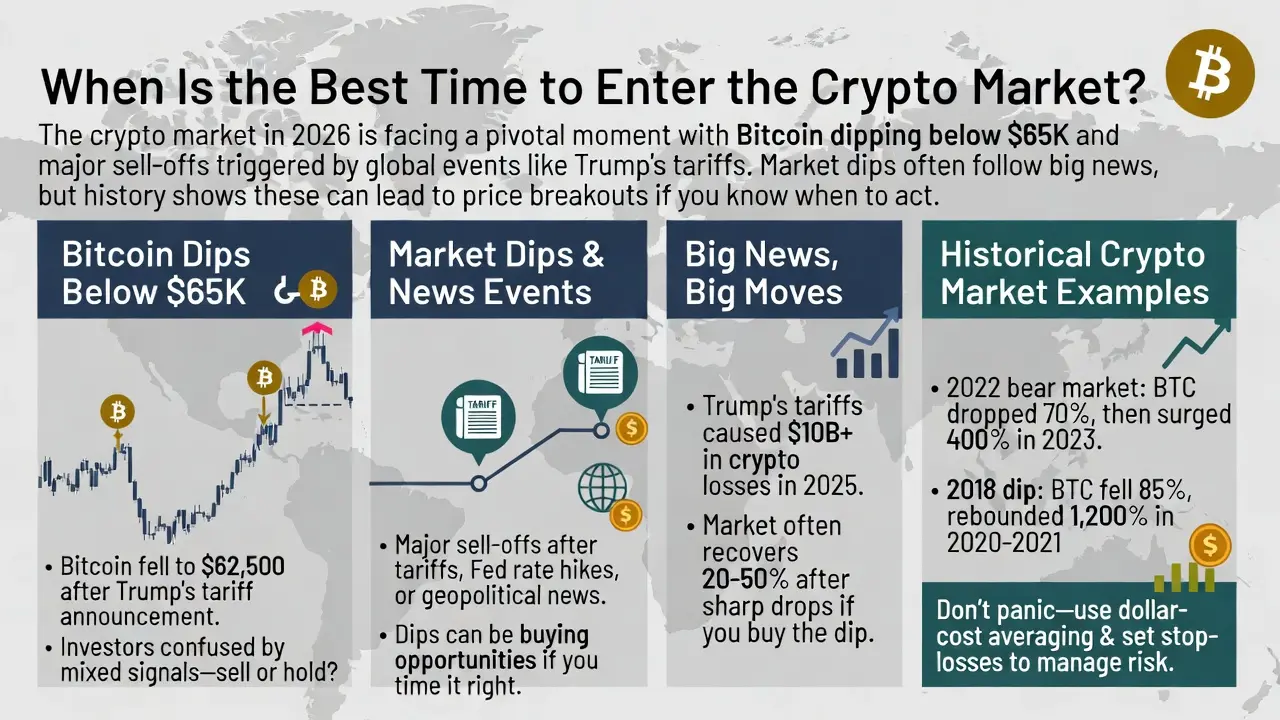
Crypto investors often ask: When is the right time to enter the market? This question comes from a mix of psychology, fear, opportunity, and strategy.
📉 1. When the Market Is in a Dip
Why this triggers the question:
When crypto prices drop sharply — 10–50% or more — fear spreads. Investors ask if this is a “buy the dip” moment or the start of a bigger crash. Dips usually happen after hype cycles, like after bull runs, when overleveraged investors get liquidated. Global events like regulations or economic slowdowns can also trig
BTC0,83%
ETH0,91%
SOL0,94%
DEFI5,11%
HighAmbitionvip
#WhenisBestTimetoEntertheMarket
#WhenIsBestTimeToEnterTheMarket
Crypto investors often ask: When is the right time to enter the market? This question comes from a mix of psychology, fear, opportunity, and strategy.
📉 1. When the Market Is in a Dip
Why this triggers the question:
When crypto prices drop sharply — 10–50% or more — fear spreads. Investors ask if this is a “buy the dip” moment or the start of a bigger crash. Dips usually happen after hype cycles, like after bull runs, when overleveraged investors get liquidated. Global events like regulations or economic slowdowns can also trigger panic selling.
Short-term effects:
Prices are lower → potential buying opportunity.
But volatility is high; you could lose more if the drop continues.
Liquidity drops, Fear & Greed Index often hits “Extreme Fear” below 20.
Retail investors may panic sell, while whales quietly buy.
Long-term effects:
Historically, dips have been the best entry points for big gains later.
Crypto with fixed supply like BTC acts as a hedge against inflation.
Dips caused by structural problems (e.g., network issues, bans) may take years to recover.
In 2026, tariff-induced inflation caused BTC to dip to ~$64.3K from $126K ATH — creating short-term pain but potential long-term accumulation.
History examples:
2022: BTC dropped from $69K → $16K during the FTX collapse; early buyers saw 4x+ returns by 2024–25.
2018: Post-ICO crash, BTC fell 84%; buyers in early 2019 earned 10x gains by 2021.
2026: Tariff hikes raised mining hardware costs but exemptions for semiconductors helped stabilize tech-heavy cryptos like ETH.
Practical advice:
Pros: Buy cheaper, higher upside potential.
Cons: Risk of deeper drops, emotional stress.
Strategy: Dollar-Cost Average (DCA) over weeks/months; monitor on-chain metrics like hash rate. If cautious, wait for volume or trend reversal signs.
Quick takeaway:
Dips are perfect for value buying but risky — invest gradually if fundamentals are strong.
📈 2. When Prices Are Breaking Out
Why this triggers the question:
Breakouts happen when prices surge above resistance levels (like BTC breaking $70K). FOMO appears, and investors wonder if it’s a real trend or a temporary pump. Breakouts often follow consolidation periods and are boosted during bull phases.
Short-term effects:
Rapid gains possible (10–50% in days).
Pullbacks or dumps can happen if overbought (RSI >70).
Leveraged trading can cause cascades.
Long-term effects:
True breakouts backed by fundamentals may start major trends.
Fake breakouts or whale pumps can trap buyers.
Historically, post-halving breakouts have led to all-time highs.
History examples:
2020–21 bull run: BTC broke $10K → $20K, then peaked at $69K.
2024 ETH ETFs: ETH broke $2K → $4K after regulatory clarity.
2026 scenario: Post-tariff exemption, SOL or AI tokens could breakout; retaliation may reverse it.
Practical advice:
Pros: Momentum can lead to fast profits.
Cons: Risk of retracements, liquidations.
Strategy: Confirm with high volume (2x average), use stop-loss, scale in gradually.
Quick takeaway:
Breakouts offer big reward but watch for traps — confirm with volume and fundamentals.
📰 3. When Big News or Events Happen
Why this triggers the question:
Major events like ETF approvals, regulations, halvings, or partnerships can move markets fast. Investors ask: Is this the right time to enter?
Short-term effects:
Positive news → prices pump 20–100%.
Negative news → quick dumps.
Overreactions and FOMO can create short-term bubbles.
Long-term effects:
Certain events (like Bitcoin halving) historically start bull runs over 12–18 months.
Persistent macro issues (like trade wars) may lead to structural changes, such as growth in DeFi to bypass fiat.
History examples:
2020 halving: BTC $8K → $69K in a year.
2022 FTX collapse: Buyers during dips recovered massively by 2024.
2026: Tariff uncertainty plus CLARITY & GENIUS Acts could spark rallies if news turns positive.
Practical advice:
Pros: News provides clear catalysts.
Cons: Fake hype fades quickly; regulatory risk remains.
Strategy: Use verified sources, sentiment tools (like LunarCrush), buy post-event dips if fundamentals are intact.
Quick takeaway:
Act on verified positive news, hedge against volatility.
🤔 4. When Investors Are Confused
Why this triggers the question:
Sideways markets or mixed signals create indecision. High forum activity or oscillating Fear & Greed Index (40–60) shows people don’t know whether to buy or wait.
Short-term effects:
Choppy price action and fakeouts.
Can amplify liquidations.
Long-term effects:
Confusion phases often become accumulation periods before big moves.
Macro confusion (like inflation + tariffs) may resolve into adoption-driven growth.
History examples:
2019 BTC sideways: $3K–$10K range, resolved into 2020 bull run.
2023 ETH post-Merge: undervalued entry opportunities.
2026: Tariff uncertainty + pro-crypto policies created mixed signals.
Practical advice:
Pros: Time to research, plan.
Cons: Opportunity cost if waiting too long.
Strategy: Use indicators (MACD, volume surges), community sentiment; start small with DCA.
Quick takeaway:
Confusion = research time. Enter gradually or wait for trend clarity.
🔥 Overall Takeaway
The “best” time to enter depends on your strategy and risk tolerance.
Aggressive traders: chase dips or breakouts.
Conservative investors: DCA during sideways or post-event phases.
Focus on risk management, fundamentals, and long-term holding.
In 2026’s tariff-impacted market, BTC down ~47% from ATH could be a dip-buy opportunity if policy stabilizes.
Rule: Always DYOR (Do Your Own Research) and consider your finances before entering.
repost-content-media
  • Reward
  • Comment
  • Repost
  • Share
#WhenisBestTimetoEntertheMarket The mention of the $50,000 prize pool and the potential for NFT-based loyalty badges later in 2026 suggests they are playing the long game with gamification.
Key Takeaways from the Gate Square Campaign
To help others who might be skimming, here is a quick summary of how to maximize this opportunity:
Quality Over Quantity: The "Red Packet" distribution now favors activity-based scoring. Posting high-quality market analysis or educational threads is your best bet for higher-tier rewards.
The Multiplier Effect: Linking your trading account to your Gate Square profi
  • Reward
  • 4
  • Repost
  • Share
StylishKurivip:
To The Moon 🌕
View More
Vitalik Buterin Sells 1,716 ETH in a Day, Renewing Market Debate
Ethereum co-founder Vitalik Buterin has once again ignited controversy in the crypto community by selling 1,716 ETH in a single day, as reported on February 23, 2026. Valued at approximately $4.5 million at current prices, the transaction was tracked via on-chain data from his known wallet addresses, prompting renewed debates about insider selling and market influence.
Buterin, who has historically donated proceeds to charities like the Effective Altruism movement, defended the move on social media, stating it was part of routine
ETH0,91%
  • Reward
  • 16
  • Repost
  • Share
AylaShinexvip:
LFG 🔥
View More
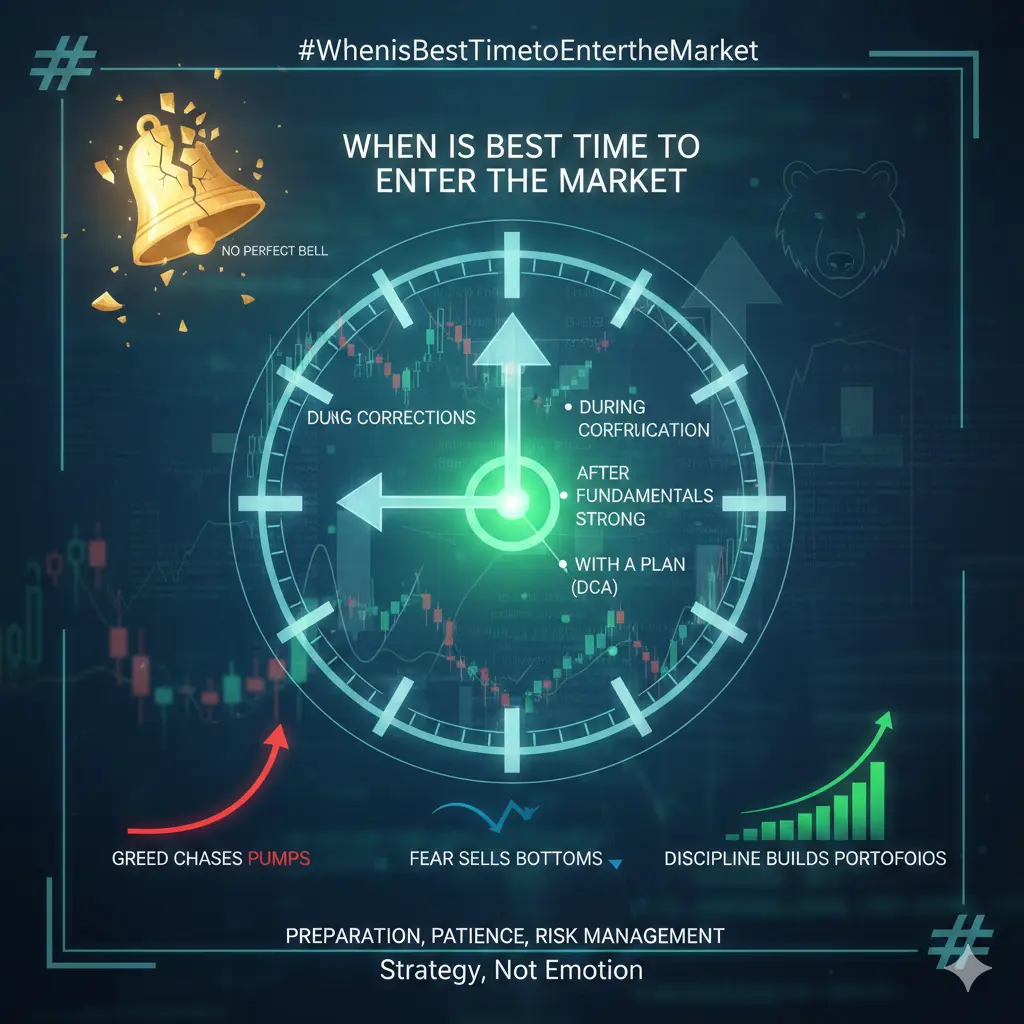
#WhenisBestTimetoEntertheMarket There’s no perfect bell that rings before the market explodes upward — and no siren before it crashes. Smart investors understand that entries are built on structure, not emotion. Whether you're trading equities, commodities, or digital assets like Bitcoin and Ethereum, timing improves when strategy replaces impulse.
📌 Best Times to Consider Entering the Market:
• During Corrections or Pullbacks
Markets move in cycles. Healthy uptrends often include temporary pullbacks to key support zones. When fear rises and prices retrace to technically strong levels, risk-t
BTC0,83%
ETH0,91%
MrFlower_XingChenvip
#WhenisBestTimetoEntertheMarket There’s no perfect bell that rings before the market explodes upward — and no siren before it crashes. Smart investors understand that entries are built on structure, not emotion. Whether you're trading equities, commodities, or digital assets like Bitcoin and Ethereum, timing improves when strategy replaces impulse.
📌 Best Times to Consider Entering the Market:
• During Corrections or Pullbacks
Markets move in cycles. Healthy uptrends often include temporary pullbacks to key support zones. When fear rises and prices retrace to technically strong levels, risk-to-reward improves significantly. Smart money often accumulates when retail sentiment turns cautious.
• After Trend Confirmation
Instead of trying to catch the exact bottom, wait for confirmation signals — higher lows, breakouts above resistance, or volume expansion. Confirmation reduces probability of entering a prolonged downtrend and protects capital from “falling knife” scenarios.
• When Fundamentals Remain Strong
Price follows narrative over time. Projects with real utility, growing adoption, strong developer activity, and transparent leadership tend to outperform speculative hype cycles. Long-term conviction should be rooted in research — not social media momentum.
• With a Structured Plan (DCA Strategy)
Dollar-Cost Averaging (DCA) remains one of the most disciplined approaches. By allocating capital in intervals, you reduce emotional stress and avoid the pressure of perfectly timing the bottom. This method is especially effective in volatile environments.
🔎 Advanced Entry Considerations
• Liquidity & Volume Analysis
Rising volume on recoveries suggests accumulation. Low volume rallies may indicate weak conviction.
• Macro Environment Awareness
Interest rate policy, inflation data, and global liquidity conditions influence risk appetite. Crypto and equities often respond to shifts in broader monetary conditions.
• Risk Management First
Position sizing matters more than entry precision. Even a strong setup fails without proper capital allocation and stop-loss discipline.
🧠 Market Psychology Reminder
Greed makes you chase green candles.
Fear makes you panic sell red ones.
Discipline builds portfolios.
The best time to enter isn’t about the clock — it’s about preparation, patience, probability, and protection of capital. Markets reward structured thinking far more consistently than emotional reaction.
📊 Stay strategic. Stay patient. Let the setup come to you — not the other way around.$BTC
repost-content-media
  • Reward
  • 2
  • Repost
  • Share
ybaservip:
To The Moon 🌕
View More
#WhenisBestTimetoEntertheMarket
The question of the “best time to enter the market” is deceptively simple, but in reality, it is one of the most nuanced topics in trading and investing. Many beginners believe that the ideal entry is the exact bottom or the precise moment when prices are about to surge. In practice, this rarely exists, and trying to predict it often leads to frustration, overtrading, and emotional mistakes. Market entry is not about timing a single candle or relying on luck; it is about reading structure, understanding sentiment, and managing risk before even thinking about ex
post-image
  • Reward
  • 18
  • Repost
  • Share
Repanzalvip:
2026 GOGOGO 👊
View More
#WhenisBestTimetoEntertheMarket There’s no perfect bell that rings before the market explodes upward — and no siren before it crashes. Smart investors understand that entries are built on structure, not emotion. Whether you're trading equities, commodities, or digital assets like Bitcoin and Ethereum, timing improves when strategy replaces impulse.
📌 Best Times to Consider Entering the Market:
• During Corrections or Pullbacks
Markets move in cycles. Healthy uptrends often include temporary pullbacks to key support zones. When fear rises and prices retrace to technically strong levels, risk-t
BTC0,83%
ETH0,91%
MrFlower_XingChenvip
#WhenisBestTimetoEntertheMarket There’s no perfect bell that rings before the market explodes upward — and no siren before it crashes. Smart investors understand that entries are built on structure, not emotion. Whether you're trading equities, commodities, or digital assets like Bitcoin and Ethereum, timing improves when strategy replaces impulse.
📌 Best Times to Consider Entering the Market:
• During Corrections or Pullbacks
Markets move in cycles. Healthy uptrends often include temporary pullbacks to key support zones. When fear rises and prices retrace to technically strong levels, risk-to-reward improves significantly. Smart money often accumulates when retail sentiment turns cautious.
• After Trend Confirmation
Instead of trying to catch the exact bottom, wait for confirmation signals — higher lows, breakouts above resistance, or volume expansion. Confirmation reduces probability of entering a prolonged downtrend and protects capital from “falling knife” scenarios.
• When Fundamentals Remain Strong
Price follows narrative over time. Projects with real utility, growing adoption, strong developer activity, and transparent leadership tend to outperform speculative hype cycles. Long-term conviction should be rooted in research — not social media momentum.
• With a Structured Plan (DCA Strategy)
Dollar-Cost Averaging (DCA) remains one of the most disciplined approaches. By allocating capital in intervals, you reduce emotional stress and avoid the pressure of perfectly timing the bottom. This method is especially effective in volatile environments.
🔎 Advanced Entry Considerations
• Liquidity & Volume Analysis
Rising volume on recoveries suggests accumulation. Low volume rallies may indicate weak conviction.
• Macro Environment Awareness
Interest rate policy, inflation data, and global liquidity conditions influence risk appetite. Crypto and equities often respond to shifts in broader monetary conditions.
• Risk Management First
Position sizing matters more than entry precision. Even a strong setup fails without proper capital allocation and stop-loss discipline.
🧠 Market Psychology Reminder
Greed makes you chase green candles.
Fear makes you panic sell red ones.
Discipline builds portfolios.
The best time to enter isn’t about the clock — it’s about preparation, patience, probability, and protection of capital. Markets reward structured thinking far more consistently than emotional reaction.
📊 Stay strategic. Stay patient. Let the setup come to you — not the other way around.$BTC
repost-content-media
  • Reward
  • 2
  • Repost
  • Share
ybaservip:
To The Moon 🌕
View More
Today's Top News😍😍😍
1、 Trump: Will raise global tariffs from 10% to 15%
2、 SBI to issue 10 billion yen in on-chain bonds and offer XRP rewards to retail investors
3、 Spot Bitcoin ETFs saw net inflows of over $88 million yesterday
4、 Spot Ethereum ETFs recorded net inflows of $17,200 yesterday
5、 CryptoQuant: Exchange whale ratio rises to 0.64, large holders are leading sell-offs
6、 Binance to launch pre-market trading for OPNUSDT perpetual contract
7、 Vitalik sold another 428.57 ETH, totaling 7,386 ETH sold since February 2
8、 Vitalik advocates using personal LLMs to improve decentralized g
TRUMP4,65%
IN2,42%
ON14,98%
XRP0,15%
  • Reward
  • Comment
  • Repost
  • Share
🔥 WIF/USDT LONG SETUP 🔥
Entry: 0.2080
DCA: 0.1920
Stop Loss: 0.1860
(5% below average — 4H candle close below = SL hit)
Targets:
0.2150 → 0.2180 → 0.2220 → 0.2240 → 0.2270 → 0.2300 → 0.2350 → 0.2400
📌 Trade Smart:
Secure partial profits at each target and trail stop loss once momentum confirms.
⚠️ Not financial advice. Do your own research.
#GateSquare$50KRedPacketGiveaway #TrumpAnnouncesNewTariffs #WhenisBestTimetoEntertheMarket #CLARITYActAdvances #GateSpringFestivalHorseRacingEvent
WIF0,11%
  • Reward
  • Comment
  • Repost
  • Share
#WhenisBestTimetoEntertheMarket
Timing or Time in the Market?
One of the most common questions in investing is simple… yet powerful:
When is the best time to enter the market?
Is it during a dip? After a breakout? Before a major announcement? Or right now?
Let’s break it down.
Timing the Market vs. Time In the Market
Many investors try to “buy the bottom and sell the top.” While that sounds ideal, perfectly timing entries and exits consistently is extremely difficult — even for professionals.
History shows that time in the market often beats timing the market. Missing just a few of the bes
  • Reward
  • 1
  • Repost
  • Share
HighAmbitionvip:
Diamond Hands 💎
Load More